
AMETEK MPC-T2010 Modules DNC-T2010-BDC MPC-T2010-021 Output Sequencer
Ametek DNC-T2010-BDC MPC-T2010-021 is listed for Servo Drives RFQ review. Confirm quantity, condition and destination before quotation.
RFQ-ready industrial model
Model: DNC-T2010-R20
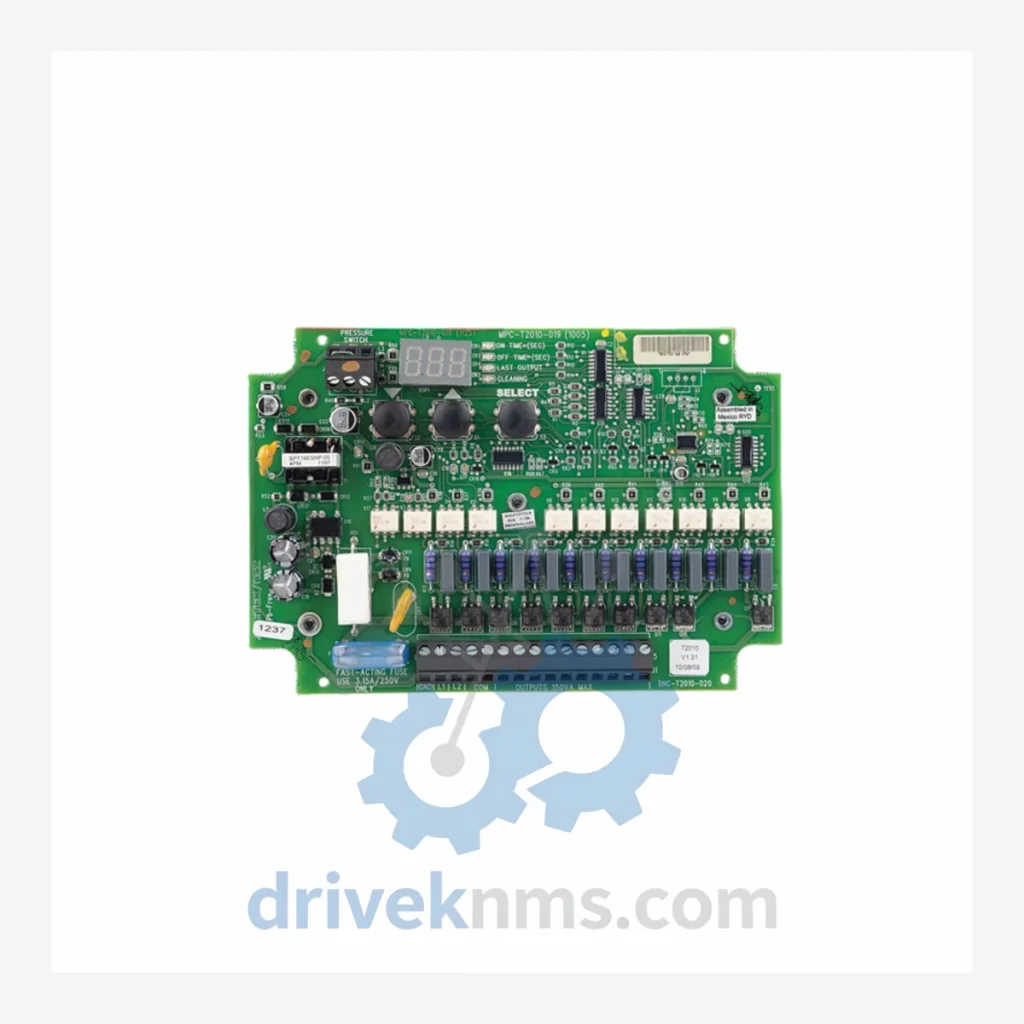
Product Overview
Commercial availability is handled through direct RFQ, model verification and export-oriented follow-up rather than public cart checkout.
Datasheet Preview
Use attached product manuals when available. If the manual is not public yet, request the full file directly through RFQ.
Commercial Path
Product pages on DRIVEKNMS are designed to verify model, brand and series first, then move the buyer into one clean quotation path.
Technical Dossier
DriveKNMS reviews sourcing options for this model through RFQ handling before quotation.
RFQ support for obsolete parts: Send the model number, required quantity and destination so DriveKNMS can confirm sourcing options before quotation.
Note: Specific electrical parameters (voltage ratings, I/O count, scan time) are confirmed during order verification to ensure accuracy. No unverified specifications are published.
The AMETEK DNC-T2010-R20 was designed for deterministic control tasks in industrial environments where reliability over a multi-decade service horizon was the primary engineering requirement. Systems built around this controller were not designed to be replaced on a software vendor's upgrade cycle — they were designed to run.
Facilities that have not yet secured a spare unit are operating with a single point of failure in their control architecture. A second unit held in climate-controlled storage is not an inventory cost — it is an insurance policy against a production stoppage that no expedited shipping option can resolve, because the part simply does not exist in standard distribution channels.
Facilities operating AMETEK DNC-series controllers — and comparable legacy platforms such as those found in older Honeywell, Allen-Bradley, or Siemens installations from the same era — have demonstrated that structured spare parts management can extend operational service life by a decade or more without requiring system-level capital expenditure. The following approach reflects practices observed across facilities that have successfully deferred costly migrations:
1. Criticality mapping: Identify every module in the control architecture that has no current-production equivalent. The DNC-T2010-R20 belongs in this category. Rank each by the production impact of its failure and the difficulty of sourcing a replacement.
3. Controlled storage: Obsolete electronic modules degrade in uncontrolled environments. Store spares in anti-static packaging, at stable temperature and humidity, away from direct light. A module stored correctly for ten years will perform identically to one installed yesterday.
4. Firmware and configuration documentation: Before any maintenance event, ensure that the current firmware version and all configuration parameters are documented and stored offline. For a discontinued controller, the ability to restore a known-good configuration is as valuable as the hardware itself.
5. Scheduled inspection cycles: Even modules in storage benefit from periodic inspection. Electrolytic capacitors in older electronics have a finite shelf life. A qualified technician reviewing stored spares every 18–24 months can identify degradation before it becomes a failure event.
This approach does not require capital investment in new infrastructure. It requires discipline in procurement and documentation — and access to a supplier who can locate verified units when the standard market cannot.
Every DNC-T2010-R20 unit supplied by DriveKNMS passes a structured five-stage inspection protocol before it is offered for sale. This process was developed specifically for obsolete industrial electronics, where the failure modes differ from those of current-production hardware.
Stage 1 – Physical inspection: Full external examination for mechanical damage, connector pin condition, and housing integrity. Units with evidence of prior field damage are quarantined.
Stage 2 – Electrolytic capacitor assessment: Capacitor aging is the primary failure mechanism in electronics of this generation. Each unit is evaluated for capacitor condition. Units showing evidence of electrolyte leakage or bulging are rejected.
Stage 3 – Firmware version verification: Where accessible, firmware version is documented and cross-referenced against known-compatible versions for the target application.
Stage 4 – Pin and contact inspection: All connector pins and board contacts are examined under magnification for oxidation, corrosion, and mechanical deformation. Affected contacts are treated or the unit is rejected.
Stage 5 – Functional verification: Units are powered and tested against baseline operational parameters before release.
Can you source other AMETEK DNC-series modules?
Yes. DriveKNMS specializes in obsolete and hard-to-find industrial automation components across multiple manufacturers and series. Contact us with your full bill of materials for a consolidated sourcing assessment.
Continue The Model Path
Move from this exact model into the matching system hub, brand archive, model-family archive or lifecycle sourcing route before sending a final RFQ list.
Related Paths
Ametek DNC-T2010-BDC MPC-T2010-021 is listed for Servo Drives RFQ review. Confirm quantity, condition and destination before quotation.
Alstom MVAJ105RA0802A is listed for MiCOM Series RFQ review. Confirm quantity, condition and destination before quotation.
Moore 16137-174 is listed for Servo Drives RFQ review. Confirm quantity, condition and destination before quotation.