Technical Dossier
Product Details And Specifications
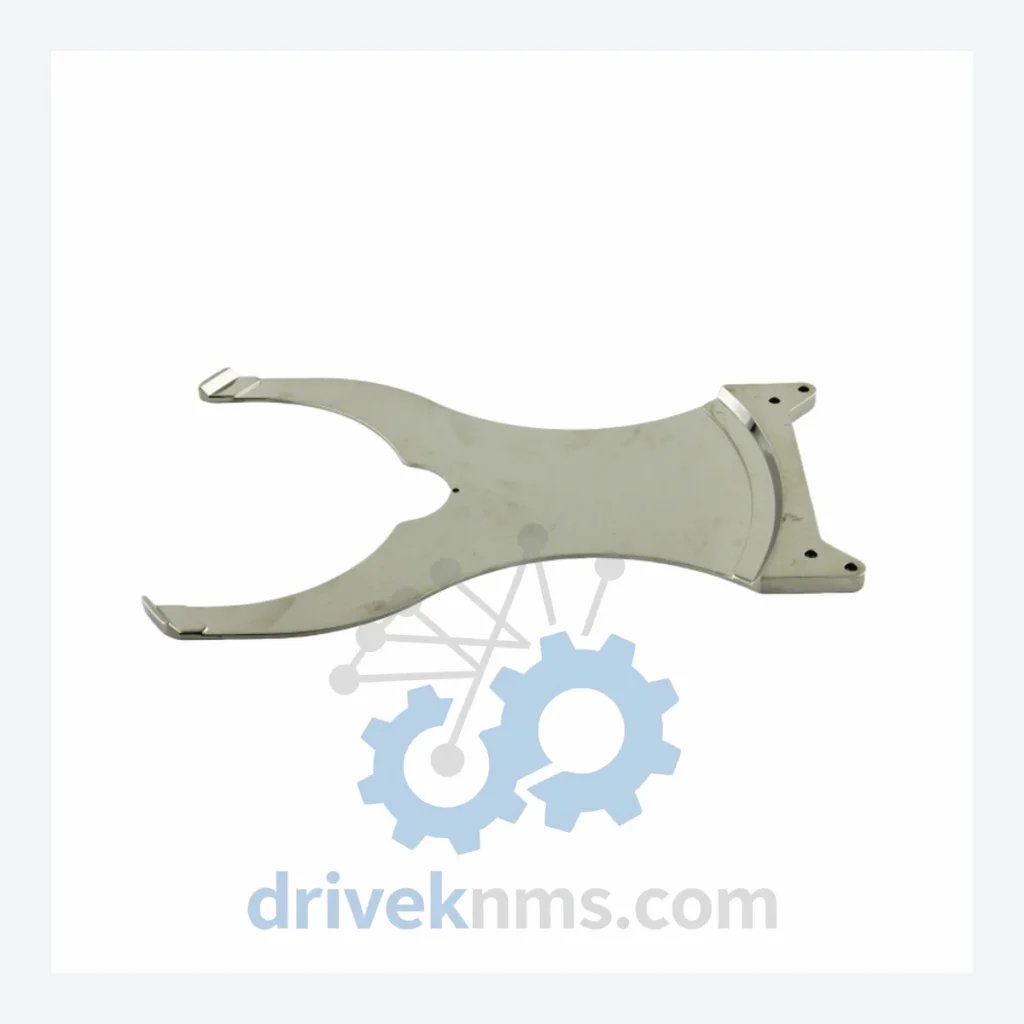
Applied Materials C0600 0021-22627 E4A MAIN BD TAS-MAIN C0507 UD2115 Robot Blade – Obsolete Centura Spare Part
When the wafer-handling robot blade on a 300mm Centura platform fails and no replacement is available through standard channels, the consequences are not limited to a single tool going down. In a high-volume semiconductor fab, a single cluster tool outage can cascade into days of lost wafer starts, missed delivery commitments, and — in the worst case — a forced decision to retire an asset that still has years of productive life remaining. A full Centura platform replacement, including qualification, process re-certification, and engineering labor, routinely exceeds USD $2–5 million. The C0600 0021-22627 E4A MAIN BD TAS-MAIN C0507 UD2115 robot blade is a direct-fit mechanical component. Sourcing one unit from DriveKNMS's verified obsolete inventory is not a workaround — it is a deliberate asset-protection decision.
Technical Specifications
| Field | Detail |
| Part Number | C0600 0021-22627 E4A MAIN BD TAS-MAIN C0507 UD2115 |
| Description | Robot Blade – No Pocket, 300mm |
| OEM | Applied Materials (AMAT) |
| Compatible Platform | Applied Materials Centura 300mm Cluster Tool |
| Wafer Size | 300mm |
| Pocket Configuration | No Pocket (bare blade) |
| Discontinuation Status | Obsolete / End-of-Life – no longer available through AMAT standard supply chain |
| Country of Origin | United States |
| Condition Available | New surplus / Refurbished (see QA section) |
Solving the Discontinued Hardware Crisis
The Applied Materials Centura platform was the dominant 300mm single-wafer processing architecture for CVD, PVD, and etch applications throughout the 2000s and into the 2010s. Many fabs worldwide continue to run Centura tools for mature-node production — 90nm, 65nm, 45nm processes — where the economics of upgrading to a newer platform cannot be justified by the product margin. The wafer-handling robot is the mechanical heart of the cluster tool. The TAS (Transfer Arm System) blade, referenced in this part number, is responsible for every wafer movement between process chambers and the load lock. Blade wear, edge chipping, or electrostatic damage are failure modes that do not announce themselves in advance. When the blade fails, the tool stops.
Applied Materials ceased active production and spare parts support for legacy Centura configurations on a rolling basis. Field engineers who attempt to source this blade through AMAT's current parts portal will find it listed as NLA (No Longer Available). The secondary market — specifically, distributors who maintained bonded inventory or acquired surplus from fab decommissions — is the only remaining supply path. DriveKNMS operates precisely in this space. Holding verified stock of the C0600 0021-22627 means a fab can execute an emergency repair in days rather than facing a multi-month procurement exercise with no guaranteed outcome.
How a single spare blade can extend a $3M+ asset by 5–10 years: Centura tools that are mechanically sound but starved of consumables and wear parts are retired prematurely — not because the process chambers have failed, but because the handling system cannot be maintained. A proactive spare parts strategy — holding one or two verified robot blades in bonded storage — eliminates the single most common unplanned retirement trigger for this platform. The cost of two spare blades is a rounding error against the capital cost of a replacement tool and the process re-qualification cycle that follows. Fab managers operating under pressure to reduce capital expenditure while maintaining output on mature nodes should treat this part as a balance-sheet item, not a maintenance line item.
Condition & Reliability Assurance
Obsolete mechanical components sourced from the secondary market carry inherent risk if they are not properly inspected before installation. DriveKNMS applies a 5-step QA protocol to all legacy robot blades prior to shipment:
- Step 1 – Visual and dimensional inspection: Blade geometry is checked against OEM drawings. Edge condition, flatness, and mounting hole integrity are verified. Any unit with measurable deformation is rejected.
- Step 2 – Surface contamination assessment: Blade surfaces are inspected for particulate contamination, oxidation, and chemical residue consistent with prior fab exposure. Units requiring cleaning are processed in a controlled environment.
- Step 3 – Electrostatic and material integrity check: For blades used in electrostatic-sensitive wafer environments, surface resistivity is measured to confirm the material has not degraded.
- Step 4 – Pin and mounting hardware inspection: All interface points — alignment pins, blade seat, and fastener threads — are inspected for corrosion and mechanical wear. Corroded hardware is replaced before shipment.
- Step 5 – Packaging for long-term storage: Units are packaged in anti-static, nitrogen-purged bags where applicable, with desiccant, and labeled with inspection date and technician ID for full traceability.
Key Features for System Maintenance
- Drop-in replacement: The C0600 0021-22627 is a direct mechanical substitute. No modifications to the robot arm assembly or chamber interface are required.
- No firmware or software changes: Robot blade replacement on the Centura TAS does not require recipe modification, software re-flashing, or re-teaching of wafer positions beyond standard post-maintenance calibration.
- Avoids engineering re-qualification costs: Installing a like-for-like spare blade keeps the tool within its existing process qualification envelope. Introducing a non-OEM substitute or a platform upgrade triggers a full re-qualification cycle — a cost that can exceed the value of the tool itself on mature-node processes.
- Supports long-term spares strategy: Fabs running Centura tools on a 5–10 year horizon should consider holding multiple units. As secondary market inventory depletes, lead times and prices for this part will increase. Securing stock now is the lower-cost option.
FAQ
Q: What warranty applies to an obsolete part like this?
A: DriveKNMS provides a 90-day warranty against defects identified during our QA process. Given the obsolete status of this component, we recommend customers perform incoming inspection upon receipt and contact us immediately if any discrepancy is found.
Q: How do I confirm the unit is new or properly refurbished?
A: Each unit shipped by DriveKNMS is accompanied by an inspection report documenting the 5-step QA process, including technician ID and inspection date. New surplus units are identified as such. Refurbished units are clearly labeled with the scope of work performed.
Q: Should we hold more than one unit in reserve?
A: For any fab running a Centura tool as a production-critical asset, holding a minimum of two spare blades is the standard recommendation. Robot blade failure is not a predictable event. A single spare eliminates one failure scenario; two spares provide a meaningful buffer against back-to-back failures or damage during installation.
Q: Can this blade be used across different Centura chamber configurations?
A: The TAS-MAIN designation indicates this blade is specific to the main transfer arm assembly. Compatibility with specific chamber configurations should be confirmed against your tool's BOM before installation. Contact our technical team for assistance.