

Applied Materials TXZ 0100-01629 GF125C-102895 MFC PCB Assembly – Obsolete GF125C Series Spare Part
Applied Materials TXZ 0100-01629 GF125C-102895 MFC PCB Assembly – Obsolete GF125C Series Spare Part When a Mass Flow Controller PCB…
Model: 0020-23811 F940GOT-SBD-H AVB51V-X0007, 1D80-004538-11 ES1D80-004538-11
Product Overview
Commercial availability is handled through direct RFQ, model verification and export-oriented follow-up rather than public cart checkout.
Datasheet Preview
Use attached product manuals when available. If the manual is not public yet, request the full file directly through RFQ.
Commercial Path
Product pages on DRIVEKNMS are designed to verify model, brand and series first, then move the buyer into one clean quotation path.
Technical Dossier
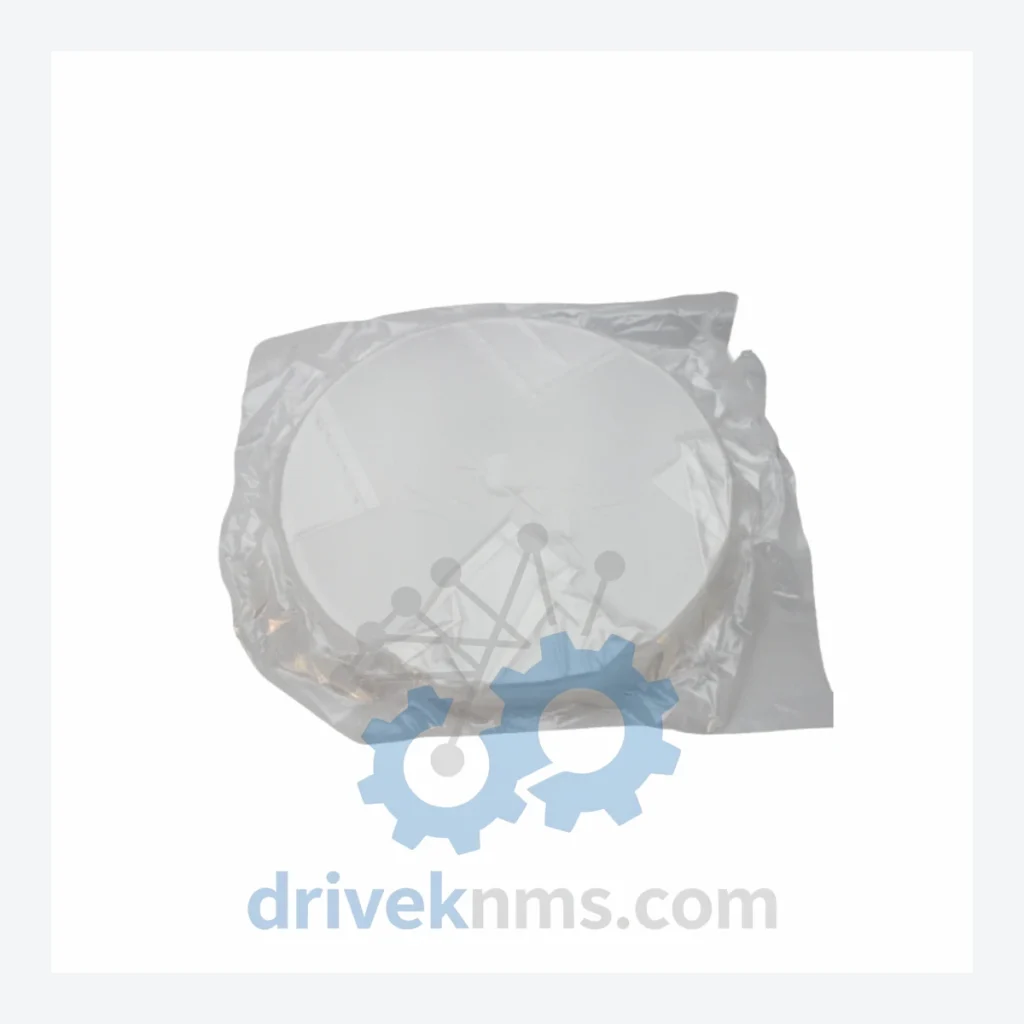
The Applied Materials Honeycomb Collimator assembly is a precision optical and mechanical component deployed in physical vapor deposition (PVD) and chemical vapor deposition (CVD) process chambers across global semiconductor fabrication facilities. This component class is integral to ion beam uniformity control in Applied Materials Endura, Centura, and Producer platform systems. Installations span high-throughput fabs in the semiconductor, flat-panel display, and advanced packaging sectors, including facilities operating under ISO Class 1–3 cleanroom standards. The collimator's honeycomb cell geometry defines the angular distribution of sputtered or deposited material flux, directly governing film thickness uniformity and step coverage on wafer substrates. Given the precision tolerances involved — cell pitch typically in the range of 1–5 mm, aspect ratios of 1:1 to 3:1 — these components are subject to scheduled replacement intervals and are classified as consumable spare parts within Applied Materials' preventive maintenance (PM) programs.
Applied Materials introduced collimated PVD deposition in the early 1990s as a solution to the step coverage limitations of conventional magnetron sputtering at sub-0.5 µm design rules. The first-generation collimators were fabricated from stainless steel with electropolished surfaces to minimize particle generation. By the mid-1990s, titanium and aluminum alloy variants were introduced to reduce mass and improve thermal cycling compatibility with chamber hardware. The transition to 200 mm and subsequently 300 mm wafer platforms drove a corresponding scale-up in collimator diameter and a refinement of cell geometry tolerances. Part numbers in the 0020-XXXXX and 1D80-XXXXXX series reflect Applied Materials' internal engineering change order (ECO) revision system, where prefix codes denote the platform generation and chamber configuration. The F940GOT-SBD-H and AVB51V-X0007 designations correspond to vendor-specific sub-assembly codes used in the supply chain for optical and mechanical sub-components integrated into the collimator stack. As 300 mm fabs have matured and leading-edge nodes have migrated to EUV lithography, the Honeycomb Collimator series has entered a sustained maintenance phase: new unit production has slowed, but installed base demand for replacement parts remains high across legacy and mature-node fabs running 28 nm to 90 nm processes.
The following SKUs represent verified part numbers within the Applied Materials Honeycomb Collimator and associated PVD chamber hardware catalog. Parts are classified by functional role within the process chamber assembly.
Collimator Assemblies & Sub-Assemblies
Optical & Beam-Shaping Components
Chamber Interface & Mounting Hardware
DriveKNMS maintains a dedicated inventory program for Applied Materials Honeycomb Collimator components that have been discontinued from the OEM's active catalog. As Applied Materials has progressively focused new hardware development on sub-10 nm and EUV-compatible platforms, a significant portion of the Honeycomb Collimator part number range — particularly those associated with 200 mm Endura and Centura chambers — has transitioned to end-of-life (EOL) status. DriveKNMS sources these components through certified secondary market channels, including decommissioned fab equipment lots, authorized surplus distributors, and direct manufacturer overstock. All sourced units are logged against original Applied Materials part number documentation to ensure cross-reference accuracy. For fabs operating extended equipment lifecycles beyond the OEM's standard 10-year support window, DriveKNMS provides long-term maintenance supply agreements covering scheduled PM kits, emergency replacement units, and engineering consultation on compatible substitute part numbers where direct replacements are unavailable.
Honeycomb Collimator components present specific inspection challenges due to their complex cell geometry, vacuum-compatibility requirements, and surface finish specifications. DriveKNMS applies the following test and inspection protocol to all units processed through its facility. Dimensional verification is performed using calibrated optical comparators and CMM (coordinate measuring machine) inspection to confirm cell pitch, aspect ratio, and overall diameter against Applied Materials engineering drawings. Surface cleanliness is assessed per SEMI F57 and IEST-STD-CC1246 standards, with particle count verification conducted in a controlled cleanroom environment. Vacuum integrity of the collimator assembly is confirmed via helium leak testing at process-relevant pressures. Electrical continuity checks are applied to any integrated sensor or thermocouple sub-assemblies. Units with evidence of arc damage, delamination, or cell deformation beyond OEM tolerance are quarantined and not returned to inventory. Each unit is individually serialized and issued a test report traceable to the inspection date and technician ID.
© 2026 DriveKNMS. All trademarks belong to their respective owners. Specifications are for reference only and subject to change without notice. Verify all parameters against official documentation before installation.
Related Paths
Applied Materials TXZ 0100-01629 GF125C-102895 MFC PCB Assembly – Obsolete GF125C Series Spare Part When a Mass Flow Controller PCB…

Applied Materials PROD 0100-01363 E249-000002-12 UF7840-2-TE2 16-287677-00 Signal Conditioning Board: Supply Continuity Strategy for Semiconductor Fab Procurement Teams The Applied…

Applied Materials 0040-47632 Housing EEP: Global Sourcing Strategy & Asset Return Value The Applied Materials part number 0040-47632 (cross-references: 0010-10663…