Technical Dossier
Product Details And Specifications
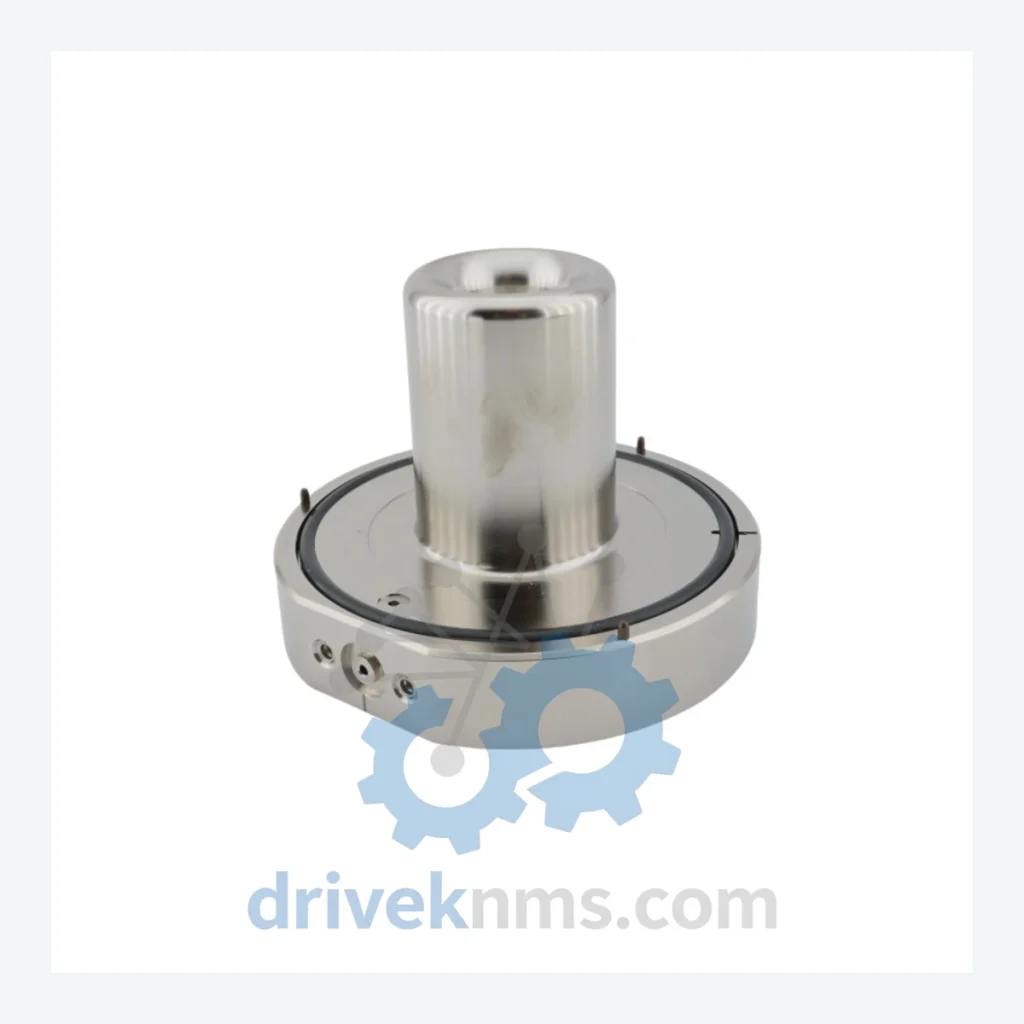
Applied Materials 0040-92503 RF Electrode – Obsolete FEOL Small RF 300mm Spare Part
When a critical RF electrode fails inside a 300mm FEOL etch or CVD chamber, the clock starts immediately. A single unplanned tool-down event on a 300mm fab line can cost $50,000–$200,000 USD per day in lost wafer output. If the failed component is discontinued and no replacement is on hand, the pressure escalates further: procurement teams face the choice between an extended search across grey-market channels, an unqualified substitute that risks process drift, or a full chamber retrofit that can run into the millions. The Applied Materials 0040-92503 (also cross-referenced as 0020-31732 and CDN496RC) RF Electrode for FEOL Small RF 300mm applications is precisely that category of part — a discontinued, chamber-critical consumable that cannot be substituted without process re-qualification. DriveKNMS maintains verified physical stock of this component, sourced through controlled industrial channels, for facilities that cannot afford to wait.
Technical Specifications
| Field | Detail |
| Primary Part Number | 0040-92503 |
| Cross-Reference / Alternate P/N | 0020-31732 | CDN496RC |
| OEM | Applied Materials (AMAT) |
| RF Generator / Matching Component | MKS Instruments AS01496-0-3 | 0190-34283 |
| Application | FEOL (Front-End-of-Line) Small RF, 300mm wafer process |
| Component Category | RF Electrode / Chamber Electrode Assembly |
| Wafer Size Compatibility | 300mm |
| Discontinuation Status | Obsolete – No longer manufactured by OEM |
| Country of Origin | United States |
Note: Electrical parameters (frequency rating, power handling, impedance) are not published here to prevent misapplication. Contact our technical team for chamber-specific verification before ordering.
Solving the Discontinued Hardware Crisis
The Applied Materials 0040-92503 electrode is designed for FEOL etch and deposition chambers operating in 300mm production environments. These chambers are embedded in process flows that took years and tens of millions of dollars to qualify. The RF electrode directly governs plasma uniformity, etch rate consistency, and critical dimension (CD) control across the wafer surface. There is no generic substitute.
Applied Materials discontinued this part number as the installed base of the associated chamber platforms aged past their original design lifecycle. Facilities running these tools today — often as secondary or legacy capacity lines — face a structural supply problem: the OEM no longer stocks the part, authorized distributors have exhausted inventory, and the engineering documentation required to qualify an alternative is either proprietary or no longer supported.
The MKS Instruments components cross-referenced in this listing (AS01496-0-3 and 0190-34283) are the RF matching network elements that operate in conjunction with this electrode. Their co-discontinuation compounds the maintenance challenge: both the electrode and its associated RF circuit components must be sourced from the secondary market simultaneously to restore full chamber function.
Facilities that have successfully extended the operational life of these chamber platforms by 5–10 years beyond OEM support end-of-life have done so through three consistent practices. First, they maintain a minimum buffer stock of two to three electrode assemblies per active chamber, treating the electrode as a scheduled consumable rather than a reactive spare. Second, they establish a documented incoming inspection protocol for secondary-market parts that includes dimensional verification, surface condition assessment, and RF impedance spot-checking before installation. Third, they negotiate long-term supply agreements with specialized obsolete-parts distributors — locking in price and availability before the remaining global inventory is absorbed. The cost of this strategy, even at current secondary-market pricing, is a fraction of the capital expenditure required to retrofit or replace a qualified 300mm etch chamber. For plant managers facing pressure to retire aging tools, the arithmetic is straightforward: a $5,000–$15,000 investment in verified spare electrode inventory can defer a $3–8 million chamber replacement decision by several years.
Condition & Reliability Assurance
Sourcing discontinued chamber components from the secondary market carries real risk. DriveKNMS applies a structured 5-step qualification process to every RF electrode unit before it is offered for sale.
Step 1 – Electrolytic Capacitor Aging Assessment: RF electrode assemblies that have been in storage for extended periods are inspected for electrolytic capacitor degradation. Capacitors showing ESR drift or physical deformation are flagged and the unit is downgraded or rejected.
Step 2 – Firmware and Revision Verification: Where applicable, embedded firmware versions and hardware revision markings are cross-checked against known-compatible revision levels for the target chamber platform. Mismatched revisions are disclosed prior to sale.
Step 3 – Pin and Contact Corrosion Inspection: All electrical contact surfaces, connector pins, and ground paths are inspected under magnification for oxidation, pitting, or mechanical deformation. Units with contact degradation are not offered as drop-in replacements without disclosure.
Step 4 – Physical Integrity Check: Electrode surface condition, ceramic or dielectric components, and mechanical mounting features are inspected for cracks, chips, or wear patterns inconsistent with serviceable condition.
Step 5 – Documentation and Traceability: Each unit is assigned an internal inspection record. Country of origin, estimated manufacture period (where determinable), and condition grade are documented and provided to the buyer upon request.
Key Features for System Maintenance
The 0040-92503 is a direct drop-in replacement for the original chamber configuration. No chamber re-qualification, no process recipe modification, and no RF matching network re-tuning is required when replacing a like-for-like unit in serviceable condition. This is the defining advantage of sourcing the correct OEM part number over pursuing an engineered alternative.
Facilities that have attempted to substitute non-OEM electrodes in these chambers have consistently encountered process drift requiring weeks of re-qualification engineering time — at a fully-loaded cost that exceeds the price of sourcing the correct obsolete part by a significant margin. The engineering hours alone, at $150–$300 per hour for process engineers, make the economics of correct-part sourcing unambiguous.
For maintenance planners: this component does not require re-programming of the chamber controller, does not alter the RF generator's load impedance profile when replaced with a matched unit, and does not trigger a mandatory process re-qualification under standard change control procedures at most facilities — provided the replacement unit meets OEM dimensional and material specifications.
FAQ
What warranty applies to obsolete parts?
DriveKNMS provides a 90-day warranty against defects in material and workmanship on all secondary-market components, covering units that fail to perform to OEM specification under normal operating conditions. Warranty claims require return of the failed unit for inspection.
How do I confirm the unit is new or quality-refurbished?
Each unit listing specifies condition grade: New Surplus (unused, original packaging or equivalent), Refurbished (inspected and restored to serviceable condition per our 5-step QA process), or Tested Used (functional, with disclosed wear). Condition documentation is available upon request before purchase.
Should I purchase more than one unit?
For any chamber running in active production, we recommend holding a minimum of two spare electrodes per chamber. Given the declining global availability of this part number, procurement teams should treat this as a time-sensitive decision. Inventory at this specificity does not replenish predictably.
Can you source the MKS components (AS01496-0-3 / 0190-34283) as well?
Yes. Contact our team directly to discuss bundled sourcing of the complete RF circuit assembly, including the MKS matching network components cross-referenced in this listing.
What is the lead time?
In-stock units ship within 2–5 business days after order confirmation and payment. Lead time for units requiring additional inspection or documentation preparation may extend to 7–10 business days.
© 2026 DriveKNMS. All trademarks belong to their respective owners. Specifications are for reference only and subject to change without notice. Verify all parameters against official documentation before installation.