Technical Dossier
Product Details And Specifications
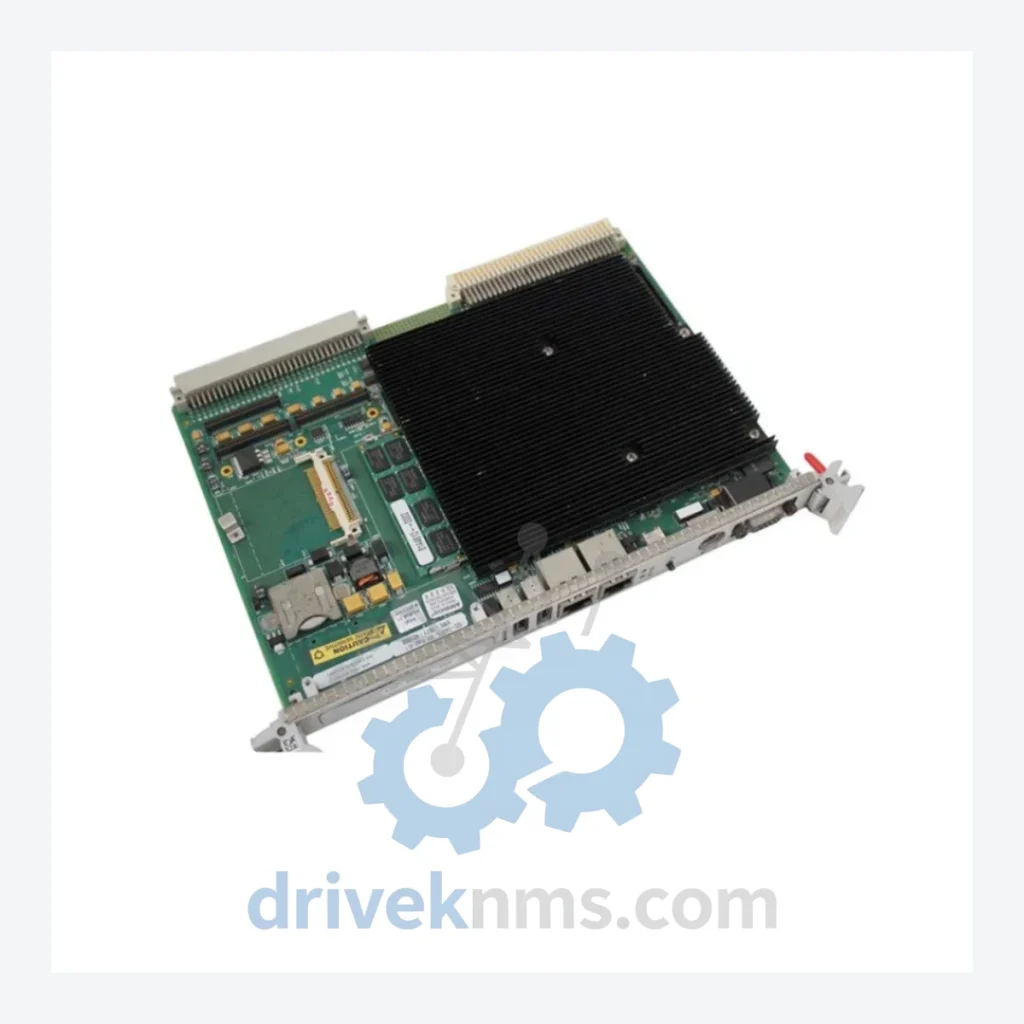
Applied Materials 0100-20051 PCB Turbo Interconnect – Obsolete Semiconductor Spare Part
When a PCB Turbo Interconnect board fails inside an Applied Materials process chamber system, the consequences extend far beyond a single module replacement. For fabs running legacy CVD, PVD, or Etch platforms built around Applied Materials architecture, this board sits at the heart of turbo pump communication and chamber coordination. A confirmed failure without a qualified replacement on hand triggers an unplanned tool down event. In today's semiconductor supply environment, sourcing a discontinued board through OEM channels is no longer a realistic option — lead times, if parts are available at all, routinely stretch beyond 6 to 12 months. The cost of a single tool down day in a 200mm or 300mm fab environment can reach tens of thousands of dollars. A full platform upgrade forced by a single unavailable spare part can run into the millions. DriveKNMS maintains verified physical stock of the 0100-20051 / E15003820 / EVS9323-ES board. This is not a catalog listing — inventory is finite and allocated on a first-confirmed basis.
Technical Specifications
| Field | Detail |
| Manufacturer | Applied Materials (AMAT) |
| Part Number | 0100-20051 |
| Reference Numbers | E15003820 / 13278160 / EVS9323-ES |
| Description | PCB Turbo Interconnect Board |
| Product Type | Printed Circuit Board – Interconnect / Interface |
| Country of Origin | United States |
| OEM Discontinuation Status | Discontinued / No Longer Available from OEM |
| Compatible Platform | Applied Materials Centura, Endura, and related legacy process tool platforms (verify against your tool BOM) |
| Application | Turbo pump interconnect and chamber-level communication interface |
Note: Electrical parameters specific to this board are not published in open documentation. DriveKNMS does not fabricate specifications. All technical verification is performed against the physical unit and original equipment BOM references.
Solving the Discontinued Hardware Crisis
Applied Materials process tools built on the Centura and Endura platforms represent capital investments that routinely exceed $5–15 million per tool. These systems were engineered for multi-decade operational lifespans, and many fabs continue to run them well past the OEM's intended support window because the process recipes, chamber qualifications, and yield data accumulated on these tools carry irreplaceable value. Rebuilding that process knowledge on a new platform is not a 3-month project.
The PCB Turbo Interconnect board (0100-20051) manages the communication layer between the system controller and the turbo molecular pump assembly. Turbo pump control is not a peripheral function — it governs chamber base pressure, pump-down sequencing, and interlock logic. A board failure in this position does not produce a degraded process. It produces a hard tool stop.
Applied Materials ceased active production and OEM support for this part number. Authorized service channels no longer carry replacement stock. The practical consequence for a fab maintenance team is that when this board fails, the replacement path runs through the secondary market — and secondary market availability for this specific reference is limited. Fabs that have not pre-positioned a spare unit face the full exposure of an extended tool down event with no guaranteed recovery timeline.
DriveKNMS operates specifically within this supply gap. We source, inspect, and hold physical inventory of discontinued AMAT boards for customers who cannot afford to discover the shortage at the moment of failure.
Extending Automation Asset Life by 5–10 Years: A Maintenance Strategy for Fab Management
The decision to retire a legacy process tool is rarely driven by the tool's inability to produce. It is driven by the inability to maintain it. When critical spare parts become unavailable, the maintenance team loses the ability to recover from failures, and the tool's effective operational life ends — not because the hardware is worn out, but because the supply chain has abandoned it.
For fab managers and equipment engineers responsible for legacy Applied Materials platforms, the following approach has proven effective in extending tool operational life by 5 to 10 years beyond the OEM support window:
1. Failure Mode Mapping: Identify the 8–12 board-level components in your tool that have no modern equivalent and no OEM stock. The 0100-20051 is one such component. Build a priority list based on failure history and criticality to tool uptime.
2. Strategic Spare Positioning: For each identified critical board, secure a minimum of one verified spare unit before the next planned maintenance window. The cost of a single spare board is a fraction of one tool down day. The cost of not having it is measured in production loss and potential customer commitments missed.
3. Condition-Based Monitoring: Implement regular functional checks on interconnect and communication boards. Electrolytic capacitor degradation and connector corrosion are the primary failure modes on boards of this age. Early detection allows planned replacement rather than emergency sourcing.
4. Firmware and Configuration Documentation: Before any board swap, document the existing firmware version and any configuration states stored on the board. For interconnect boards, this is particularly important where the board holds address or parameter data specific to your tool configuration.
5. Vendor Qualification: Not all secondary market sources apply consistent inspection standards to discontinued boards. Qualify your suppliers before a crisis, not during one. Understand their inspection process, their return policy, and their ability to provide documentation of the unit's condition history.
This approach does not require capital expenditure. It requires planning. The fabs that successfully operate legacy Applied Materials tools into the 2030s are the ones that treat spare part positioning as a maintenance discipline, not an afterthought.
Condition & Reliability Assurance
DriveKNMS applies a 5-step inspection protocol to all discontinued PCB units before they are offered for sale. This process is designed specifically for the failure modes common to boards that have been in storage or field service for extended periods.
Step 1 – Visual and Physical Inspection: Full board examination for mechanical damage, burn marks, delamination, and connector pin condition. Boards with physical damage that cannot be confirmed as non-functional are rejected.
Step 2 – Electrolytic Capacitor Assessment: Capacitor aging is the leading cause of latent failure in legacy PCBs. Each electrolytic capacitor on the board is checked for bulging, leakage, and ESR deviation. Boards with suspect capacitors are flagged for component-level evaluation before release.
Step 3 – Connector and Pin Corrosion Check: All edge connectors, header pins, and interface contacts are inspected under magnification. Oxidation and corrosion at contact points are the most common cause of intermittent faults in boards that have been in storage. Affected contacts are cleaned and re-evaluated, or the board is rejected.
Step 4 – Firmware Version Verification: Where firmware version is identifiable from the board's ROM or label markings, this is documented and provided to the customer. Customers are advised to verify compatibility with their specific tool revision before installation.
Step 5 – Functional Cross-Reference: The board's part number, reference numbers, and physical configuration are cross-referenced against known BOM documentation to confirm the unit matches the listed specification before shipment.
Key Features for System Maintenance
The 0100-20051 PCB Turbo Interconnect is a direct hardware replacement for the original board installed in compatible Applied Materials tool configurations. Key operational characteristics relevant to maintenance planning:
Drop-in Replacement: The board is designed to install into the existing board slot without mechanical modification. No chassis rework is required.
No Reprogramming Required: In standard replacement scenarios, the board does not require software reconfiguration at the system controller level. The tool's existing process recipes and chamber parameters remain intact.
No Engineering Rework: Replacing this board does not trigger a requalification requirement for the process chamber in most operational contexts. Confirm with your process engineering team based on your specific tool configuration and customer qualification requirements.
Immediate Deployment: Units shipped from DriveKNMS inventory are inspection-complete and ready for installation. There is no additional lead time for preparation after order confirmation.
FAQ
Q: What warranty applies to a discontinued board like the 0100-20051?
A: DriveKNMS provides a 90-day warranty covering functional defects identified under normal operating conditions. Given the discontinued status of this part, we recommend customers treat the purchased unit as a working spare and, where budget allows, secure a second unit as a backup.
Q: How do I know the unit is genuine and not a counterfeit?
A: All units are sourced through verified secondary market channels with documented provenance where available. Physical inspection includes part marking verification against known Applied Materials labeling standards. We do not sell boards where authenticity cannot be confirmed to our inspection standard.
Q: Is the unit new or refurbished?
A: Units are offered as new old stock (NOS) or professionally inspected used condition, clearly identified at the time of quotation. Condition is disclosed before purchase confirmation.
Q: Should I buy more than one unit?
A: For any tool where this board is a single point of failure and no OEM replacement path exists, holding at least one verified spare on-site is a standard risk management practice. Given the scarcity of this part number in the secondary market, customers running multiple tools on the same platform are advised to evaluate their total exposure before current stock is depleted.
Q: How quickly can you ship?
A: In-stock units are prepared for shipment within 1–2 business days of order confirmation. International shipping timelines depend on destination and selected freight method.
For stock confirmation, technical questions, or purchase inquiries:
© 2026 DriveKNMS. All trademarks belong to their respective owners. Specifications are for reference only and subject to change without notice. Verify all parameters against official documentation before installation.