Applied Materials TXZ 0100-01629 GF125C-102895 MFC PCB Assembly – Obsolete GF125C Series Spare Part
Applied Materials TXZ 0100-01629 GF125C-102895 MFC PCB Assembly – Obsolete GF125C Series Spare Part When a Mass Flow Controller PCB…
Model: 0240-20551 101102635 0050-09821
Product Overview
Commercial availability is handled through direct RFQ, model verification and export-oriented follow-up rather than public cart checkout.
Datasheet Preview
Use attached product manuals when available. If the manual is not public yet, request the full file directly through RFQ.
Commercial Path
Product pages on DRIVEKNMS are designed to verify model, brand and series first, then move the buyer into one clean quotation path.
Technical Dossier
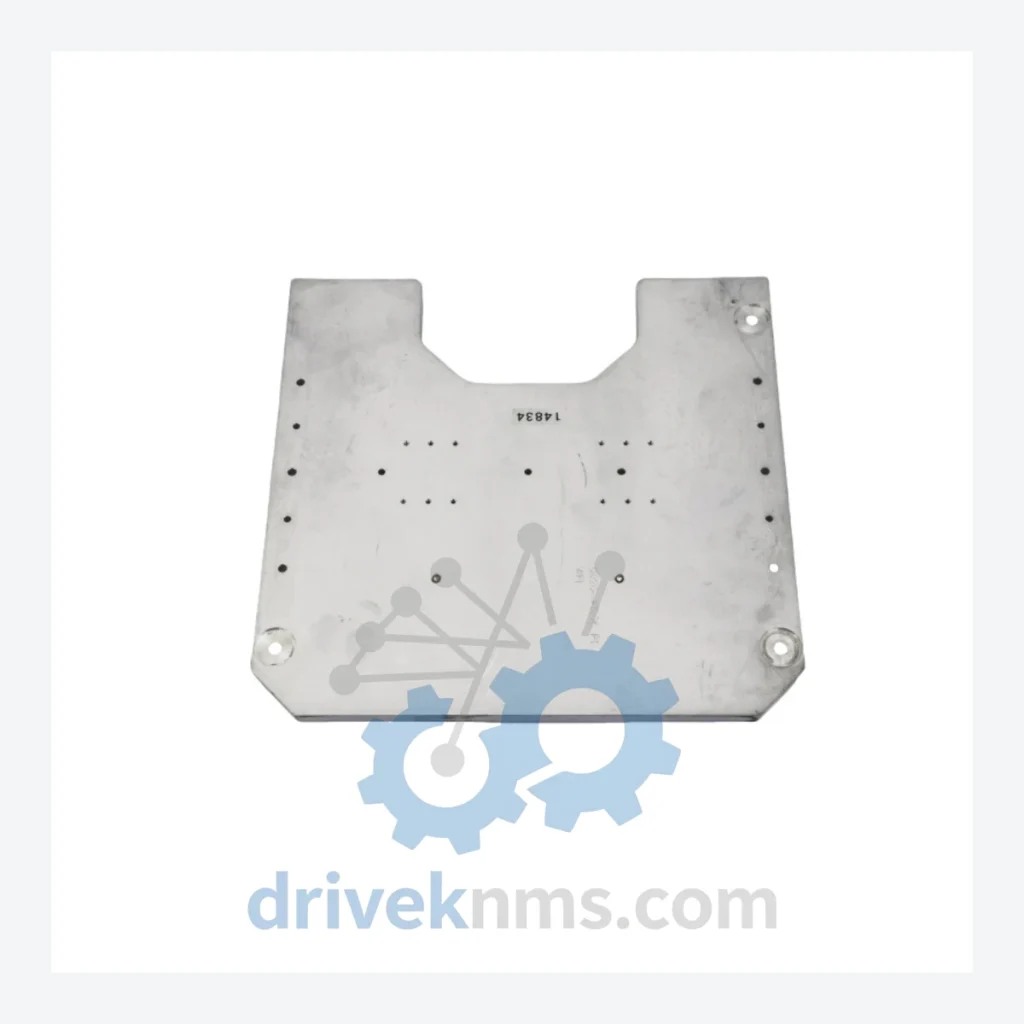
When a Shield Clamp fails inside an Applied Materials process chamber, the consequences extend far beyond a single component replacement. For fabs still operating legacy AMAT platforms — including the Centura, Producer, and Endura series — sourcing a discontinued mechanical interface part like the 0240-20551 / 101102635 / 0050-09821 Shield Clamp can mean the difference between a 48-hour recovery and a multi-week production halt. A forced platform migration triggered by a single unavailable spare part routinely costs $2M–$8M in engineering, requalification, and lost wafer output. DriveKNMS maintains verified stock of this part specifically to prevent that outcome.
| Field | Detail |
|---|---|
| Part Number | 0240-20551 |
| Cross Reference | 101102635 / 0050-09821 |
| Description | Shield Clamp |
| OEM | Applied Materials (AMAT) |
| Compatible Platforms | AMAT Centura, Endura, Producer series process chambers (CVD / PVD / Etch) |
| Part Category | Chamber Mechanical Hardware – Shield Retention |
| Country of Origin | United States |
| Lifecycle Status | Discontinued / Obsolete – No longer available through OEM channels |
| Condition Available | New Old Stock (NOS) / Certified Refurbished |
Applied Materials' legacy chamber platforms remain the backbone of mature-node fabs worldwide. The Shield Clamp (P/N 0240-20551) is a precision mechanical component that secures the process shield assembly within the chamber body. Its function is not cosmetic — improper shield retention directly affects deposition uniformity, particle contamination rates, and chamber-to-chamber matching. When this part is unavailable through standard OEM channels, facilities face three options: cannibalize a running tool, accept extended downtime, or commit to a platform upgrade that was not budgeted.
For fabs running 200mm legacy lines or mature-node 300mm processes where platform migration carries a requalification cost measured in months, none of those options are acceptable. The 0240-20551 Shield Clamp is not a commodity fastener — it is a geometry-critical interface component. Substitution with non-OEM equivalents without dimensional verification introduces process risk. DriveKNMS sources this part through verified secondary market channels and applies a structured inspection protocol before shipment.
How to Extend Expensive Automation Assets 5–10 Years Through Strategic Spare Parts Management
Semiconductor equipment carries a capital cost that rarely justifies early retirement when the underlying process node remains profitable. The practical path to extending AMAT platform service life by 5–10 years rests on three disciplines:
1. Criticality-based inventory stratification. Not all spare parts carry equal downtime risk. Mechanical interface components like shield clamps, lift pin assemblies, and susceptor retaining rings are high-criticality, low-cost items that should be held on-site in quantities sufficient for 12–24 months of consumption. Their OEM discontinuation timeline is rarely announced in advance.
2. Proactive lifecycle monitoring. AMAT publishes end-of-service notifications through its customer portal, but these notifications often lag actual parts availability by 12–18 months. Facilities that rely solely on OEM notification are consistently late. Independent supply chain partners with secondary market access provide earlier visibility into parts scarcity.
3. Condition-based replacement scheduling. Shield components in CVD and PVD chambers degrade on a predictable cycle tied to RF hours and clean cycles. Establishing a replacement schedule based on chamber utilization data — rather than waiting for failure — eliminates unplanned downtime and allows parts procurement to be planned rather than reactive.
The cost of holding $3,000–$15,000 in critical spare inventory is trivial against the $50,000–$200,000 daily cost of an unplanned chamber down event on a production line.
Every obsolete mechanical part shipped by DriveKNMS passes a 5-step inspection protocol before release:
Step 1 – Visual and dimensional inspection. All mating surfaces, bore geometries, and thread profiles are checked against OEM drawing tolerances. Parts with corrosion, deformation, or surface damage beyond serviceable limits are rejected.
Step 2 – Material verification. Shield clamps and chamber hardware are typically manufactured from anodized aluminum or stainless steel alloys. Material composition is verified where traceability documentation is available.
Step 3 – Corrosion and contamination assessment. Pin interfaces, fastener seats, and contact surfaces are inspected for oxidation, process chemical residue, and particulate contamination. Parts are cleaned to semiconductor-grade standards where applicable.
Step 4 – Functional fit verification. Where reference hardware is available, parts are test-fitted to confirm dimensional compatibility with the target assembly.
Step 5 – Packaging and ESD protection. Parts are packaged in cleanroom-compatible materials with appropriate ESD protection and labeled with full traceability information including inspection date and condition grade.
The 0240-20551 Shield Clamp is a direct mechanical replacement for the original AMAT-supplied component. Installation requires no firmware changes, no process recipe modification, and no chamber requalification beyond standard post-maintenance verification runs. This is a drop-in replacement in the strictest sense — same geometry, same material specification, same interface points.
Facilities that have already invested in AMAT chamber qualification data, process recipes, and trained maintenance personnel have a strong economic argument for keeping legacy platforms operational. Replacing a $300 shield clamp to avoid a $4M platform migration is not a compromise — it is sound asset management. The engineering cost of requalifying a replacement platform on a production process node routinely exceeds the total cost of 10 years of spare parts procurement for the legacy system.
Q: What warranty applies to obsolete parts?
A: DriveKNMS provides a 90-day warranty against defects in material and workmanship on all inspected parts. New Old Stock (NOS) parts carry a 180-day warranty. Warranty terms are confirmed in writing at the time of order.
Q: How do I confirm the part is new or certified refurbished?
A: Each shipment includes a condition report specifying the part grade (NOS, Certified Refurbished, or Used-Tested), the inspection steps completed, and the inspector's identification. Photographic documentation is available on request.
Q: Can I order multiple units for long-term stock?
A: Yes. For critical obsolete parts, DriveKNMS recommends procuring a minimum of 3–5 units to cover a 24–36 month maintenance window. Volume pricing is available. Contact our team to discuss a long-term supply agreement.
Q: What if the part does not fit my specific chamber configuration?
A: Provide your chamber model and serial number at the time of inquiry. Our technical team will cross-reference the part number against known configuration variants before shipment.