Technical Dossier
Product Details And Specifications
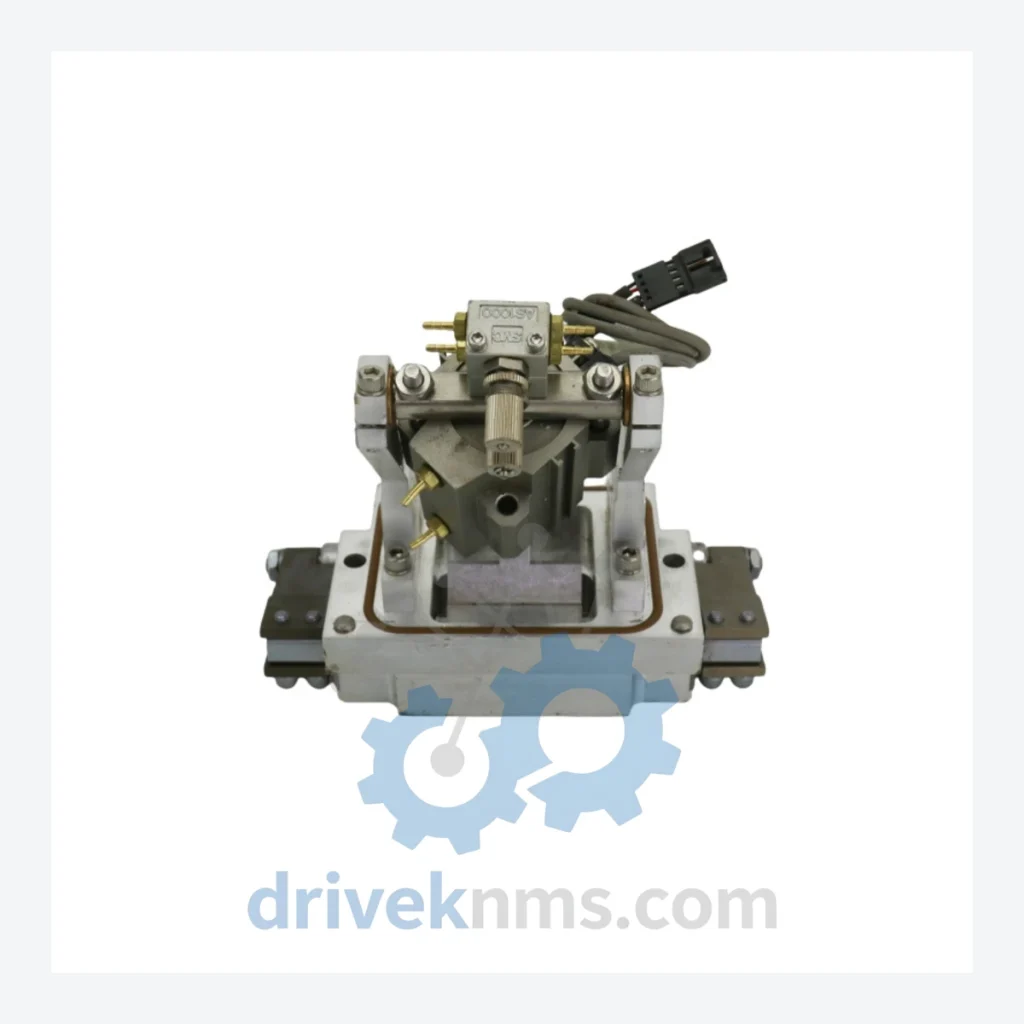
Applied Materials 0090-09006 Slit Valve Assembly – Hard-to-Find Centura & Producer Spare Part
When a slit valve assembly fails on an Applied Materials Centura or Producer etch chamber, the clock starts immediately. Chamber isolation is lost. Wafer transfer halts. The process module goes offline. In a 200mm or mature-node 300mm fab running continuous production, a single unplanned chamber downtime event translates directly into lost wafer starts, broken maintenance schedules, and — if the part cannot be sourced quickly — a forced conversation about platform retirement that operations management is not prepared to have.
Replacing a Centura etch chamber, or migrating a process to a newer platform, carries engineering qualification, process revalidation, and capital expenditure costs that routinely exceed seven figures. The slit valve assembly, part number 0090-09006 (alternate: 0010-70191), is the vacuum isolation gate between the process chamber and the transfer module. It is a high-cycle wear component. It is not interchangeable across platforms. And as OEM direct supply for legacy chamber assemblies tightens, lead times from unverified secondary market sources have become an operational liability.
DriveKNMS maintains verified stock of this assembly for facilities that cannot absorb a 12–16 week sourcing delay.
Technical Specifications
| Parameter | Detail |
| Brand | Applied Materials (AMAT) |
| Primary Part Number | 0090-09006 |
| Alternate Part Numbers | 0010-70191, BG4-4276, BH8-1395-02, BG4-3835, 8000317507 |
| Assembly Reference | D-A80, CPU20-III |
| Component Type | Etch Slit Valve Assembly |
| Pressure Rating | 0.3–8 BAR (as marked on assembly) |
| Compatible Platforms | Applied Materials Centura, Producer (verify chamber BOM before ordering) |
| Country of Origin | United States |
| OEM Supply Status | Constrained – Limited availability through standard distribution channels |
| Condition | New / Refurbished-to-Spec (confirmed at time of inquiry) |
Electrical and pneumatic parameters beyond the pressure rating marked on the assembly are not independently confirmed. Cross-reference against your chamber bill of materials before installation.
Solving the Constrained Supply Crisis for Legacy Etch Platforms
Applied Materials Centura and Producer etch platforms have been in continuous production use for over two decades. Globally, a significant installed base continues to run in mature-node semiconductor, MEMS, power device, and compound semiconductor applications — processes where the economics of platform migration do not justify the capital and engineering disruption.
The slit valve assembly is among the highest-consequence wear components in these chambers. It cycles with every wafer transfer. Seal degradation, actuator fatigue, and valve body wear are predictable failure modes in systems with high utilization histories. The structural problem is not that the part wears — it is that when it fails, the sourcing path has become progressively more difficult. OEM direct supply for legacy chamber assemblies is constrained. Authorized distributors have reduced safety stock. Secondary market sources without documented QA processes introduce risk that a production facility cannot accept.
Facilities that have successfully extended the productive life of their Centura etch systems by 5 to 10 years beyond original platform support windows share a consistent operational approach: they identified the six to ten highest-consequence spare parts for each chamber type, secured multi-unit buffer stock from verified suppliers, and established a replenishment relationship before the next failure event — not after. The slit valve assembly appears on that list for every Centura etch configuration. A single verified spare on the shelf eliminates the downtime risk entirely. Measured against one day of unplanned chamber downtime in a production fab, the cost of that spare is not a procurement line item. It is an asset protection decision.
For facilities managing extended system life programs, the calculation is straightforward: the annual cost of maintaining a structured spare parts buffer for a Centura etch chamber is a fraction of one unplanned downtime event. The engineering and requalification cost of platform migration is an order of magnitude larger. Sourcing verified critical spares from a supplier with documented QA processes is the lowest-cost path to protecting a capital asset that still has productive years remaining.
Condition & Reliability Assurance
DriveKNMS applies a structured 5-step inspection protocol to all slit valve assemblies before shipment:
- Step 1 – Visual and Mechanical Inspection: Full external inspection of valve body, actuator housing, and mounting interfaces. Evidence of corrosion, impact damage, or seal extrusion results in rejection.
- Step 2 – Electrolytic Capacitor Assessment: Where applicable to integrated control or sensor sub-assemblies, capacitor condition is evaluated for age-related degradation. Bulging, leakage, or elevated ESR results in component replacement before shipment.
- Step 3 – Firmware and Version Verification: For assemblies with embedded control logic, firmware version is confirmed against the customer's chamber configuration requirements before dispatch.
- Step 4 – Pin and Connector Integrity Check: All electrical connectors and pneumatic fittings are inspected for corrosion, pin recession, and seal condition. Corroded contacts are cleaned or the connector assembly is replaced.
- Step 5 – Functional Verification: Where test infrastructure permits, actuator travel and seal engagement are verified under controlled conditions before packaging.
Units that do not pass all five steps are not shipped. Inspection documentation is available upon request.
Key Features for System Maintenance
- Drop-in Replacement: Sourced to match the original AMAT part number specification. Installation follows the existing chamber maintenance procedure — no mechanical modification required.
- No Reprogramming Required: Compatible units are supplied to match the existing chamber configuration. No process recipe requalification or operator retraining is required.
- Avoids Engineering Rework Costs: A verified OEM-spec replacement eliminates the engineering hours, process requalification time, and production hold associated with chamber reconfiguration or platform migration.
- Long-Term Sparing Strategy Support: DriveKNMS can advise on multi-unit procurement for facilities building a structured spare parts buffer for extended system life programs.
FAQ
Q: What warranty applies to this assembly?
A: DriveKNMS provides a 90-day warranty against defects in materials and workmanship under normal operating conditions. Extended warranty terms are available for volume orders.
Q: How do I confirm the condition of the unit I receive?
A: Condition is specified at the time of quotation. New-in-box units are supplied with original or equivalent packaging. Refurbished-to-spec units are supplied with DriveKNMS inspection documentation. No unit ships without passing the 5-step QA protocol.
Q: Can I order multiple units for long-term buffer stock?
A: Yes. For facilities running extended system life programs, a minimum of two units per active chamber is recommended. Volume pricing is available — contact us with your chamber count and target stock level.
Q: How quickly can you ship?
A: In-stock units ship within 3–5 business days of order confirmation. Express logistics options are available for critical downtime situations.
Q: Do you ship internationally?
A: DriveKNMS ships globally. Export documentation and compliance support is provided as standard. Contact us with your destination country for confirmation.
© 2026 DriveKNMS. All trademarks belong to their respective owners. Specifications are for reference only and subject to change without notice. Verify all parameters against official documentation before installation.