
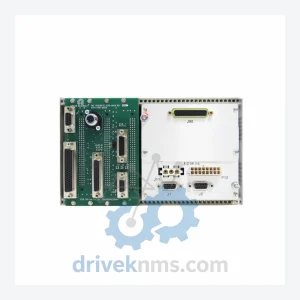
Applied Materials TXZ 0100-01629 GF125C-102895 MFC PCB Assembly – Obsolete GF125C Series Spare Part
Applied Materials TXZ 0100-01629 GF125C-102895 MFC PCB Assembly – Obsolete GF125C Series Spare Part When a Mass Flow Controller PCB…
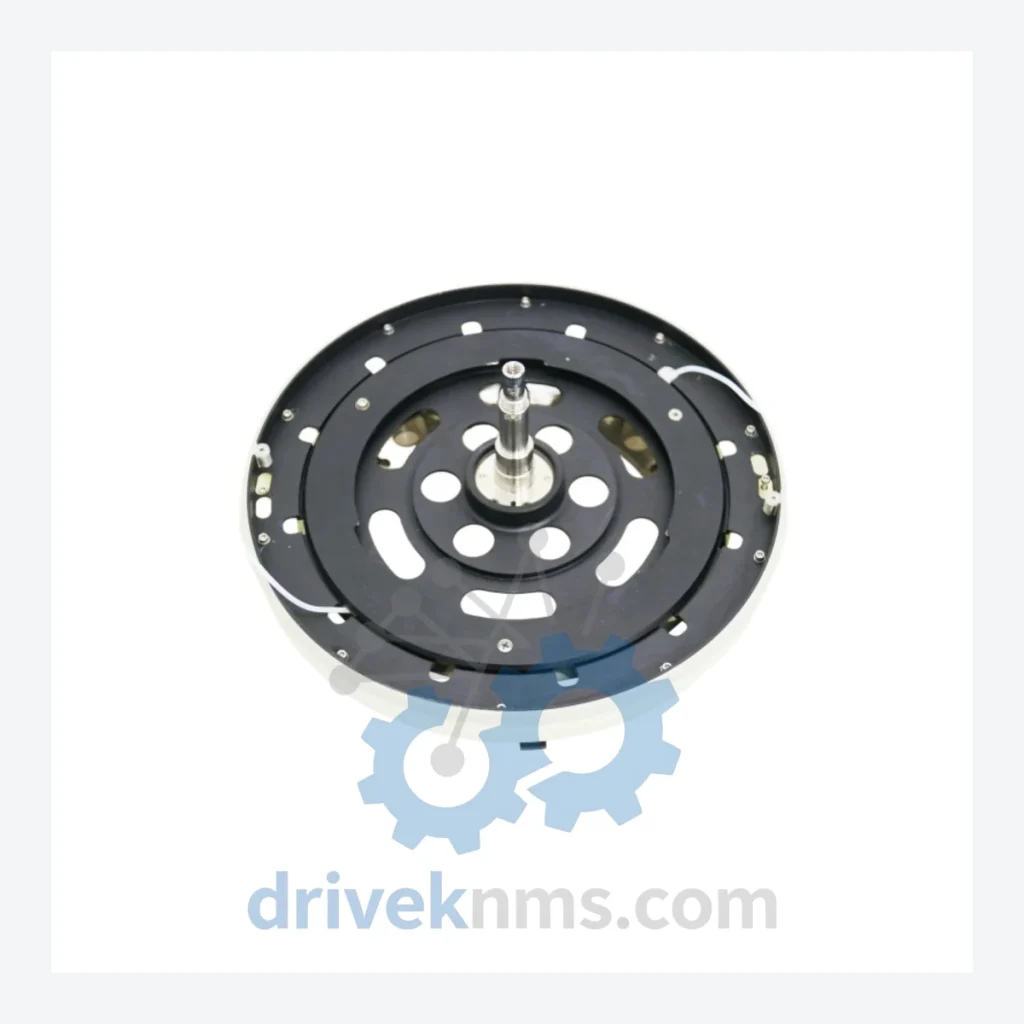
Model: OD: 34CM, ID: 29.5CM 23835-503 932T0016-503-1198 6LVV-P1V222P-BA
Product Overview
Commercial availability is handled through direct RFQ, model verification and export-oriented follow-up rather than public cart checkout.
Datasheet Preview
Use attached product manuals when available. If the manual is not public yet, request the full file directly through RFQ.
Commercial Path
Product pages on DRIVEKNMS are designed to verify model, brand and series first, then move the buyer into one clean quotation path.
Technical Dossier
When a CMP carrier head fails on a legacy Applied Materials Mirra or Reflexion polisher, the consequences extend far beyond a single tool going down. A full fab line upgrade — replacing the polisher platform, requalifying the process, retraining operators, and re-certifying wafer output — routinely costs semiconductor manufacturers between $2M and $8M USD, not counting lost production yield during the transition window. For fabs still running 200mm or early 300mm nodes on cost-depreciated equipment, that calculus rarely favors replacement. The 23835-503 carrier head assembly (cross-referenced as 932T0016-503-1198 / 6LVV-P1V222P-BA) is no longer manufactured by Applied Materials. DriveKNMS maintains verified physical stock of this assembly, sourced through controlled decommissioning channels and subject to multi-point inspection before shipment.
| Parameter | Value |
|---|---|
| Primary Part Number | 23835-503 |
| Cross Reference | 932T0016-503-1198 / 6LVV-P1V222P-BA |
| Carrier Head OD | 34 cm |
| Carrier Head ID (inner bore) | 29.5 cm |
| Assembly Type | CMP Carrier Head (Chemical Mechanical Planarization) |
| OEM | Applied Materials (AMAT) |
| Compatible Platform | Applied Materials Mirra / Reflexion CMP Polisher |
| Wafer Size Compatibility | Verify against your specific tool configuration prior to ordering |
| Manufacture Status | Discontinued / Obsolete – No longer in OEM production |
| Country of Origin | United States |
The Applied Materials Mirra and Reflexion CMP platforms were workhorses of 200mm and early 300mm semiconductor fabs through the late 1990s and 2000s. Many of these tools remain in active production today — running mature nodes, compound semiconductors, MEMS, or power devices — where the economics of continued operation far outweigh the cost of platform migration.
The carrier head is the most mechanically stressed consumable-adjacent assembly in a CMP tool. It governs wafer-to-pad contact pressure, retaining ring engagement, and membrane uniformity. When the 23835-503 assembly degrades — through membrane fatigue, retaining ring wear, or internal pressure channel failure — there is no generic substitute. The geometry (OD 34 cm / ID 29.5 cm) and the internal pneumatic architecture are specific to the AMAT platform. Installing an incompatible assembly does not just risk process drift; it risks wafer breakage, pad damage, and platen contamination events that can take a tool offline for weeks.
Applied Materials ceased production of this part number. Authorized service channels have exhausted their buffer stock. The only remaining supply exists in the secondary market — and within that market, condition and traceability vary enormously. DriveKNMS specializes in locating, inspecting, and supplying exactly this category of part to fabs that cannot afford to gamble on unverified inventory.
For plant managers and equipment engineers facing pressure to retire legacy CMP tools, the following framework has been used successfully by fabs across Asia, Europe, and North America to defer capital expenditure while maintaining process integrity:
1. Critical Spare Identification: Map every part on your Mirra/Reflexion tool that is either discontinued or has lead times exceeding 16 weeks. The carrier head assembly (23835-503), the retaining ring, and the membrane kit are the top three failure-driven downtime causes. Holding one qualified spare of each eliminates the most common unplanned outage scenarios.
2. Condition-Based Replacement Scheduling: Rather than running carrier heads to failure, establish a wafer-count-based replacement interval based on your process chemistry and pad type. Proactive replacement on a known schedule allows you to source parts during planned maintenance windows — not during a production crisis when lead time pressure forces acceptance of unverified parts.
3. Refurbishment Loop: A removed carrier head that has not suffered catastrophic failure can often be refurbished — membrane replacement, retaining ring swap, pneumatic channel cleaning — and returned to service as a qualified spare. This extends the effective life of each unit and reduces total cost of ownership.
4. Vendor-Managed Inventory Agreements: For fabs running multiple Mirra/Reflexion tools, negotiate a consignment or reserved-stock arrangement with a specialist supplier. This guarantees access to critical parts without tying up capital in on-site inventory.
5. Documentation and Traceability: Maintain a part history log for every carrier head in service — installation date, wafer count, process chemistry exposure, and any maintenance events. This data supports both internal reliability analysis and regulatory/customer audit requirements.
A single unplanned CMP tool outage lasting two weeks can cost a fab $500K–$2M in lost wafer starts, depending on product mix and utilization rate. The cost of maintaining a qualified spare 23835-503 assembly is a fraction of that exposure.
Every 23835-503 carrier head assembly shipped by DriveKNMS passes a 5-stage inspection protocol before release:
Stage 1 – Visual and Dimensional Inspection: External surfaces, OD/ID measurements, and retaining ring seat geometry are verified against reference dimensions. Units with visible cracks, deformation, or corrosion on structural surfaces are rejected at this stage.
Stage 2 – Pneumatic Channel Integrity Test: Internal pressure channels are tested for leakage and cross-contamination between zones. This directly affects membrane pressure uniformity and wafer-level planarity control.
Stage 3 – Membrane and Elastomer Assessment: Membrane material is inspected for micro-cracking, hardening, or delamination — common failure modes in assemblies that have been stored for extended periods. Aged elastomers are flagged and disclosed.
Stage 4 – Pin and Interface Surface Check: Mounting interface surfaces and alignment features are inspected for corrosion, galling, or dimensional deviation that would affect installation fit or rotational balance.
Stage 5 – Documentation Review: Where available, traceability documentation (removal records, prior service history) is reviewed and provided to the buyer. Units without traceable history are clearly identified as such.
Condition grade and any findings from the above stages are disclosed in writing prior to order confirmation. There are no surprises after shipment.
Drop-in Replacement: The 23835-503 is a direct mechanical replacement for the original AMAT-supplied assembly. No modifications to the polisher head spindle, no changes to the tool's process recipe parameters, and no re-qualification of the pneumatic control system are required. Installation follows standard AMAT field service procedures.
No Firmware or Software Changes: The carrier head assembly contains no embedded electronics or programmable components. Replacement does not trigger any software re-qualification requirement under most fab change control procedures.
Avoids Engineering Rework Costs: Substituting a non-OEM or dimensionally incompatible carrier head would require process re-characterization, new DOE runs, and potentially a full re-qualification of the CMP step — a process that can take 4–12 weeks and consume significant engineering resources. A verified OEM-equivalent replacement eliminates this cost entirely.
Supports Multi-Tool Standardization: Fabs running multiple Mirra or Reflexion tools benefit from maintaining a single spare part number across the fleet, simplifying inventory management and reducing the risk of installation errors.
Q: What warranty applies to obsolete parts?
A: DriveKNMS provides a 90-day warranty against defects identified through our inspection process. Warranty terms are confirmed in writing at the time of order. Given the discontinued status of this part, warranty coverage is based on the condition grade assigned after inspection — not on OEM new-part standards.
Q: How do I know the unit is genuine and not a counterfeit?
A: We source exclusively from decommissioned OEM equipment and authorized secondary market channels. Part markings, casting geometry, and material characteristics are cross-checked against reference units. Where available, removal documentation is provided. We do not source from unverified brokers or grey-market channels without prior inspection.
Q: Should I buy more than one unit?
A: For fabs running two or more Mirra/Reflexion tools, holding a minimum of one qualified spare per tool is the standard risk management position. Given that this part is no longer manufactured and secondary market supply is finite, procurement teams should treat this as a last-time-buy opportunity. Once current stock is exhausted, no further supply can be guaranteed.
Q: What is the lead time?
A: Units in current stock ship within 3–5 business days after order confirmation and payment. Contact us to confirm real-time availability before placing an order.
Q: Can you source other AMAT Mirra/Reflexion spare parts?
A: Yes. DriveKNMS maintains an active sourcing network for legacy Applied Materials CMP platform components. Contact us with your full part number list for availability and pricing.
Related Paths
Applied Materials TXZ 0100-01629 GF125C-102895 MFC PCB Assembly – Obsolete GF125C Series Spare Part When a Mass Flow Controller PCB…
Applied Materials PROD 0100-01363 E249-000002-12 UF7840-2-TE2 16-287677-00 Signal Conditioning Board: Supply Continuity Strategy for Semiconductor Fab Procurement Teams The Applied…
Applied Materials 0040-47632 Housing EEP: Global Sourcing Strategy & Asset Return Value The Applied Materials part number 0040-47632 (cross-references: 0010-10663…