ALSTOM MVAJ105RA0802A Protection Relay – MiCOM Series
ALSTOM MVAJ105RA0802A Protection Relay: Supply Continuity Strategy for a Discontinued Critical Component The ALSTOM MVAJ105RA0802A is a numerical protection relay…
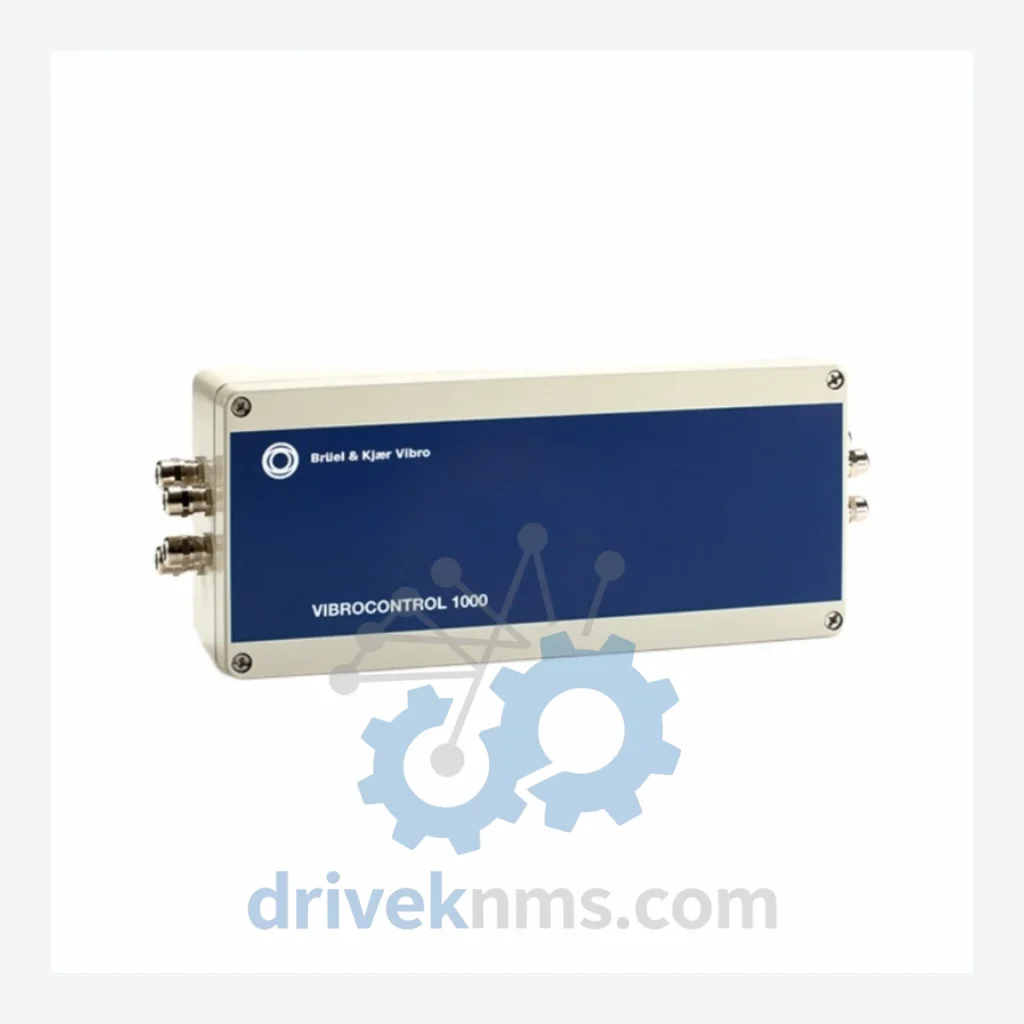
Model: VIBRO VC-1100 C11
Product Overview
Commercial availability is handled through direct RFQ, model verification and export-oriented follow-up rather than public cart checkout.
Datasheet Preview
Use attached product manuals when available. If the manual is not public yet, request the full file directly through RFQ.
Commercial Path
Product pages on DRIVEKNMS are designed to verify model, brand and series first, then move the buyer into one clean quotation path.
Technical Dossier
When a bearing vibration monitoring module fails in a legacy rotating machinery protection system, the consequences extend far beyond a single component replacement. The B&K Vibro VC-1100 C11 is a discontinued module that sits at the heart of vibration-based machine protection architectures deployed across power generation, petrochemical, and heavy manufacturing facilities. Its failure does not merely interrupt a measurement channel — it can trigger a full system requalification process, force a migration to a modern platform, and expose plant operators to capital expenditure demands that routinely exceed seven figures. DriveKNMS maintains verified stock of this discontinued module, providing a direct path to restoring system integrity without the cost and disruption of a forced upgrade.
| Parameter | Detail |
|---|---|
| Manufacturer | B&K Vibro (Brüel & Kjær Vibro) |
| Part Number / SKU | VIBRO VC-1100 C11 |
| Product Series | VC-1100 |
| Function | Bearing Vibration Monitoring |
| Country of Origin | Germany |
| Discontinuation Status | Discontinued / Obsolete – No longer in active production |
| Typical System Compatibility | B&K Vibro VIBROCONTROL and legacy machine protection systems |
Note: Electrical parameters such as input voltage range, output signal type, and frequency response are not published here to avoid inaccuracy. Confirmed specifications are available upon request with supporting documentation.
The VC-1100 series was designed for continuous bearing condition monitoring on critical rotating assets — turbines, compressors, pumps, and gearboxes — where early detection of mechanical degradation is the primary line of defense against catastrophic failure. In facilities where this module has been integrated into a machine protection architecture for 15 or 20 years, it is not a standalone device. It is embedded in a validated safety and monitoring chain that includes wiring infrastructure, sensor calibration records, alarm setpoint configurations, and operator training.
Replacing this module with a modern equivalent is not a plug-and-play exercise. It requires signal compatibility verification, potential rewiring, recalibration of the entire measurement chain, revalidation of alarm thresholds, and in regulated industries, formal documentation of the change for compliance purposes. Engineering firms that specialize in this work charge between $150 and $300 per hour, and a full migration project for a single machine train can consume 200 to 500 engineering hours before the system is returned to a validated operational state.
Against that cost structure, sourcing a verified VC-1100 C11 replacement module is not a procurement decision — it is an asset protection decision. Extending the operational life of an existing validated system by five to ten years defers capital expenditure, preserves institutional knowledge embedded in the current configuration, and eliminates the project risk associated with a forced technology migration.
For plant managers operating under maintenance budget constraints, the arithmetic is straightforward: the cost of a single spare module is a fraction of one week of engineering time on a migration project. Facilities that maintain a strategic inventory of critical discontinued modules consistently achieve lower total cost of ownership on aging automation assets than those that operate without a spares strategy.
Discontinued modules sourced from secondary markets carry inherent risks that do not apply to new production parts. DriveKNMS applies a structured five-step quality process to every VC-1100 C11 unit before it is offered for sale.
Step 1 – Visual and Mechanical Inspection: Each unit is examined for physical damage, connector pin condition, and housing integrity. Corroded or bent pins are documented and assessed for impact on electrical performance.
Step 2 – Electrolytic Capacitor Assessment: Electrolytic capacitors are the primary age-related failure point in electronics of this generation. Units are inspected for capacitor bulging, leakage, and ESR degradation. Where deterioration is identified, the unit is either reconditioned or removed from inventory.
Step 3 – Firmware and Configuration Verification: Where accessible, firmware version and internal configuration states are verified against known baseline references for the VC-1100 C11 variant.
Step 4 – Pin and Contact Corrosion Check: All connector interfaces are cleaned and inspected under magnification. Contact resistance is verified where test access permits.
Step 5 – Functional Verification: Units are powered and subjected to operational checks consistent with the module's intended function prior to packaging and dispatch.
Units are classified as New Old Stock (NOS), Tested Serviceable, or Refurbished, and the classification is disclosed at the point of sale.
The VC-1100 C11 is a direct form-fit-function replacement for the original installed module. It connects to the existing wiring harness using the original connector interface, occupies the same physical slot in the monitoring rack, and operates within the same signal chain without requiring changes to upstream sensors or downstream alarm systems.
This means no reprogramming of the host system, no recalibration of the sensor chain, and no modification to existing alarm setpoint configurations. Maintenance personnel familiar with the existing system can complete the replacement without specialist contractor involvement. The engineering cost of the replacement is limited to the time required to swap the module and verify normal operation — typically measured in hours, not weeks.
For facilities managing multiple machines with VC-1100-based monitoring, purchasing additional units as long-term strategic spares eliminates the risk of an unplanned outage caused by a future module failure when stock is no longer available on the secondary market.
What warranty applies to a discontinued module?
DriveKNMS provides a 90-day warranty covering functional defects identified under normal operating conditions. Warranty terms are confirmed in writing at the time of sale and vary based on unit condition classification.
How do I know the unit is genuine and not a counterfeit?
All units are sourced through verified industrial channels. Physical markings, part number labels, and internal construction are cross-referenced against known authentic references. Documentation of provenance is available upon request for units where traceability records exist.
Should I buy more than one unit as a long-term spare?
For any discontinued module installed on critical rotating machinery, maintaining a minimum of one additional spare unit is standard practice. For facilities with multiple machines using the same module, a spares holding of two to three units provides meaningful protection against extended downtime caused by future availability constraints. The secondary market for discontinued B&K Vibro modules is finite and will not improve over time.
Can you source other discontinued B&K Vibro or condition monitoring parts?
Yes. DriveKNMS specializes in obsolete and hard-to-find industrial automation and condition monitoring components. Submit your full part number list for a sourcing assessment.
© 2026 DriveKNMS. Status: DRAFT