Products / Bachmann / MPC Series
Bachmann MPC Series

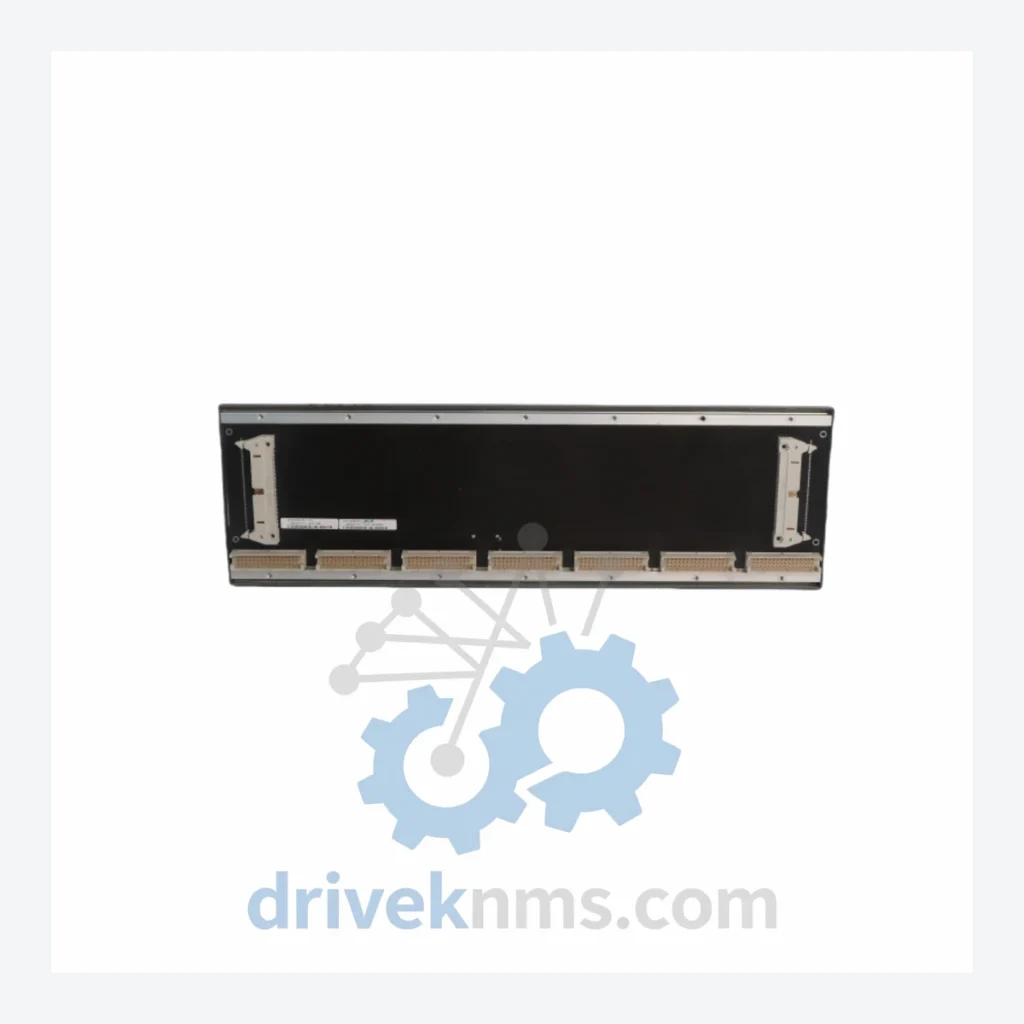
Bachmann BS207 Input/Output Module – Obsolete MPC Series Spare Part

Model: BS207

Brand Bachmann
Series MPC Series
Model BS207
RFQ-ready model route Obsolete and surplus sourcing Export follow-up by model list

Product Overview

Commercial availability is handled through direct RFQ, model verification and export-oriented follow-up rather than public cart checkout.

Datasheet Preview

Datasheet Preview

Use attached product manuals when available. If the manual is not public yet, request the full file directly through RFQ.

Request Full Manual

Commercial Path

Use This Page To Confirm The Model, Then Move To RFQ

Product pages on DRIVEKNMS are designed to verify model, brand and series first, then move the buyer into one clean quotation path.

Technical Dossier

Product Details And Specifications

Bachmann BS207 Input/Output Module – Obsolete MPC Series Spare Part

When a Bachmann BS207 I/O module fails in a legacy MPC-based control system, the consequences extend far beyond a single component. Plant managers face a binary choice: locate a verified replacement unit, or commit to a full control system migration. Conservative estimates place the cost of a forced migration — including new hardware, engineering hours, re-commissioning, and production downtime — in the range of several hundred thousand to several million dollars, depending on system complexity. DriveKNMS maintains verified stock of the BS207 specifically to eliminate that forced choice. This is not a commodity listing. It is a documented, inspected unit held for facilities that cannot afford unplanned capital expenditure.

Technical Specifications

Parameter Detail
Manufacturer Bachmann Electronic GmbH
Part Number BS207
Module Type Input/Output Module
Compatible System Bachmann MPC Series (M1 Runtime Environment)
Country of Origin Austria
Lifecycle Status Discontinued / Obsolete – No longer manufactured or sold by OEM
Replacement Availability No direct OEM successor; system-level upgrade required if spare unavailable

Note: Electrical parameters (voltage ratings, channel count, signal type) are not published here to prevent specification errors. Confirmed technical data is provided upon request with your system documentation.

Solving the Discontinued Hardware Crisis

The Bachmann MPC platform was deployed extensively in industrial automation, renewable energy control (particularly wind turbine controllers), and process automation during the 1990s and 2000s. The BS207 I/O module serves as a core signal interface within these systems — handling the physical-layer communication between field instruments and the central processing unit. There is no firmware-compatible drop-in replacement available from the OEM. Facilities still operating MPC-based systems face a hard constraint: the BS207 must be sourced from the secondary market, or the entire control architecture must be replaced.

For plant managers under pressure to defer capital expenditure, the secondary market is not a fallback — it is the primary strategy. A single verified BS207 unit, properly inspected and installed, can sustain a production line for an additional 5 to 10 years without triggering a system-wide upgrade cycle. That window is often sufficient to align replacement with a planned shutdown, a facility consolidation, or a budget cycle that can absorb the cost of a controlled migration rather than an emergency one.

The risk of sourcing from unverified channels is real: counterfeit modules, units with undisclosed fault histories, and firmware mismatches have caused unplanned outages in facilities that believed they had secured a replacement. DriveKNMS sources, inspects, and documents each unit before it leaves our facility.

Condition & Reliability Assurance

Every BS207 unit processed by DriveKNMS passes a structured 5-step inspection protocol before being offered for sale:

  • Step 1 – Electrolytic Capacitor Assessment: Aging electrolytic capacitors are the primary failure mode in modules of this era. Each unit is inspected for capacitor bulging, leakage, and ESR deviation. Units with degraded capacitors are either reconditioned with matched-specification replacements or rejected.
  • Step 2 – Firmware Version Verification: The installed firmware version is confirmed and documented. Compatibility with the target system's runtime version is verified prior to shipment where system information is provided by the customer.
  • Step 3 – Pin and Connector Inspection: All I/O connectors and backplane pins are inspected under magnification for corrosion, mechanical deformation, and contact resistance anomalies.
  • Step 4 – Functional Bench Test: Where test infrastructure permits, modules are powered and subjected to signal-level functional testing to confirm basic I/O operation.
  • Step 5 – Documentation and Traceability: Each unit is assigned an internal inspection record. Condition grade (New, Refurbished-Grade-A, or Tested-Used) is disclosed in writing before purchase confirmation.

Key Features for System Maintenance

  • Drop-in replacement: The BS207 installs directly into the existing MPC backplane without mechanical modification.
  • No reprogramming required: The module operates within the existing M1 runtime environment. No changes to application logic, I/O mapping, or PLC program are required upon replacement.
  • Avoids engineering reconstruction costs: Substituting a verified BS207 eliminates the need for control system re-engineering, third-party integration work, and the associated validation and re-commissioning expenses.
  • Preserves existing operator interfaces: HMI configurations, alarm mappings, and historian connections remain intact. Operator retraining is not required.
  • Supports long-term spare parts strategy: Facilities managing multiple MPC installations benefit from holding buffer stock. DriveKNMS can advise on quantity requirements based on system criticality and mean-time-between-failure data.

Extending Automation Asset Life: A Maintenance Strategy for Legacy MPC Systems

Facilities operating Bachmann MPC-based control systems are not operating obsolete technology by choice — they are managing a capital asset that was engineered to last, and that continues to perform its function reliably when maintained correctly. The economic case for extending the life of these systems is straightforward: the cost of a controlled, planned migration is a fraction of the cost of an emergency replacement driven by an unplanned hardware failure.

The following principles apply to facilities seeking to extend MPC system life by 5 to 10 years:

  • Identify single-point-of-failure modules now. The BS207 and similar I/O modules are high-wear components. Waiting for failure before sourcing replacements is the highest-cost strategy. Identify critical modules and secure verified spares before they are needed.
  • Maintain a documented spare parts register. A structured register of installed module part numbers, firmware versions, and spare inventory levels is the foundation of any legacy system maintenance program. Without it, procurement decisions are reactive rather than planned.
  • Establish a supplier relationship before a crisis. Secondary market availability of obsolete modules is not guaranteed. Facilities that have established sourcing relationships with verified suppliers are able to respond to failures in days rather than weeks.
  • Schedule preventive module rotation. For systems with redundant I/O paths, rotating modules on a scheduled basis — replacing units before failure and returning them for inspection — reduces the probability of simultaneous multi-module failure.
  • Document system configuration at the firmware level. Firmware version records, I/O configuration backups, and runtime environment documentation are essential for rapid recovery. These records also inform compatibility verification when sourcing replacement modules.

FAQ

What warranty applies to obsolete parts?
DriveKNMS provides a 90-day warranty against defects identified under normal operating conditions for inspected and tested units. Warranty terms for as-is or untested units are confirmed at the time of quotation.

How do I confirm the unit is new or genuine refurbished?
Each unit is assigned a condition grade prior to sale: New (sealed OEM stock), Refurbished-Grade-A (fully inspected and reconditioned), or Tested-Used (functional, cosmetic wear). Condition documentation is provided in writing before order confirmation. We do not sell units without a disclosed condition grade.

Can you source multiple units for a long-term spare parts program?
Yes. DriveKNMS maintains relationships with verified secondary market sources globally. For facilities requiring buffer stock of the BS207 or related MPC modules, we can provide a sourcing assessment and availability timeline. Contact us with your requirements.

What information should I provide when inquiring?
To accelerate compatibility verification, please provide: your system model and runtime version, the firmware version currently installed on your existing BS207 units (if known), and your required delivery timeline.

Do you ship internationally?
Yes. DriveKNMS ships to industrial facilities worldwide. Export documentation and compliance support is available for regulated destinations.

© 2026 DriveKNMS. All trademarks belong to their respective owners. Specifications are for reference only and subject to change without notice. Verify all parameters against official documentation before installation.