Technical Dossier
Product Details And Specifications
BACHMANN DIO264 Series Technical Notes
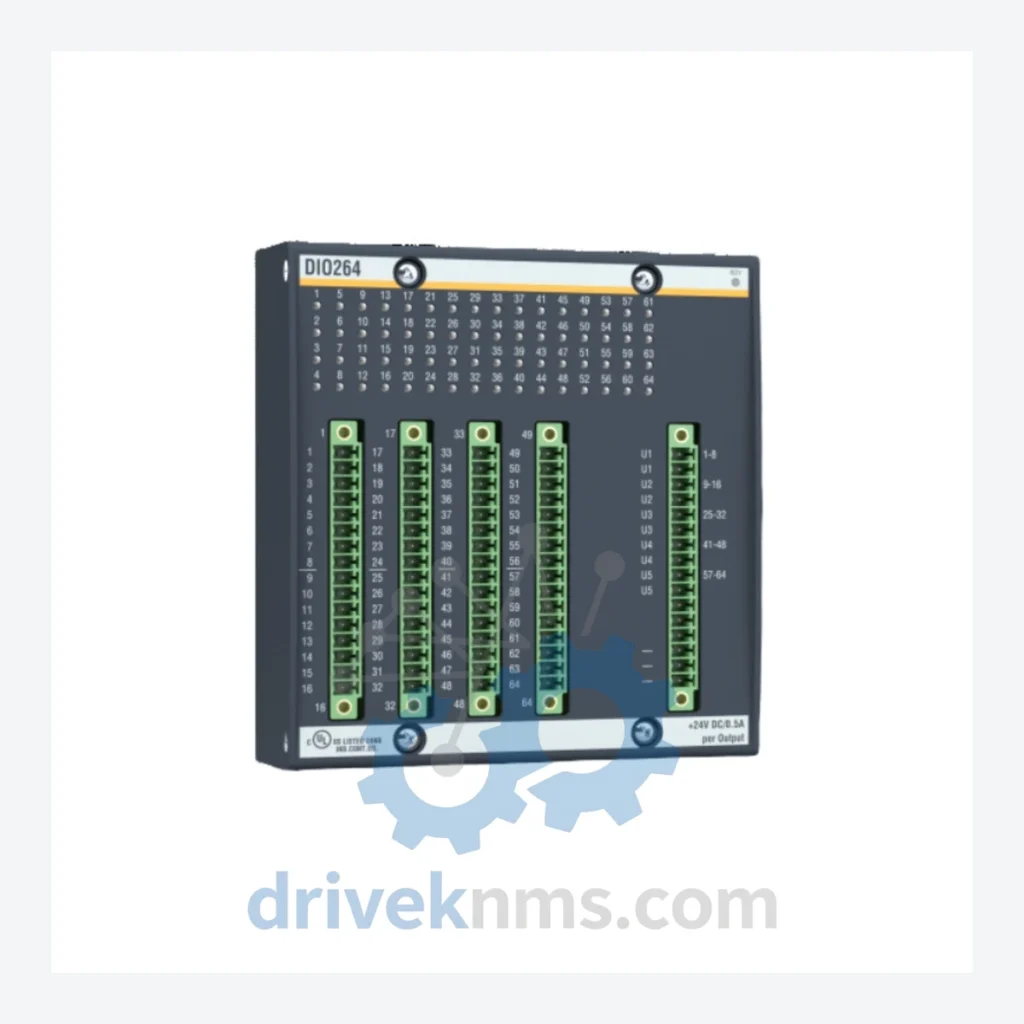
The BACHMANN DIO264 is a 24-channel digital input/output module designed for deployment within the BACHMANN M1 automation system — a modular, rack-based control platform with established installations across heavy-process industries including petrochemical refining, offshore wind energy, hydroelectric power generation, and nuclear auxiliary systems. The DIO264 occupies a defined position in the M1 I/O layer, interfacing directly with the M1 CPU modules via the proprietary M1 backplane bus. Its 24 configurable digital channels (16 DI + 8 DO in standard configuration) operate at 24 VDC logic levels, making it compatible with field devices across IEC 61131-2 Type 1, 2, and 3 input classifications. Installed base density is highest in European and Asian utility-scale power plants, where BACHMANN M1 systems were specified as primary turbine control and grid synchronization platforms from the mid-1990s through the 2010s.
The Evolution of DIO264 Architecture
The BACHMANN M1 platform was introduced in the early 1990s as a deterministic, real-time control system targeting power generation and process automation. The DIO264 module was developed as part of the M1 I/O expansion family to address the need for high-density digital field interfacing within a compact, DIN-rail-compatible rack format.
Generation 1 (M1 Classic, ~1993–2002): Early DIO264 variants used parallel backplane addressing with fixed channel-to-address mapping. Firmware was stored on socketed EPROM, allowing field reprogramming. These units are identifiable by their gray front panel and 9-pin diagnostic port.
Generation 2 (M1 Enhanced, ~2002–2012): Revised backplane protocol introduced CAN-based inter-module communication, improving determinism for time-critical I/O scanning. The DIO264 in this generation gained configurable input filtering (0.1 ms to 3 ms) and short-circuit protection on output channels. Front panel LEDs expanded from 8 to 24 individual channel indicators.
Generation 3 (M1 Current / MPC, ~2012–present): Integration with BACHMANN's SolutionCenter engineering environment. DIO264 modules in this generation support online parameter changes without rack power cycling. Compatibility with legacy Gen 1 racks requires a backplane adapter (BACHMANN part: BPX-ADAPT-01). The MPC-series CPU (e.g., MPC240, MPC265) is the current recommended pairing for new DIO264 deployments.
DIO264 Full Catalog & Functionalities (SKU List)
The following SKUs represent the verified BACHMANN M1 I/O and associated module range compatible with or directly related to the DIO264 platform. All models listed have confirmed production history within the BACHMANN M1 ecosystem.
Digital I/O Modules
- DIO264: 24-ch digital I/O module, 16 DI / 8 DO, 24 VDC, M1 backplane bus
- DIO216: 16-ch digital I/O, 8 DI / 8 DO, compact form factor for space-constrained racks
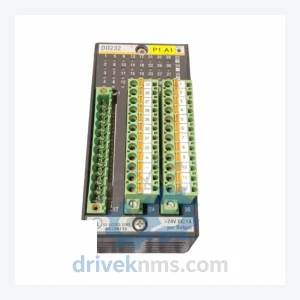
- DIO232: 32-ch digital I/O, high-density variant, dual-row terminal block
- DIO248: 48-ch digital I/O, extended rack only, requires M1-EXT backplane
- DI216: 16-ch dedicated digital input module, 24 VDC, IEC Type 1/2/3 selectable
- DO216: 16-ch dedicated digital output module, 24 VDC, 0.5 A per channel, short-circuit protected
- DO208: 8-ch relay output module, 250 VAC / 30 VDC, 2 A per channel, SPDT contacts
Analog I/O Modules
- AIO288: 8-ch analog I/O, 4 AI / 4 AO, ±10 V / 4–20 mA, 16-bit resolution
- AI216: 16-ch analog input, 4–20 mA / 0–10 V, 12-bit, differential input configuration
- AO208: 8-ch analog output, 0–20 mA / 0–10 V, 12-bit, individually isolated channels
CPU / Controller Modules
- MPC240: M1 main processor, 400 MHz, IEC 61131-3 runtime, Ethernet + CAN onboard
- MPC265: High-performance M1 CPU, 650 MHz, dual Ethernet, redundancy-capable
- MPC200: Entry-level M1 CPU, legacy installations, 200 MHz, single CAN port
Communication & Network Modules
- CAN232: Dual-port CAN communication module, CANopen master/slave, 1 Mbit/s
- ETH100: 100 Mbit Ethernet module, Modbus TCP / EtherNet/IP gateway function
- PROFIBUS-DP: PROFIBUS DP master/slave module, up to 12 Mbit/s, GSD file configurable
Power Supply Modules
- PSU224: 24 VDC rack power supply, 10 A output, wide-range AC input (85–264 VAC)
- PSU248: Redundant power supply module, hot-swap capable, for M1-EXT racks
Sourcing Hard-to-Find & Obsolete DIO264 Parts
Our sourcing process for DIO264 units includes: verification of hardware revision against the customer's rack firmware version; cross-referencing of backplane connector pin compatibility between Gen 1 and Gen 2 variants; and confirmation of channel configuration (DI/DO ratio) against the original project BOM. For customers operating mixed-generation M1 racks, we can supply matched sets of DIO264 modules with consistent firmware baselines to avoid inter-module communication faults.
Quality Control for the DIO264 Range
The DIO264 presents specific test challenges due to its dual-function backplane interface (simultaneous DI scanning and DO driving) and its dependence on M1 CAN bus timing for channel synchronization. DriveKNMS applies the following test protocol to all DIO264 units processed through our facility:
- Backplane Bus Integrity Test: Each DIO264 is seated in a live M1 test rack running a reference firmware image. CAN bus traffic is monitored for correct node addressing, message timing (±0.1 ms tolerance), and absence of error frames over a 30-minute soak period.
- Channel-by-Channel Functional Verification: All 24 I/O channels are individually exercised using a dedicated breakout fixture. DI channels are tested at 0 V (logic 0) and 24 VDC (logic 1) with input filter timing verified. DO channels are loaded at rated current (0.5 A) and verified for correct switching and short-circuit trip behavior.
- Thermal Stress Screening: Units are cycled between 0°C and 55°C (operating range per BACHMANN specification) for a minimum of 4 hours to screen for latent solder joint or component failures.
- Firmware Revision Logging: The firmware version stored in each unit's onboard flash is recorded and reported with the shipment documentation, enabling customers to assess compatibility with their existing M1 CPU firmware baseline before installation.