Products / Beckhoff / Obsolete CX
Beckhoff Obsolete CX

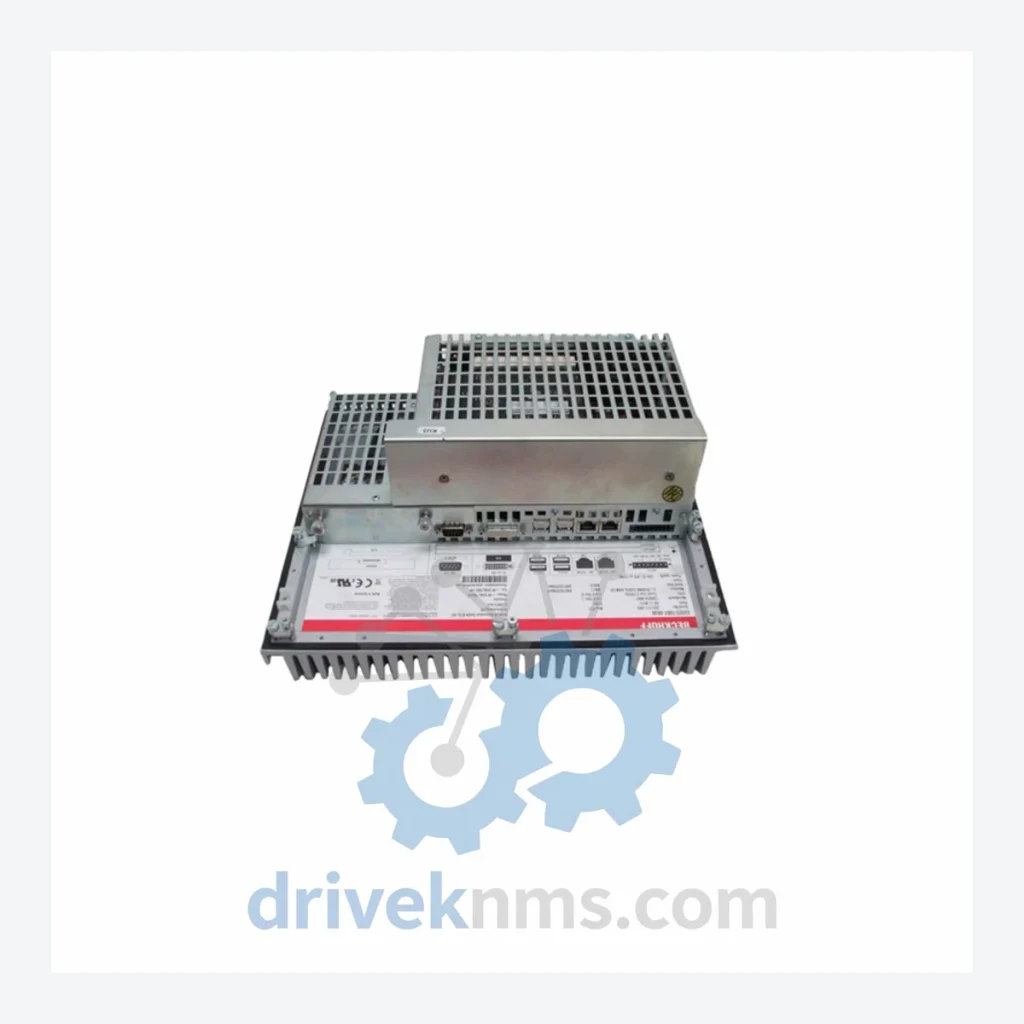
Beckhoff C6525-1007-0030 Digital I/O Module – Obsolete CX Series Spare Part

Model: C6525-1007-0030

Brand Beckhoff
Series Obsolete CX
Model C6525-1007-0030
RFQ-ready model route Obsolete and surplus sourcing Export follow-up by model list

Product Overview

Commercial availability is handled through direct RFQ, model verification and export-oriented follow-up rather than public cart checkout.

Datasheet Preview

Datasheet Preview

Use attached product manuals when available. If the manual is not public yet, request the full file directly through RFQ.

Request Full Manual

Commercial Path

Use This Page To Confirm The Model, Then Move To RFQ

Product pages on DRIVEKNMS are designed to verify model, brand and series first, then move the buyer into one clean quotation path.

Technical Dossier

Product Details And Specifications

Beckhoff C6525-1007-0030 Digital I/O Module – Obsolete CX Series Spare Part

When a Beckhoff C6525-1007-0030 Digital I/O Module fails in a running production line, the consequences extend far beyond the cost of the component itself. A forced migration away from a legacy Beckhoff CX-series control architecture — including new PLC hardware, software re-engineering, I/O rewiring, and operator retraining — routinely carries a total project cost measured in the hundreds of thousands to low millions of dollars, depending on line complexity. That figure does not account for production downtime during the transition period, which in high-throughput manufacturing environments can dwarf the engineering cost entirely.

DriveKNMS maintains verified physical stock of the C6525-1007-0030. This is not a catalog listing. Procurement teams and plant engineers facing an unplanned failure or a planned long-term spares strategy can act on this inventory today.

Technical Specifications

Parameter Detail
Manufacturer Beckhoff Automation
Part Number C6525-1007-0030
Product Family CX Series Embedded PC / I/O Extension
Module Type Digital Input/Output Module
Country of Origin Germany
Lifecycle Status Discontinued / Obsolete – No longer in active production by Beckhoff
Compatible Systems Beckhoff CX-series Embedded PCs; TwinCAT 2/3 environments; legacy Beckhoff fieldbus I/O architectures
Communication Interface Beckhoff proprietary CX internal bus

Note: Electrical parameters such as channel count, voltage ratings, and current specifications are not published here to avoid inaccuracy. Confirmed datasheet documentation is available upon request prior to purchase.

Solving the Discontinued Hardware Crisis

The Beckhoff CX platform established itself across a wide range of industrial automation applications — machine tool control, packaging lines, building automation, and laboratory instrumentation — precisely because of its compact form factor, deterministic real-time performance under TwinCAT, and the depth of its I/O ecosystem. The C6525-1007-0030 digital I/O module occupies a specific role within that ecosystem: it extends the digital signal handling capacity of the CX embedded PC without requiring an additional fieldbus segment or external I/O coupler.

That architectural specificity is exactly what makes the module difficult to replace. A modern substitute does not simply slot into the same physical and logical position. Substitution requires re-mapping I/O addresses in the TwinCAT project, validating signal timing against the application's scan cycle, and in many cases modifying the machine's wiring harness. For a production facility running 24/7 shifts, the engineering window to execute that work safely — without risking a process upset — may not exist for months.

Holding a verified spare of the C6525-1007-0030 eliminates that constraint. The failed module is swapped, the system restarts on the existing validated configuration, and production resumes. The engineering redesign, if it is ever warranted, happens on a planned schedule rather than under emergency conditions.

Plant managers and reliability engineers operating Beckhoff CX-based systems should treat the C6525-1007-0030 as a critical single point of failure. The cost of one spare unit is a fraction of one hour of unplanned downtime on most production lines.

Extending Automation Asset Life by 5–10 Years: A Maintenance Strategy for Legacy Beckhoff Systems

The decision to retire a functioning automation system is rarely driven by the system's inability to perform its control function. It is driven by the inability to source replacement parts when something fails. A Beckhoff CX-based line that has been running reliably for 12 years does not need to be replaced because the control architecture is inadequate — it needs a defensible spares strategy.

The following approach has been applied successfully in facilities that have extended legacy Beckhoff system service life by 5 to 10 years beyond the point at which standard distribution channels stopped carrying the relevant components:

  • Critical path identification: Audit the installed Beckhoff hardware and identify every module for which no current-generation drop-in replacement exists. The C6525-1007-0030 is a representative example. These are the components that will determine the system's actual end-of-life date.
  • Minimum buffer stock: For each critical-path module, hold a minimum of one verified spare on-site. For high-utilization lines or multi-machine installations using the same module, two to three units is a more defensible position.
  • Condition-based procurement: Do not wait for a failure event to source obsolete components. The secondary market for discontinued Beckhoff hardware is finite. Availability and pricing both deteriorate as the installed base ages and competing buyers deplete stock.
  • Firmware and configuration documentation: Maintain a current backup of the TwinCAT project and all module configuration parameters. In the event of a module replacement, a documented configuration eliminates the risk of re-commissioning errors.
  • Supplier qualification: Source obsolete Beckhoff modules only from suppliers who can provide traceability documentation and who perform incoming inspection. A counterfeit or degraded module installed in a safety-adjacent application creates liability that exceeds the cost of the original system replacement.

This strategy does not require capital expenditure on new hardware. It requires procurement discipline and a qualified supply chain partner. DriveKNMS operates specifically in this segment of the industrial parts market.

Condition & Reliability Assurance

Obsolete modules sourced from the secondary market carry inherent risk if they are not properly inspected before dispatch. DriveKNMS applies a 5-step incoming quality process to all discontinued Beckhoff hardware prior to sale:

  1. Visual and mechanical inspection: Physical examination of the housing, connector pins, and PCB for corrosion, mechanical damage, and evidence of prior field repair or rework.
  2. Electrolytic capacitor assessment: Aged electrolytic capacitors are the most common failure mode in legacy industrial electronics. Capacitors are inspected for visible swelling, electrolyte leakage, and ESR deviation where test access permits.
  3. Pin and connector integrity: All I/O and bus connectors are inspected under magnification for oxidation, bent pins, and contact surface degradation. Corroded contacts are a primary cause of intermittent faults in field-returned modules.
  4. Firmware version verification: Where the module carries embedded firmware, the version is documented and cross-referenced against known compatibility requirements for TwinCAT 2 and TwinCAT 3 environments.
  5. Functional power-on test: Where test fixtures permit, modules are powered and basic functional verification is performed prior to packaging.

Modules that do not pass all applicable inspection steps are not offered for sale. Condition grade (New Old Stock, Refurbished, or Tested Used) is disclosed explicitly in the order confirmation.

Key Features for System Maintenance

  • Drop-in replacement: The C6525-1007-0030 installs directly into the existing CX system slot. No hardware modification to the host system is required.
  • No reprogramming required: The TwinCAT project recognizes the replacement module by its hardware identity. Provided the firmware version is compatible, the existing validated program runs without modification.
  • Avoids engineering redesign costs: A like-for-like spare replacement eliminates the need for I/O remapping, wiring changes, and re-validation — costs that routinely reach five to six figures on complex machine installations.
  • Preserves process certification: In regulated industries (pharmaceutical, food processing, medical device manufacturing), replacing a validated control component with a non-equivalent substitute triggers a revalidation requirement. A like-for-like spare does not.
  • Immediate dispatch: Stock is held physically at DriveKNMS. Orders confirmed before cut-off ship the same business day where logistics permit.

FAQ

What warranty applies to an obsolete module like the C6525-1007-0030?
DriveKNMS provides a 90-day warranty against defects in the supplied unit under normal operating conditions. Warranty terms are confirmed in writing at the time of order.

How do I know the unit is genuine and not counterfeit?
All Beckhoff modules supplied by DriveKNMS are sourced through documented channels. Physical authenticity markers — label format, housing markings, PCB construction — are verified against known-genuine references during incoming inspection. Traceability documentation is available on request.

Should I buy more than one unit?
For any production-critical application, holding at least one additional spare beyond the installed unit is a standard reliability practice. For multi-machine installations or lines where downtime cost is high, a buffer of two to three units is appropriate. Stock of discontinued components is not replenishable on demand — once the secondary market is depleted, it is depleted.

WhatsApp Prefilled Inquiry Email [email protected] Phone +86 18359293191 Top Back To Top