Technical Dossier
Product Details And Specifications
Beijer T-Series HMI Panels: Comprehensive Module Range and Technical Overview
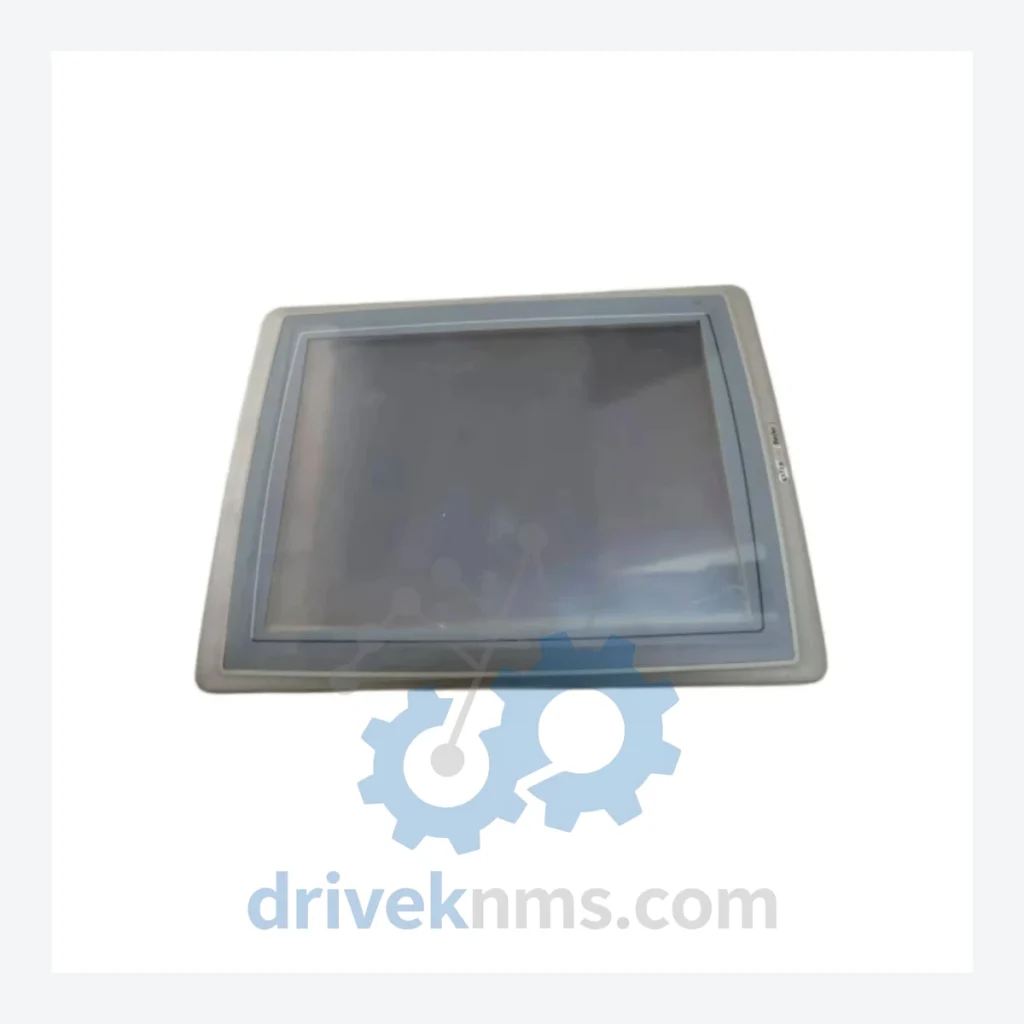
The Beijer Electronics T-Series represents one of the most widely deployed operator panel families in European and global heavy industry. Installed across chemical processing plants, pulp & paper mills, water treatment facilities, and discrete manufacturing lines, the T-Series established Beijer's position as a primary HMI supplier for Mitsubishi Electric-compatible and multi-protocol automation environments. Units from this series remain embedded in production infrastructure with operational lifespans exceeding 15–20 years, making spare part availability a critical maintenance planning variable for plant engineers and procurement teams worldwide.
The Evolution of T-Series Architecture
The Beijer T-Series was introduced in the early 1990s as a dedicated operator terminal platform built around Mitsubishi's MELSEC protocol stack, later expanding to support multi-vendor connectivity via the E-Designer and BDTP communication layers. The series progressed through several hardware generations:
- First Generation (T50–T100): Monochrome LCD panels with RS-232/RS-422 serial interfaces. Limited memory, fixed function keys, no touchscreen. Primarily used in machine-level HMI roles.
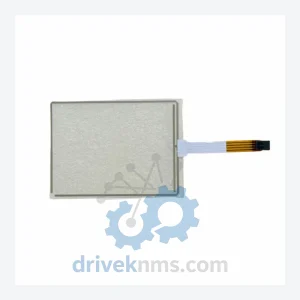
- Second Generation (T150–T200): Introduction of resistive touchscreen overlays (AL/BL variants), expanded display resolution, and support for Ethernet adapters via external modules. The T150/AL belongs to this generation and remains one of the most commonly requested obsolete units.
- Third Generation (T300–T400): Colour TFT displays, integrated Ethernet, USB host ports, and compatibility with the iX Developer software platform. Bridged the gap between legacy T-Series and the modern E-Series/X2-Series.
- Transition to E-Series / X2-Series: Beijer officially migrated its HMI portfolio to the E-Series and subsequently the X2-Series, which offer Linux-based OS, multi-touch capacitive screens, and cloud connectivity. T-Series units are no longer manufactured; however, installed base demand sustains an active secondary market.
Compatibility note: T-Series panels running E-Designer projects are not directly portable to iX Developer without project conversion. Procurement teams replacing T-Series units must verify software version compatibility before specifying a modern substitute.
Beijer T-Series Full Catalog & Functionalities (SKU List)
The following SKUs represent confirmed models within the Beijer T-Series product family, categorized by display type and interface configuration:
Monochrome / STN LCD Panels
- T50: 5.7" STN monochrome, RS-232 serial, 128×64 resolution, keypad-only input, no touch
- T70: 7" STN monochrome, RS-422/RS-232, function key matrix, suitable for basic MELSEC HMI
- T100: 10.4" STN monochrome, dual serial ports, expanded recipe memory, panel-mount format
- T100/A: Enhanced T100 variant with additional function keys and alarm list capacity
- T100/B: T100 with backlight upgrade and extended temperature rating for industrial enclosures
Touchscreen Panels – AL/BL Variants
- T150/AL: 10.4" STN monochrome resistive touch, RS-232/RS-422, E-Designer compatible, panel-mount
- T150/BL: T150 with revised backlight driver and front bezel; functionally equivalent to AL for most applications
- T200/AL: 12.1" STN monochrome resistive touch, dual serial ports, expanded project memory
- T200/BL: T200 with revised backlight assembly; direct drop-in replacement for T200/AL in most panel cutouts
Colour TFT Panels
- T300: 10.4" TFT colour, 640×480, RS-232/RS-422/Ethernet option, E-Designer and early iX compatible
- T300/C: T300 with compact flash slot for extended project and data logging storage
- T350: 10.4" TFT colour with integrated Ethernet port, USB host, enhanced graphics rendering
- T400: 12.1" TFT colour, 800×600, dual serial + Ethernet, high-brightness option available
- T400/C: T400 with compact flash and extended I/O connector for peripheral devices
- T500: 15" TFT colour, 1024×768, full Ethernet + USB, designed for supervisory-level HMI roles
- T500/C: T500 with compact flash and dual Ethernet for redundant network topologies
Lead Time & Availability: T-Series units are end-of-life (EOL). Standard lead time from DriveKNMS stock: 3–7 business days for stocked units. Non-stocked or rare variants: 2–6 weeks subject to global sourcing. Inventory status confirmed at time of RFQ.
Sourcing Hard-to-Find & Obsolete T-Series Parts
Beijer officially discontinued the T-Series product line. OEM replacement parts, factory repair services, and new-unit supply are no longer available through authorized distribution channels. This creates a defined procurement risk for facilities that have not yet migrated to E-Series or X2-Series platforms.
DriveKNMS maintains an active sourcing network for EOL Beijer T-Series units through the following channels:
- Certified secondary market inventory: Units sourced from decommissioned plant equipment, tested to original Beijer functional specifications before dispatch.
- Cross-border procurement: Access to T-Series stock held in European, North American, and Asia-Pacific industrial surplus markets, with full export documentation.
- Lifecycle extension advisory: For facilities unable to source a direct T-Series replacement, DriveKNMS provides a compatibility assessment for E-Series or X2-Series substitutes, including E-Designer to iX Developer project migration guidance.
- Batch procurement: Procurement managers responsible for multi-site operations can request consolidated RFQs covering multiple T-Series model variants in a single transaction.
Procurement risk note: Single-source dependency on OEM channels for EOL HMI panels is a documented cause of unplanned downtime. Establishing a secondary supplier relationship for T-Series spares is a standard risk mitigation measure recommended in IEC 62443 asset lifecycle frameworks.
Quality Control for the T-Series Range
T-Series panels sourced through secondary markets carry inherent quality variables that require structured verification before deployment in production environments. DriveKNMS applies the following inspection protocol to all T-Series units:
- Visual and mechanical inspection: Bezel integrity, connector pin condition, backlight diffuser assessment, and front panel seal evaluation.
- Power-on functional test: Unit boot sequence verification, display uniformity check, and touchscreen calibration validation (AL/BL variants).
- Communication protocol test: Serial port loopback testing on RS-232 and RS-422 interfaces; Ethernet port link verification where applicable.
- E-Designer project load test: Where feasible, a reference project is loaded to confirm project memory read/write integrity and driver communication.
- Thermal cycling: Units intended for high-ambient-temperature environments undergo abbreviated thermal soak testing prior to dispatch.
All units are dispatched with a 12-month warranty covering functional defects. Units that fail post-sale within the warranty period are subject to replacement or full refund per DriveKNMS standard terms.