Technical Dossier
Product Details And Specifications
Bently Nevada 130539 Series: Comprehensive Interconnect Cable Range and Technical Overview
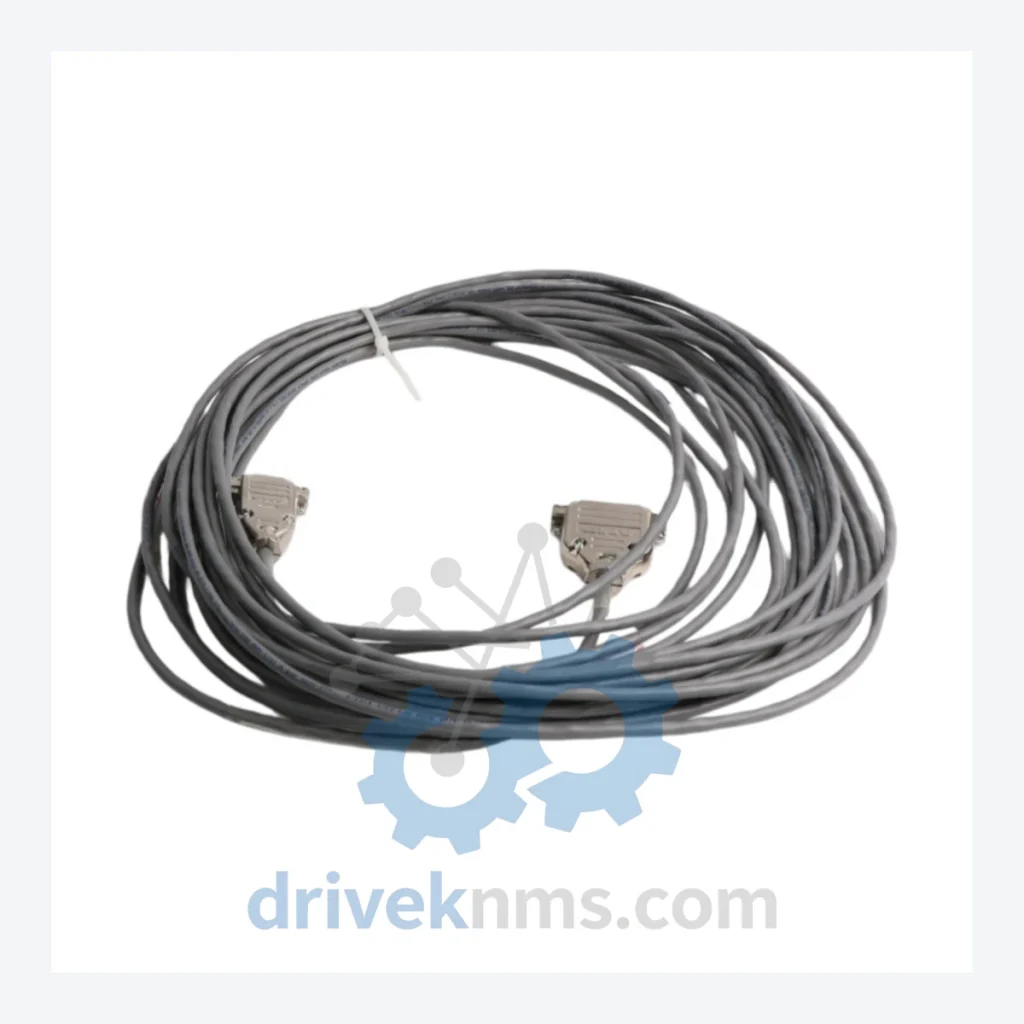
The Bently Nevada 130539 Series Interconnect Cables are purpose-engineered signal transmission components used within the Bently Nevada 3300 and 3500 Series vibration monitoring systems. These cables serve as the physical link between proximity transducer drivers, monitor rack I/O modules, and field-mounted sensors. Their deployment spans the most demanding continuous-process industries: petroleum refining, LNG liquefaction trains, nuclear power auxiliary systems, offshore platform compressor monitoring, and integrated steel mill drive trains.
The 130539 cable family is not a commodity item. Each part number encodes a specific length (in feet), connector configuration, and shielding specification. Substituting an incorrect length or connector type introduces signal attenuation errors that directly corrupt vibration amplitude readings — a failure mode that is invisible until a bearing event occurs. Procurement teams must match the exact part number to the installed rack position and transducer driver type.
As of 2026, the 3300 Series has entered end-of-active-support status, while the 3500 Series remains in active production. The 130539 cable series supports both platforms, making it a long-tail spare part with sustained demand across the installed base of legacy 3300 racks still operating under life-extension programs at refineries and power stations worldwide.
The Evolution of 130539 Series Architecture
The 130539 interconnect cable design was introduced alongside the Bently Nevada 3300 Series rack architecture in the 1980s. The original design used a multi-conductor shielded construction with proprietary locking connectors at both ends, ensuring secure seating in high-vibration environments — a critical requirement given that the cables themselves are installed in proximity to rotating machinery.
When Bently Nevada (acquired by GE in 2002, subsequently integrated into Baker Hughes in 2017) transitioned the product line to the 3500 Series, the 130539 cable family was retained with backward-compatible connector geometry. This decision preserved the installed base investment for operators running mixed 3300/3500 rack environments during phased upgrades — a common scenario in refineries where capital expenditure cycles span 10–15 years.
The primary compatibility risk in the 130539 family is length mismatch. The part number suffix (e.g., -20, -25, -50) denotes cable length in feet. Installing a cable longer than the designed run introduces excess capacitance that degrades the high-frequency response of the proximity measurement loop. Installing a shorter cable forces field splicing, which violates Bently Nevada's signal integrity specifications and voids the system's SIL certification in safety-instrumented applications.
For facilities running 3300 Series racks under life-extension programs, the 130539 cable series represents one of the highest-turnover spare categories, as cable insulation degradation from heat cycling and hydrocarbon exposure is the primary failure mode — not electronic component failure.
130539 Series Full Catalog & Functionalities (SKU List)
The following SKUs represent the core of the 130539 Interconnect Cable family. Each part number is a distinct length variant. All cables in this series use the same connector type and shielding specification; the suffix denotes cable length in feet.
130539-20: Interconnect cable, 20 ft — standard rack-to-junction-box run for compact installations.
130539-25: Interconnect cable, 25 ft — common in offshore platform rack rooms with extended cable trays.
130539-50: Interconnect cable, 50 ft — used where monitor racks are located remote from the machinery train.
130539-75: Interconnect cable, 75 ft — long-run variant for large compressor hall installations.
130539-100: Interconnect cable, 100 ft — maximum standard length; used in power plant turbine hall applications.
130539-05: Interconnect cable, 5 ft — short jumper for rack-internal or panel-internal connections.
130539-10: Interconnect cable, 10 ft — standard short-run variant for co-located rack and junction box.
130539-15: Interconnect cable, 15 ft — intermediate length for mid-distance field runs.
130539-30: Interconnect cable, 30 ft — used in steel mill and heavy industrial environments.
130539-35: Interconnect cable, 35 ft — less common; typically a site-specific procurement for retrofit projects.
130539-40: Interconnect cable, 40 ft — used in chemical plant DCS integration projects.
130539-45: Interconnect cable, 45 ft — intermediate long-run variant.
130539-60: Interconnect cable, 60 ft — used in LNG train monitoring where rack rooms are separated from machinery.
130539-80: Interconnect cable, 80 ft — extended run for large rotating equipment monitoring arrays.
130539-90: Interconnect cable, 90 ft — near-maximum run; used in nuclear auxiliary system monitoring.
130539-02: Interconnect cable, 2 ft — ultra-short jumper for rack-internal module-to-module connections.
Sourcing Hard-to-Find & Obsolete 130539 Series Parts
For facilities operating 3300 Series racks under life-extension programs, DriveKNMS can provide multi-year blanket order agreements to lock in pricing and ensure cable availability aligned with planned maintenance outage schedules. This eliminates the risk of a single cable length variant becoming the critical path item in a turnaround.
Quality Control for the 130539 Series Range
Each 130539 cable unit processed by DriveKNMS undergoes the following verification steps:
Connector seating test: Both end connectors are mated to reference sockets and subjected to a 5 N axial pull test to verify locking mechanism integrity.
Insulation resistance: 500 VDC applied between conductor bundle and shield; minimum acceptance threshold 100 MΩ.
Shield continuity: End-to-end shield resistance measured; maximum acceptance threshold 2 Ω for standard lengths up to 50 ft, scaled proportionally for longer runs.
Conductor continuity: All signal conductors verified for continuity and cross-talk isolation.
Visual inspection: Cable jacket inspected for heat damage, hydrocarbon contamination, and mechanical abrasion — the three primary degradation modes in refinery and power plant environments.
Q: How are RFQ terms confirmed?
A: Quantity, required condition, documentation needs, destination and sourcing route are confirmed during RFQ review before quotation.