Technical Dossier
Product Details And Specifications
Bently Nevada 3300 XL Series Technical Notes
The Bently Nevada 3300 XL Series represents one of the most widely deployed eddy-current proximity probe systems in global heavy industry. Installed across petrochemical refineries, nuclear power stations, LNG terminals, offshore platforms, and large-scale rotating machinery facilities, this series has served as the de facto standard for shaft vibration and position monitoring for over three decades.
In applications where a single turbine or compressor train represents a capital investment of $5–30 million USD, the 3300 XL proximity probe system is not a peripheral accessory — it is the primary safeguard against catastrophic mechanical failure. The loss of a single probe assembly or extension cable due to component unavailability can force an unplanned shutdown, with daily production losses routinely exceeding $500,000 in refinery or power generation contexts. Sourcing a verified replacement from existing inventory is, in most cases, the only economically rational response.
The Evolution of 3300 XL Architecture
The Bently Nevada 3300 series was introduced in the 1980s as a modular eddy-current transducer system designed for continuous, online monitoring of rotating shaft dynamics. The core operating principle — measuring the gap between a conductive probe tip and a rotating shaft surface via electromagnetic induction — has remained unchanged, but the mechanical and electrical specifications have evolved through several distinct generations.
Early 3300 Series (Pre-XL): Original assemblies used a 5-meter standard cable configuration with a fixed armored jacket. Connector terminations were proprietary and incompatible with later XL variants. These units are now fully obsolete and replacement requires either exact-match sourcing or full transducer system redesign.
3300 XL Generation: Introduced improved EMI shielding, a standardized 5-pin connector interface, and extended temperature ratings suitable for high-ambient environments (up to 177°C probe tip). The XL designation also introduced a modular housing assembly concept, separating the probe body, extension cable, and proximitor (signal conditioning unit) into independently replaceable components. This architecture significantly reduced maintenance cost per event but increased the complexity of exact-part matching.
Transition to 3500 Series Compatibility: As Bently Nevada migrated customers toward the 3500 rack-based monitoring platform, 3300 XL transducers were retained as the field-side input standard. The 3500/42M, 3500/44M, and 3500/46M monitor modules are all designed to accept 3300 XL probe inputs, meaning that a facility upgrading its rack electronics may still be running original 3300 XL probes installed in the 1990s. This cross-generational dependency is the primary driver of ongoing demand for 3300 XL spare parts.
Current Status: Many specific 3300 XL configurations — particularly those with non-standard cable lengths, high-temperature ratings, or specialized housing geometries — are no longer manufactured. Baker Hughes (which acquired Bently Nevada from GE in 2020) has consolidated the product line, and a significant portion of the 3300 XL catalog is now available only through aftermarket and surplus channels.
3300 XL Full Catalog & Functionalities (SKU List)
The following SKUs represent the most commonly encountered configurations within the 3300 XL proximity probe system. Each assembly is defined by a structured part number encoding probe diameter, cable length, temperature rating, and connector type. Misidentification of any parameter can result in signal calibration errors or physical incompatibility.
Probe Assemblies – Standard Configuration
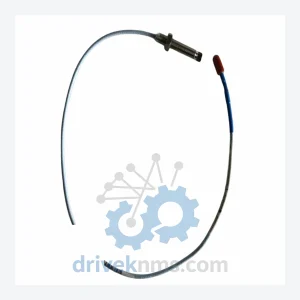
- 21000-16-05-20-065-04-02: 8mm probe, 5m armored extension, standard temp, straight connector, 200 mil range
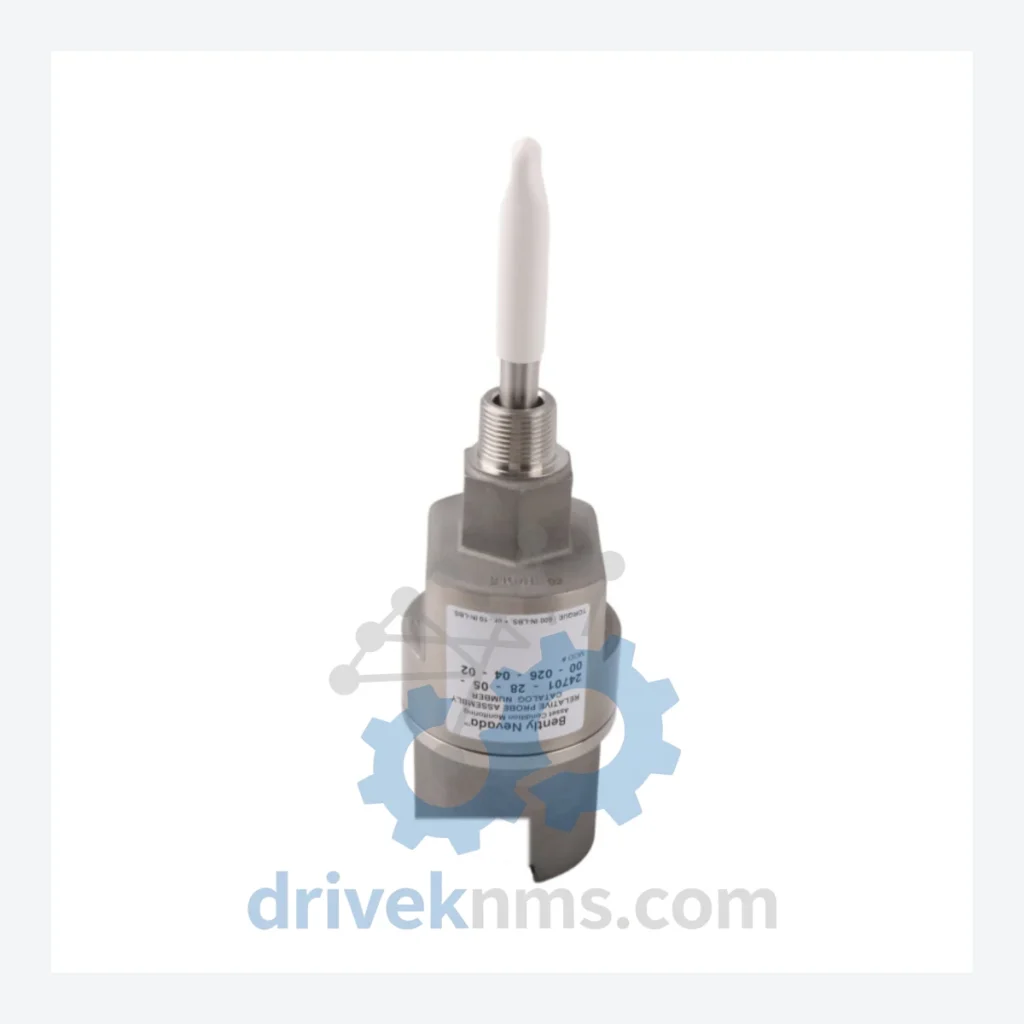
- 24701-34-05-20-018-03-02: 14mm probe body, 5m cable, standard housing, 90° connector, 200 mil range
- 21000-16-05-20-065-04-00: 8mm probe, 5m cable, standard temp, straight connector, no proximitor
- 21000-16-08-20-065-04-02: 8mm probe, 8m armored extension, standard temp, straight connector
- 21000-16-05-55-065-04-02: 8mm probe, 5m cable, high-temp rating (177°C), straight connector
- 24701-34-08-20-018-03-02: 14mm probe, 8m cable, standard housing, 90° connector
- 24701-34-05-55-018-03-02: 14mm probe, 5m cable, high-temp housing, 90° connector
- 21000-16-05-20-065-04-01: 8mm probe, 5m cable, standard temp, straight connector, metric thread
Extension Cables
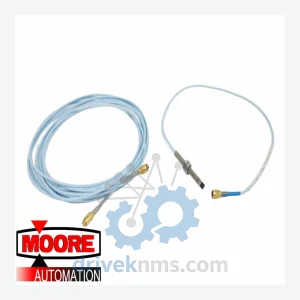
- 330130-045-00-CN: 3300 XL extension cable, 4.5m, standard armored jacket, BNC termination
- 330130-080-00-CN: 3300 XL extension cable, 8m, standard armored jacket
- 330130-050-00-CN: 3300 XL extension cable, 5m, standard armored jacket
- 330130-045-00-05: 3300 XL extension cable, 4.5m, high-flex jacket, field-wiring termination
Proximitor Modules (Signal Conditioners)
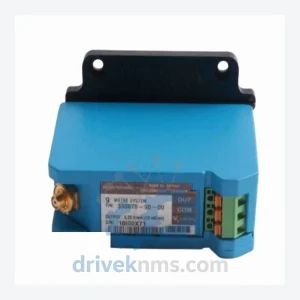
- 330180-X1-05: 3300 XL proximitor, 5m system, -24V DC supply, standard output (-18V DC)
- 330180-X1-08: 3300 XL proximitor, 8m system, -24V DC supply, standard output
- 330180-X1-CN: 3300 XL proximitor, field-mount enclosure, conduit entry
Housing Assemblies & Mechanical Components
- 24701-34-05-20-018-03-02: 14mm housing assembly, 5m, 90° exit, standard thread
- 21000-16-05-20-065-04-02: 8mm housing assembly, 5m, straight exit, standard thread
Note: Parameters not confirmed from verified technical documentation have been omitted. Always cross-reference the full part number against the installed system's calibration records before ordering.
Sourcing Hard-to-Find & Obsolete 3300 XL Parts
The 3300 XL series presents a specific sourcing challenge: the part number structure encodes up to six independent variables (probe diameter, cable length, temperature class, connector orientation, range, and thread type), meaning that a facility requiring an exact replacement must match all parameters simultaneously. A probe with the correct diameter but wrong cable length will produce a miscalibrated output; a housing with the correct thread but wrong temperature rating may fail prematurely in high-ambient installations.
Quality Control for the 3300 XL Range
The 3300 XL system's accuracy depends on the integrity of the complete signal chain from probe tip to proximitor output. Our QC process for this series addresses the specific failure modes associated with long-service eddy-current transducer systems:
- Step 1 – Probe Tip Inspection: Visual and dimensional inspection of the probe tip for mechanical damage, corrosion, or contamination. Tip geometry directly affects the electromagnetic field pattern and calibration linearity.
- Step 2 – Cable Continuity and Insulation Resistance: Full-length continuity test on center conductor and shield. Insulation resistance measurement at 500V DC to identify degraded cable jacket or moisture ingress — a common failure mode in armored cables exposed to process fluids.
- Step 3 – Connector Integrity: Inspection and cleaning of BNC or proprietary connectors. Oxidized or mechanically damaged connectors are the most frequent cause of intermittent signal faults in installed 3300 XL systems.
- Step 4 – Proximitor Output Verification: Bench test of proximitor module using a calibrated target at known gap distances. Output voltage is measured at the standard calibration points (typically 200 mil range: -2V at 0 mil, -18V at 200 mil) and compared against Bently Nevada factory specification.
- Step 5 – System-Level Gap Simulation: Where feasible, probe and proximitor are tested as a matched pair to verify calibration curve conformance. Units that pass individual tests but show deviation as a pair are flagged and not shipped as matched assemblies.