Technical Dossier
Product Details And Specifications
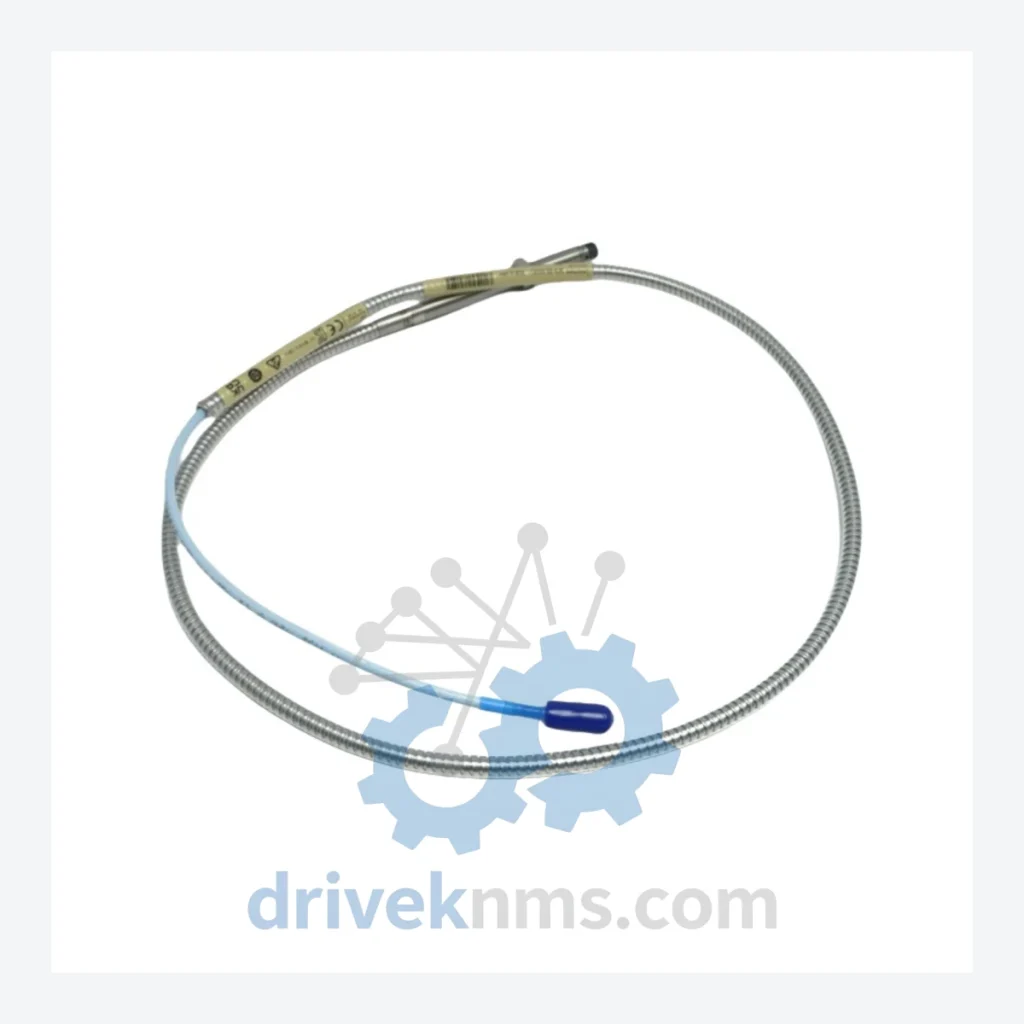
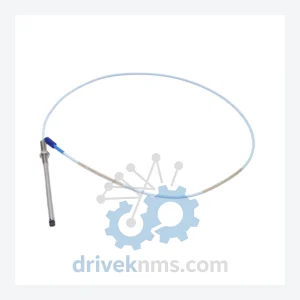
Bently Nevada 330102-00-35-10-02-CN Proximity Probe – Obsolete 3300 XL Spare Part
When a proximity probe fails inside a turbine protection loop, the machine does not simply pause — it trips. In facilities running Bently Nevada 3300 XL vibration monitoring systems, a single failed probe can force an unplanned shutdown that costs tens of thousands of dollars per hour in lost production. For plants that have operated on this platform for 15 to 25 years, the alternative is not a simple component swap. Migrating away from the 3300 XL architecture requires replacing the entire monitoring rack, recalibrating every channel, rewriting trip logic, and revalidating the system against API 670 — a project that routinely exceeds USD 500,000 before the first turbine restarts. The 330102-00-35-10-02-CN is no longer in active production. DriveKNMS holds RFQ-reviewed sourcing status. Securing a replacement now is not a procurement exercise — it is asset protection.
RFQ support for obsolete parts: Send the model number, required quantity and destination so DriveKNMS can confirm sourcing options before quotation.
Technical Specifications
| Parameter | Value |
| Part Number | 330102-00-35-10-02-CN |
| Manufacturer | Bently Nevada (Baker Hughes) |
| Series | 3300 XL 8mm Proximity Transducer System |
| Product Type | Eddy-Current Proximity Probe |
| Probe Diameter | 8 mm |
| Cable Length | 3.5 m (integral cable) |
| Connector Type | CN (Coaxial, standard) |
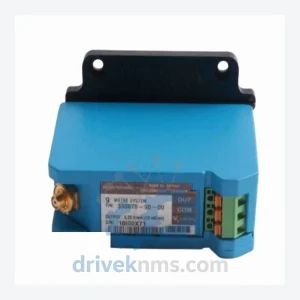
| Compatible Driver / Conditioner | Bently Nevada 3300 XL series drivers (e.g., 330180) |
| Compatible Monitoring Rack | Bently Nevada 3500 series, 3300 XL series |
| Production Status | Discontinued / Obsolete |
| Country of Origin | United States |
Note: Electrical sensitivity, gap voltage, and frequency response specifications are system-dependent and must be verified against the matched driver datasheet. DriveKNMS does not publish unverified parameters.
Solving the Discontinued Hardware Crisis
The Bently Nevada 3300 XL proximity transducer system was the industry standard for turbomachinery shaft vibration and position monitoring across petrochemical, power generation, and rotating equipment facilities worldwide. Thousands of installations — compressors, steam turbines, gas turbines, pumps — were commissioned with this platform between the 1990s and early 2010s. The system was engineered for decades of service, and many of those machines are still running.
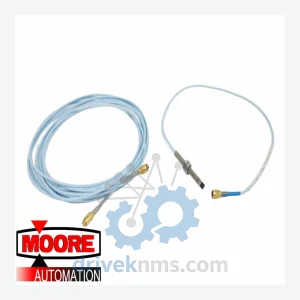
The problem is that the probe, the extension cable, and the driver must be matched as a calibrated set. Substituting a probe from a different series or a different cable length changes the system sensitivity and invalidates the calibration. In a machinery protection context, an incorrect calibration does not produce a warning — it produces either a missed trip or a false trip. Neither outcome is acceptable.
For plant engineers managing aging 3300 XL installations, the practical strategy is not replacement of the monitoring architecture — it is controlled spare parts inventory. Maintaining two to four matched probe sets per critical machine extends the operational life of the monitoring system by 8 to 12 years at a fraction of the cost of a platform migration. The 330102-00-35-10-02-CN is the correct probe for 8 mm installations with 3.5 m integral cable and CN connector. If your facility runs this configuration, this part number is not interchangeable with adjacent variants.
Condition & Reliability Assurance
Proximity probes sourced from secondary markets carry real risk: coil degradation, cable jacket cracking, connector oxidation, and probe tip damage are common in units that have been improperly stored. DriveKNMS applies a structured 5-step inspection protocol to every unit before dispatch review.
Step 1 — Visual and mechanical inspection: Probe body, cable jacket, and connector are examined for physical damage, corrosion, and jacket brittleness. Units with cracked jackets or deformed probe tips are rejected.
Step 2 — Connector integrity check: The CN connector is inspected for pin straightness, contact oxidation, and thread condition. Oxidized contacts are cleaned; damaged connectors result in unit rejection.
Step 3 — Coil resistance verification: Probe coil resistance is measured and compared against the expected range for the 330102 series. Out-of-range readings indicate coil degradation and the unit is quarantined.
Step 4 — Cable continuity and insulation test: Full cable continuity is verified from probe tip to connector. Insulation resistance is tested to confirm no moisture ingress or jacket breakdown.
Step 5 — Documentation and traceability: Each unit is logged with inspection results and assigned a DriveKNMS reference number. Shipment documentation includes inspection summary and part identification records.
Key Features for System Maintenance
The 330102-00-35-10-02-CN is a direct, drop-in replacement for the same part number in any 3300 XL installation. No recalibration of the monitoring rack is required when replacing a like-for-like probe within the same matched set configuration. No firmware changes, no channel remapping, no engineering rework.
For maintenance teams operating under shutdown time pressure, this matters. A probe replacement that requires rack recalibration can extend a planned outage by 12 to 24 hours. A verified like-for-like replacement restores the system to its validated state without additional commissioning steps. The cost difference between a sourced spare and an emergency platform migration is not marginal — it is the difference between a maintenance event and a capital project.
Facilities managing multiple critical machines on the 3300 XL platform should evaluate a structured long-term sparing strategy. Holding matched probe sets — probe, extension cable, and driver — for each critical machine eliminates the sourcing risk that comes with emergency procurement of obsolete components.
Q: How are RFQ terms confirmed?
A: Quantity, required condition, documentation needs, destination and sourcing route are confirmed during RFQ review before quotation.
Q: Can you support multi-unit or repeat RFQ requests?
A: Yes. Send the model list, target quantity and destination so DRIVEKNMS can review sourcing options and quote the requirement as a project RFQ.