Technical Dossier
Product Details And Specifications
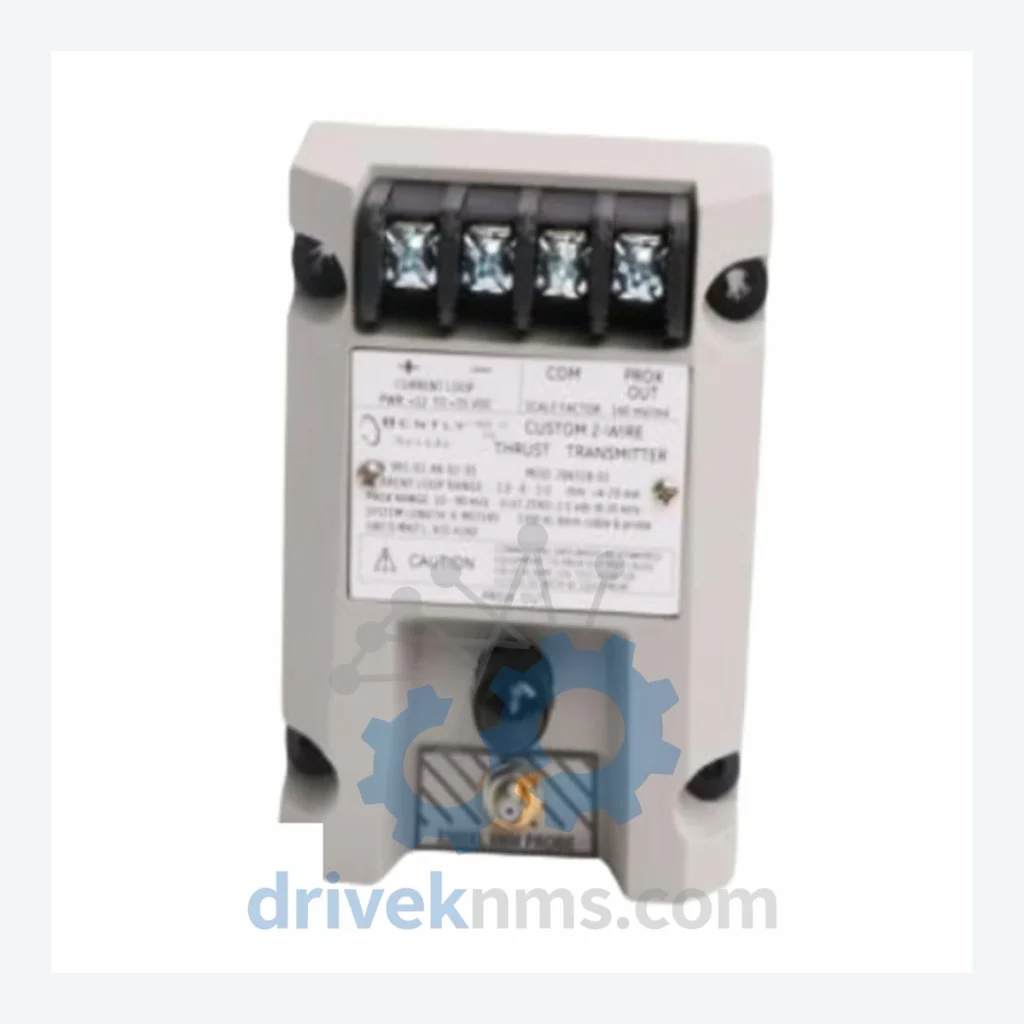
Bently Nevada 991-06-XX-01-00 Thrust Transmitter – Obsolete 9000 Series Spare Part
RFQ support for obsolete parts: Send the model number, required quantity and destination so DriveKNMS can confirm sourcing options before quotation.
Technical Specifications
| Part Number | 991-06-XX-01-00 |
| Brand | Bently Nevada |
| Series | 9000 Series |
| Function | Thrust Position Transmitter |
| Application | Turbomachinery axial position monitoring |
| Discontinuation Status | Discontinued / Obsolete – No longer manufactured |
| Compatible Systems | Bently Nevada 9000 Series vibration and position monitoring racks |
| Country of Origin | United States |
| Condition Available | New surplus / Professionally refurbished |
Note: Electrical parameters for this obsolete module vary by sub-revision (XX designation). Specific parameters are confirmed against your system documentation upon order. DriveKNMS does not publish unverified specifications.
Solving the Discontinued Hardware Crisis
The Bently Nevada 9000 Series was the industry standard for turbomachinery protection across refineries, power generation plants, and petrochemical facilities for decades. The 991-06-XX-01-00 thrust transmitter sits at the core of axial position monitoring — a safety-critical function that protects compressors, steam turbines, and gas turbines from catastrophic thrust bearing failure.
Q: How are RFQ terms confirmed?
A: Quantity, required condition, documentation needs, destination and sourcing route are confirmed during RFQ review before quotation.
The practical alternative — one used by maintenance engineers at major industrial facilities worldwide — is to maintain a strategic inventory of critical 9000 Series spare parts. A single 991-06-XX-01-00 held in a climate-controlled spare parts room can defer a multi-million dollar system upgrade by 5 to 10 years, buying time for a planned, budgeted migration rather than a crisis-driven one.
Condition & Reliability Assurance
DriveKNMS applies a 5-step quality assurance process to all obsolete and refurbished units before dispatch review:
- Step 1 – Visual and Mechanical Inspection: Full external inspection for physical damage, connector pin integrity, and housing condition. Corroded or bent pins are disqualifying defects.
- Step 2 – Electrolytic Capacitor Assessment: Aged electrolytic capacitors are the primary failure mode in legacy transmitter electronics. Each unit is assessed for capacitor condition; units with suspect capacitors are either recapped with equivalent-spec components or rejected.
- Step 3 – Firmware and Revision Verification: The hardware revision (the XX sub-designation) is confirmed and documented. Customers receive the exact revision code prior to shipment to verify compatibility with their rack configuration.
- Step 4 – Functional Bench Test: Where test equipment is available for the specific module, units are powered and output signals are verified against known reference values.
- Step 5 – Packaging for Long-Term Storage: Units are packaged in anti-static bags with desiccant and sealed for storage. Units intended for immediate installation are packaged for transit protection.
Key Features for System Maintenance
- Drop-in replacement: The 991-06-XX-01-00 installs directly into existing 9000 Series rack slots. No rack modification, no rewiring, no software changes required.
- No reprogramming required: Configuration is carried by the rack, not the module. Replacement restores full function without engineering intervention.
- Avoids system migration costs: Maintaining spare transmitters eliminates the trigger condition that forces emergency platform upgrades. One spare can protect years of planned operational continuity.
- Supports SIS compliance continuity: Replacing a like-for-like certified component preserves the existing safety instrumented system certification boundary, avoiding recertification costs.
- Long shelf life when properly stored: Solid-state electronics with no moving parts. Properly stored units retain full functionality for extended periods.
How Spare Parts Extend Automation Asset Life by 5–10 Years
The decision to retire an automation system is rarely driven by the system's inability to perform its function. It is driven by the inability to source replacement parts when a failure occurs. This is the mechanism by which obsolescence forces premature capital expenditure — not technical obsolescence, but supply chain obsolescence.
A structured spare parts strategy breaks this mechanism. For a Bently Nevada 9000 Series installation, the critical spares list is finite and well-understood: thrust transmitters, proximity transducer interface modules, power supplies, and communication cards represent the majority of field failures. Stocking one or two units of each critical module — purchased now, while supply exists — converts an unpredictable failure risk into a managed maintenance event.
The math for a typical refinery or power plant: a 9000 Series rack protecting a single large compressor train represents an asset worth $10–50 million. The cost of stocking a complete critical spares kit for that rack is a fraction of one percent of the protected asset value. The cost of not having spares when a failure occurs — measured in production loss, emergency procurement premiums, and forced migration — routinely exceeds the entire annual maintenance budget for the asset.
Plant managers who have navigated this situation consistently report the same conclusion: the spare parts investment was not the expensive decision. The failure to make it was.
Q: Can you support multi-unit or repeat RFQ requests?
A: Yes. Send the model list, target quantity and destination so DRIVEKNMS can review sourcing options and quote the requirement as a project RFQ.
Q: How do I confirm compatibility with my specific rack configuration?
A: Provide your rack model number and existing module revision code when contacting us. We will confirm compatibility before processing the order.