Technical Dossier
Product Details And Specifications
CELERITY DSVAF Series Technical Notes
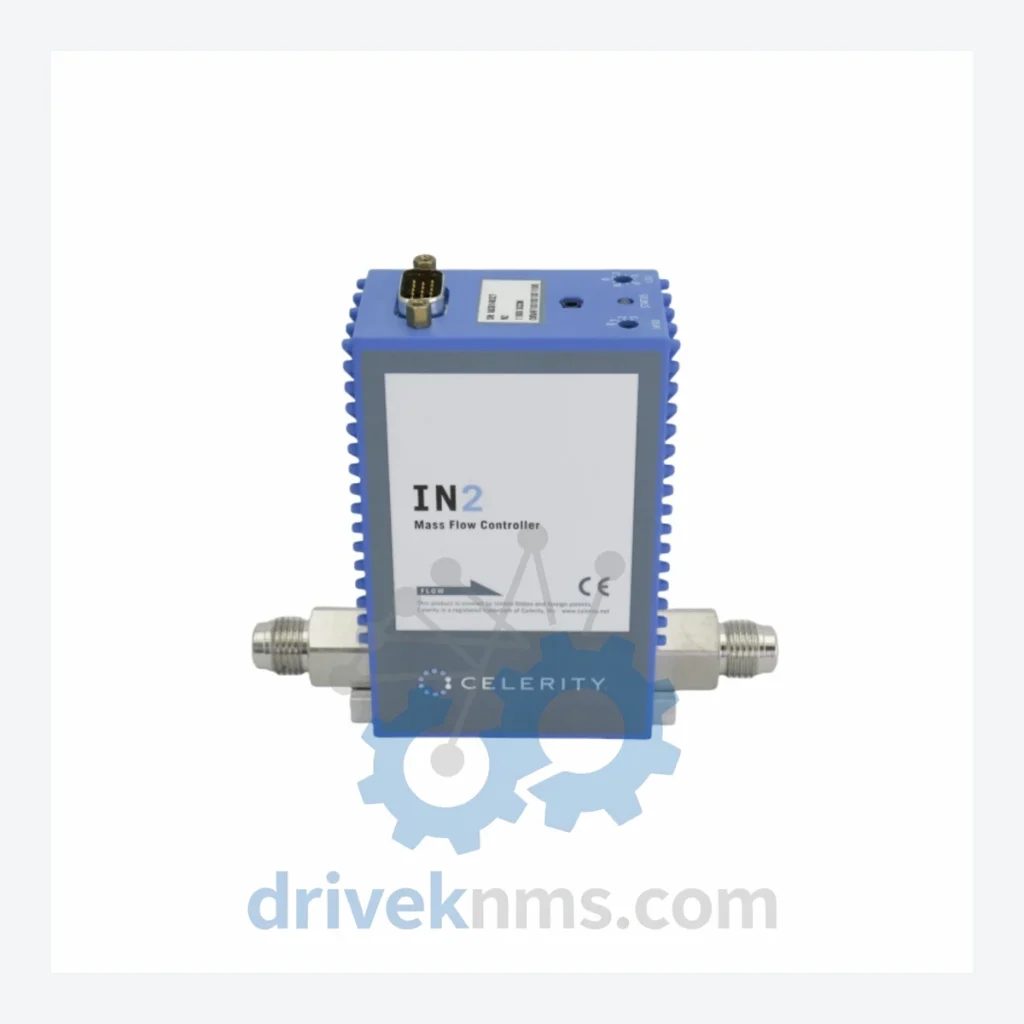
The CELERITY DSVAF series of thermal mass flow controllers (MFCs) has established a significant installed base across global heavy-process industries, including semiconductor fabrication, chemical vapor deposition (CVD), flat-panel display manufacturing, and specialty gas distribution systems. Manufactured by Celerity (formerly Unit Instruments, later acquired by Brooks Instrument), the DSVAF platform was engineered to deliver high-accuracy, low-drift gas flow measurement and control for corrosive, inert, and reactive process gases. Its compact form factor and standardized D-sub electrical interface made it a default specification in OEM tool builds from Applied Materials, Lam Research, and Novellus Systems throughout the 1990s and 2000s. The series remains in active use at legacy fabs and chemical plants where tool replacement is cost-prohibitive, creating sustained demand for certified spare and refurbished units.
The Evolution of DSVAF Architecture
The DSVAF architecture is rooted in the capillary thermal sensing principle: a precision bypass splits the process gas stream, routing a laminar fraction through a heated sensor tube. Resistance temperature detectors (RTDs) upstream and downstream of the heater element measure the differential temperature shift proportional to mass flow rate. Early DSVAF variants used analog signal conditioning with 0–5 VDC output and manual zero/span potentiometers. Mid-generation units introduced digital linearization via onboard EEPROM calibration tables, enabling multi-gas and multi-range configurability without hardware changes. The suffix structure encodes critical configuration data: the numeric segment (e.g., 100) denotes the full-scale flow range in sccm or slm; the ratio segment (e.g., 32/900) specifies the bypass ratio; ATN indicates the valve actuator type (normally closed solenoid); CEIA defines the electrical connector and I/O standard; and the gas code (e.g., 45-A for N₂/IN2) identifies the factory calibration gas and conversion factor. Compatibility between DSVAF units and downstream process tools depends on matching all suffix parameters precisely. Substitution with a different gas code or bypass ratio will produce systematic flow error and may violate process recipe specifications.
DSVAF Full Catalog & Functionalities (SKU List)
The following SKUs represent verified, commonly traded configurations within the CELERITY DSVAF series. Each unit is a self-contained thermal mass flow controller integrating sensor, bypass, control valve, and signal electronics in a single body.
- DSVAF100 32/900 ATN CEIA 45-A: 100 sccm N₂-equivalent, normally closed valve, standard D-sub I/O, inert gas service.
- DSVAF200 32/900 ATN CEIA 45-A: 200 sccm N₂-equivalent, same bypass and valve configuration, higher range for process gas blending.
- DSVAF500 32/900 ATN CEIA 45-A: 500 sccm N₂-equivalent, used in CVD precursor delivery and etch gas manifolds.
- DSVAF1000 32/900 ATN CEIA 45-A: 1 slm N₂-equivalent, common in atmospheric-pressure CVD and bulk gas distribution.
- DSVAF2000 32/900 ATN CEIA 45-A: 2 slm N₂-equivalent, high-flow variant for purge and carrier gas applications.
- DSVAF5000 32/900 ATN CEIA 45-A: 5 slm N₂-equivalent, used in large-chamber etch tools and furnace gas panels.
- DSVAF100 32/900 ATN CEIA 14-A: 100 sccm, calibrated for Ar (gas code 14), semiconductor sputter deposition tools.
- DSVAF200 32/900 ATN CEIA 14-A: 200 sccm Ar-calibrated, reactive sputter and ion beam applications.
- DSVAF100 32/900 ATN CEIA 1-A: 100 sccm, calibrated for H₂ (gas code 1), low-pressure CVD and annealing furnaces.
- DSVAF500 32/900 ATN CEIA 1-A: 500 sccm H₂-calibrated, high-flow hydrogen service in epitaxial reactors.
- DSVAF100 32/900 ATN CEIA 8-A: 100 sccm, calibrated for O₂ (gas code 8), thermal oxidation and PECVD oxide processes.
- DSVAF200 32/900 ATN CEIA 8-A: 200 sccm O₂-calibrated, used in ozone-assisted deposition systems.
- DSVAF100 32/900 ATN CEIA 22-A: 100 sccm, calibrated for SiH₄ (silane, gas code 22), LPCVD and PECVD silicon deposition.
- DSVAF50 32/900 ATN CEIA 22-A: 50 sccm SiH₄-calibrated, low-flow silane delivery for thin-film deposition.
- DSVAF100 32/900 ATO CEIA 45-A: 100 sccm N₂-equivalent, normally open (ATO) valve variant, fail-open safety configuration.
- DSVAF300 32/900 ATN CEIA 45-A: 300 sccm N₂-equivalent, intermediate range for mixed-gas process recipes.
- DSVAF1000 32/900 ATN CEIA 14-A: 1 slm Ar-calibrated, high-flow sputter and plasma etch gas panels.
Quality Control for the DSVAF Range
Each DSVAF unit processed by DriveKNMS undergoes a structured verification protocol prior to dispatch. Flow calibration is performed on a primary-standard traceable test bench using the factory-specified calibration gas or a certified N₂-equivalent conversion factor. Zero stability, full-scale linearity (typically ±1% FS), and valve response time are recorded against original Celerity factory acceptance criteria. The internal bypass element is inspected for particulate contamination and corrosion pitting, which are common failure modes in units previously used with halogen-containing process gases. The solenoid valve coil resistance and seat integrity are verified under operating pressure differential. Electrical interface continuity across the D-sub connector pins is confirmed against the CEIA wiring standard. Units that fail any parameter are either refurbished to specification or quarantined and not offered for sale. A calibration certificate with as-found and as-left data is issued with each unit.