
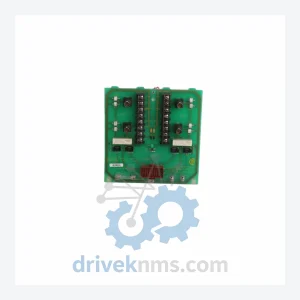
ABB NTCL01 Communication Termination Unit
ABB NTCL01 is listed for Communication Modules RFQ review. Confirm quantity, condition and destination before quotation.
RFQ-ready industrial model
Model: 2UBA002322R0010 D470 A010
Product Overview
Commercial availability is handled through direct RFQ, model verification and export-oriented follow-up rather than public cart checkout.
Datasheet Preview
Use attached product manuals when available. If the manual is not public yet, request the full file directly through RFQ.
Commercial Path
Product pages on DRIVEKNMS are designed to verify model, brand and series first, then move the buyer into one clean quotation path.
Technical Dossier
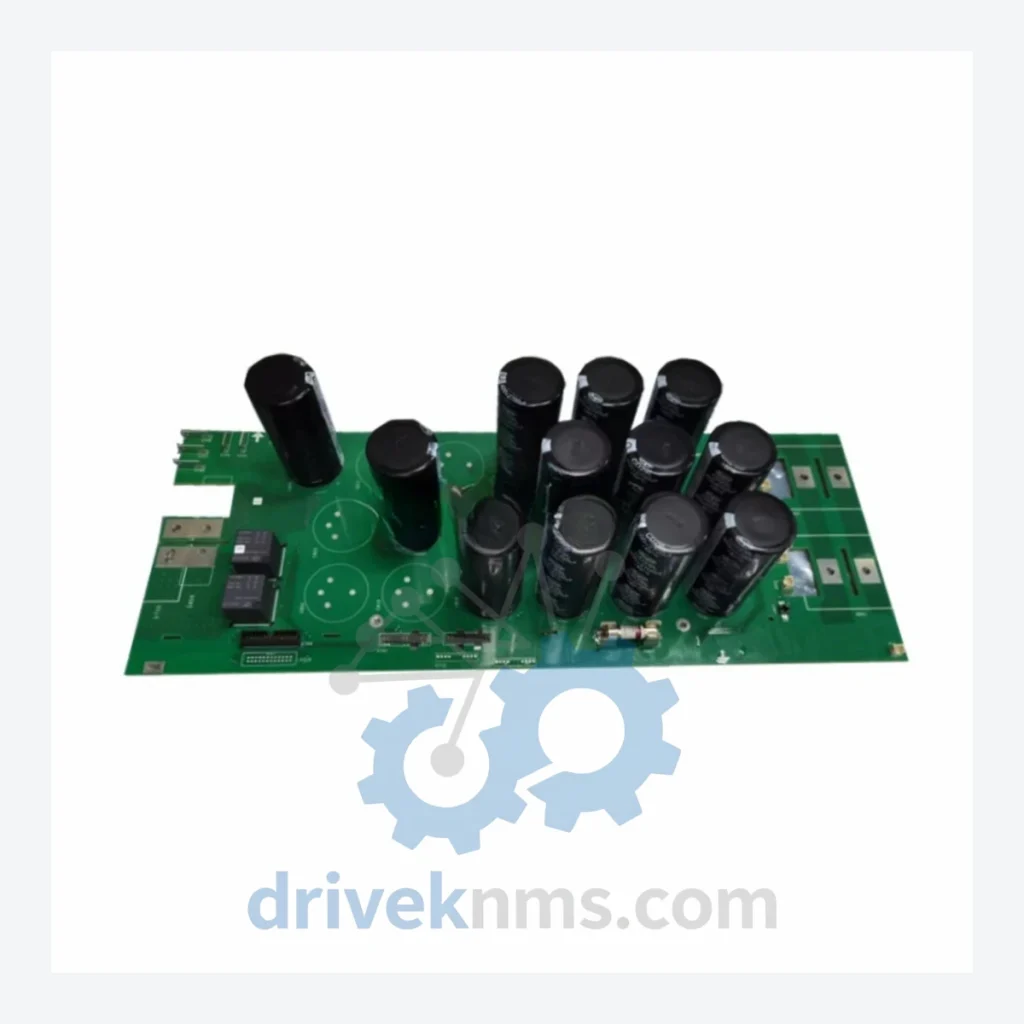
The ABB 2UBA002322R0010 D470 A010 is a Fiber Optic Communication Board designed for ABB's industrial drive and DCS platforms, including the ACS/DCS series variable frequency drives and Advant-generation distributed control systems. Boards in this family serve as the optical link layer between drive control units and external supervisory systems, enabling high-speed, noise-immune data transmission in electrically harsh environments such as chemical plants, nuclear power stations, oil refineries, and steel mills. ABB fiber optic communication boards of this generation are installed across hundreds of continuous-process facilities worldwide, many of which operate on 20+ year maintenance cycles, making long-term spare parts availability a critical operational requirement.
ABB's fiber optic communication boards evolved through three distinct architectural generations. The first generation, introduced in the late 1980s and early 1990s alongside the Advant OCS and MASTERPIECE 200/1 platforms, used proprietary DDCS (Distributed Drive Control System) protocol over plastic optical fiber (POF) at 5 Mbit/s. These boards were physically large, DIN-rail mounted, and tightly coupled to ABB's own drive inverter hardware.
The second generation, spanning the mid-1990s through the 2000s, introduced the NDSC and NAMC board families. These reduced the form factor, increased link speed, and added support for multi-drop ring topologies. The 2UBA002322R0010 part number series belongs to this generation, with the D470 hardware revision and A010 firmware designation indicating a mature, field-proven variant. Compatibility extends to ACS600, ACS800, DCS600, and DCS800 drive families, as well as AC800M controller nodes when used with appropriate adapter firmware.
The third generation, represented by FENA, FEIP, and FMAC adapter boards, transitioned to standard industrial Ethernet (EtherNet/IP, PROFINET, Modbus TCP) and is not backward-compatible with DDCS-based systems. Facilities running legacy DDCS topologies must source second-generation boards such as the 2UBA002322R0010 to maintain system integrity without full platform migration.
The following SKUs represent the verified catalog of ABB fiber optic and drive communication boards compatible with or related to the 2UBA002322R0010 D470 A010, organized by functional category:
Fiber Optic Communication Boards (DDCS / NDSC Family)
Drive Control & I/O Boards (Compatible Platform)
Fiber optic communication boards present specific test challenges due to their dual-domain nature: optical signal integrity on the POF interface and digital logic integrity on the drive backplane bus. DriveKNMS applies a three-stage test protocol to all 2UBA002322R0010 and related DDCS boards:
Stage 1 — Visual and Component Inspection: Full board inspection under 10× magnification. Verification of optical transceiver condition (ST or HFBR connector type), capacitor ESR check, and solder joint integrity assessment on high-vibration-risk areas (connector footprints, crystal oscillator mounts).
Stage 2 — Optical Link Test: POF loopback test using calibrated optical power meter. Transmit power and receive sensitivity verified against ABB DDCS specification (nominal Tx: -16 dBm, Rx sensitivity: -27 dBm at 5 Mbit/s). Boards failing optical margin test are rejected regardless of digital function.
All tested units ship with a DriveKNMS test certificate including optical power readings, firmware version confirmation, and test rig serial number for traceability.
Continue The Model Path
Move from this exact model into the matching system hub, brand archive, model-family archive or lifecycle sourcing route before sending a final RFQ list.
Related Paths
ABB NTCL01 is listed for Communication Modules RFQ review. Confirm quantity, condition and destination before quotation.
ABB NINT-73C is listed for Communication Modules RFQ review. Confirm quantity, condition and destination before quotation.
ABB SDCS-IOB-1 3BSE004084R1 is listed for Communication Modules RFQ review. Confirm quantity, condition and destination before quotation.