
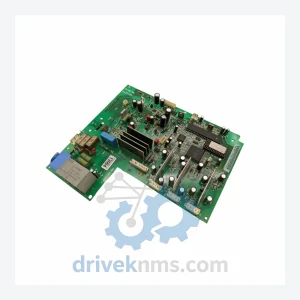
ABB SNAT-7120 Circuit Board – SNAZ7120J Series
ABB SNAT-7120 / SNAZ7120J Circuit Board: Sourcing Strategy & Asset Return Value in a Constrained Global Supply Chain The ABB…
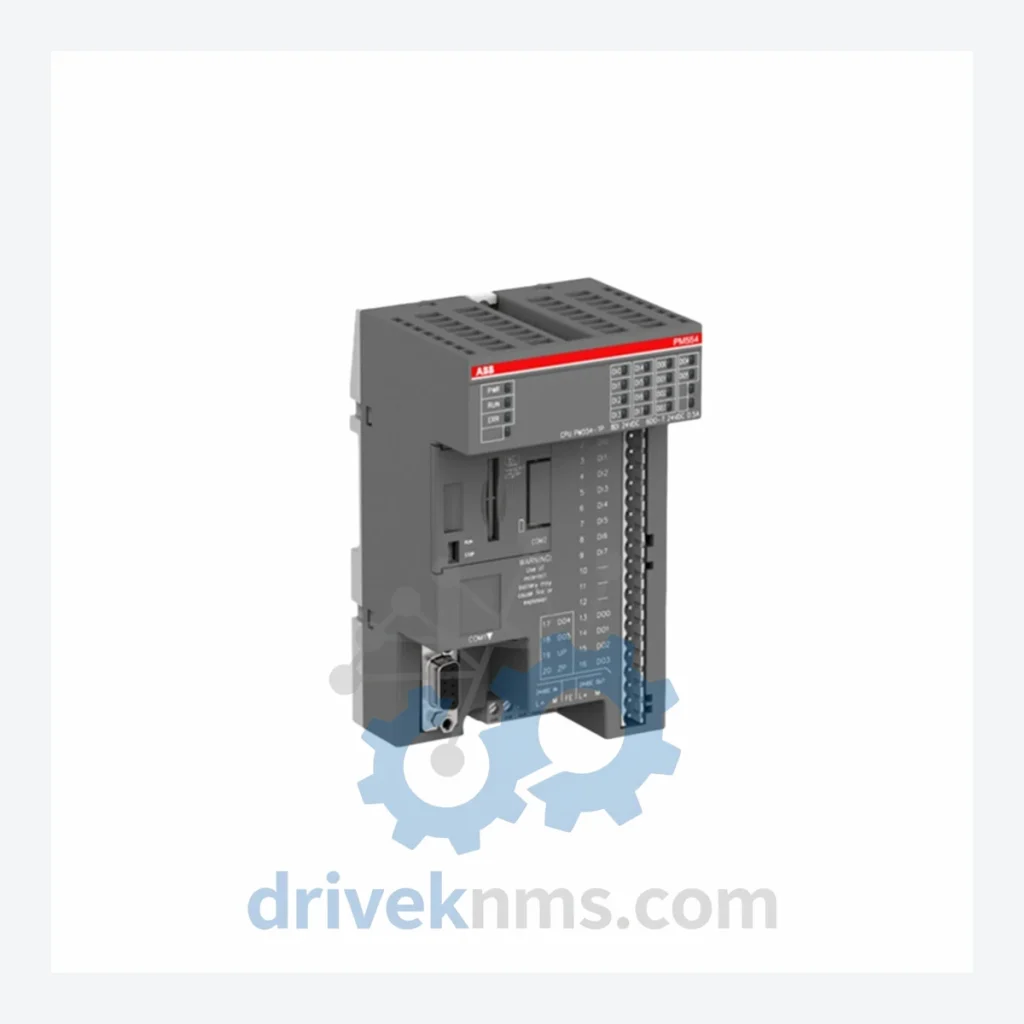
Model: PM564-TP-ETH 1SAP121100R0071
Product Overview
Commercial availability is handled through direct RFQ, model verification and export-oriented follow-up rather than public cart checkout.
Datasheet Preview
Use attached product manuals when available. If the manual is not public yet, request the full file directly through RFQ.
Commercial Path
Product pages on DRIVEKNMS are designed to verify model, brand and series first, then move the buyer into one clean quotation path.
Technical Dossier
The ABB AC500 is a scalable modular PLC platform deployed across heavy industrial sectors including petrochemical refineries, nuclear power auxiliary systems, offshore oil & gas platforms, pulp and paper mills, and large-scale water treatment infrastructure. Its distributed I/O architecture and deterministic real-time execution make it a reference-class controller in process automation environments where mean-time-between-failure (MTBF) requirements exceed 100,000 hours. The AC500 family spans entry-level compact CPUs to high-availability redundant configurations, supporting IEC 61131-3 programming languages and fieldbus protocols including PROFIBUS, PROFINET, EtherNet/IP, Modbus TCP, and CANopen. Installed base globally exceeds several hundred thousand units, with active deployments in facilities operated by major energy, chemical, and infrastructure companies across Europe, Asia-Pacific, and the Americas.
The AC500 platform was introduced by ABB in the early 2000s as a successor to the CS31 and Advant Controller 31 (AC31) families. The first generation (AC500 V1) established the modular CPU + terminal unit (TU) concept, where CPUs mount onto dedicated terminal units that provide field wiring connectivity and bus interface. This mechanical separation allows CPU replacement without rewiring — a critical maintainability feature in live plant environments.
The second generation introduced the S500 I/O expansion modules with enhanced diagnostics and the PM5xx CPU range, covering performance tiers from PM510 (entry) through PM591 (high-end). Communication was extended with dedicated CM (Communication Module) adapters for PROFIBUS DP, DeviceNet, and CANopen. The PM564-TP-ETH (1SAP121100R0071) represents the mid-range tier of this generation, integrating dual Ethernet ports natively on the CPU for PROFINET and Modbus TCP without requiring an external CM module.
The third generation (AC500 V3, introduced circa 2018–2020) brought the PM5650, PM5670, and PM5690 CPUs with increased memory, faster cycle times, and IEC 62443 cybersecurity compliance. Legacy AC500 V1/V2 I/O modules (S500 series) retain backward compatibility with V3 CPUs via the same TB (Terminal Base) mechanical interface, protecting existing field wiring investments. For plants running PM564-TP-ETH units, migration paths to PM5650 or PM5670 are documented in ABB migration guide 2CDC135025M0201.
CPU Modules
Digital I/O Modules (S500 Series)
Analog I/O Modules (S500 Series)
Communication Modules
Power Supply Modules
The AC500 V1 and early V2 CPU modules — including the PM510, PM531, PM554-T, and PM564-TP-ETH — have entered the mature/end-of-active-production phase. ABB's official last-order dates for several V2 SKUs have passed, shifting procurement responsibility to the secondary market and authorized spare parts distributors. DriveKNMS maintains a dedicated inventory buffer for AC500 V2 CPUs and S500 I/O modules, sourced through verified OEM-surplus and controlled decommissioning channels.
For the PM564-TP-ETH (1SAP121100R0071) specifically, DriveKNMS provides: (1) unit-level availability from tested surplus stock; (2) cross-reference validation against the terminal unit TU516-ETH (1SAP214000R0001) to ensure mechanical and electrical compatibility; (3) firmware version documentation to match the replacement unit to the existing project's Automation Builder version requirements. Plants operating on extended maintenance contracts beyond ABB's standard support window can engage DriveKNMS for multi-year supply agreements covering both CPU and associated I/O modules.
AC500 CPU modules present specific test challenges due to their integrated dual-Ethernet PHY, SD card controller, and backplane communication bus (internal S-Bus). DriveKNMS applies the following test protocol to all AC500 CPU units prior to dispatch:
All units are shipped with a test report, firmware version label, and ESD-protective packaging compliant with IEC 61340-5-1.
© 2026 DriveKNMS. All trademarks belong to their respective owners. Specifications are for reference only and subject to change without notice. Verify all parameters against official documentation before installation.
Related Paths
ABB SNAT-7120 / SNAZ7120J Circuit Board: Sourcing Strategy & Asset Return Value in a Constrained Global Supply Chain The ABB…
ABB SCDCS-CON-4 Control Board – Obsolete DCS Spare Part When a single control board fails in a legacy distributed control…
ABB AC500 Series: Comprehensive Module Range and Technical Overview The ABB AC500 is a scalable modular PLC platform deployed across…