
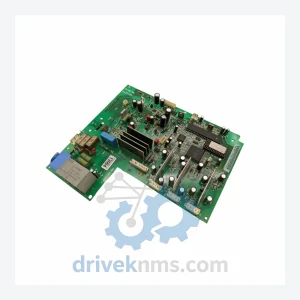
ABB SNAT-7120 Circuit Board – SNAZ7120J Series
ABB SNAT-7120 SNAZ 7120 J SNAZ7120J is listed for SNAZ7120J Series RFQ review. Confirm quantity, condition and destination before quotation.
RFQ-ready industrial model
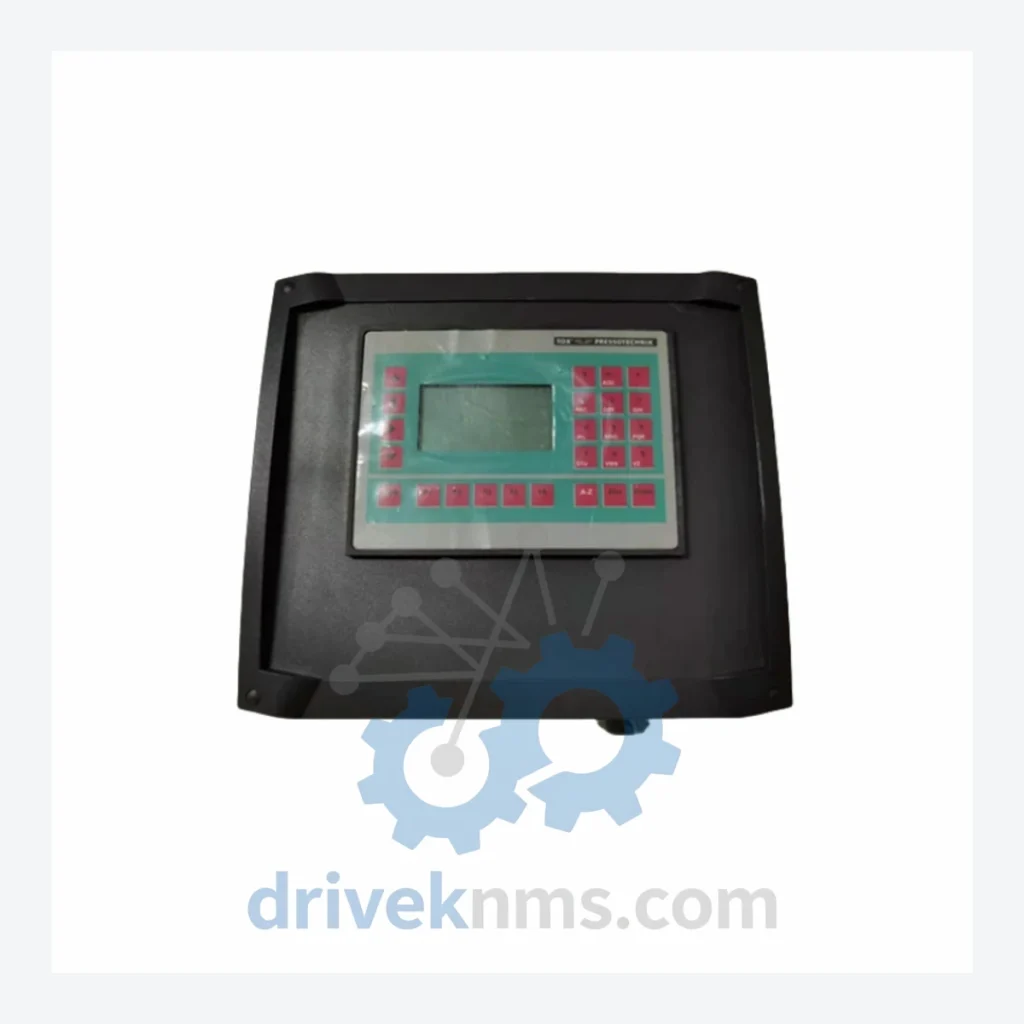
Model: CEP400.201.11.00
Product Overview
Commercial availability is handled through direct RFQ, model verification and export-oriented follow-up rather than public cart checkout.
Datasheet Preview
Use attached product manuals when available. If the manual is not public yet, request the full file directly through RFQ.
Commercial Path
Product pages on DRIVEKNMS are designed to verify model, brand and series first, then move the buyer into one clean quotation path.
Technical Dossier
The ABB CEP400 series represents a core family of control and I/O modules deployed extensively within ABB's AC400 and Advant Controller 400 (AC400) distributed control system (DCS) platform. Installed across global heavy industry sectors — including petrochemical refineries, nuclear power generation facilities, pulp and paper plants, and offshore oil and gas platforms — the CEP400 architecture has accumulated decades of field-proven operational history. Its modular backplane design, deterministic scan cycle, and compatibility with ABB's Master Bus (MB300) communication protocol made it a preferred choice for process engineers requiring high-availability control infrastructure. Facilities running CEP400-based systems typically operate on extended maintenance cycles of 15–25 years, making long-term spare parts availability a critical operational concern.
As ABB transitioned its DCS portfolio toward the System 800xA platform (introduced circa 2004), the CEP400 series entered a managed lifecycle phase. ABB formally discontinued active development of new CEP400 hardware variants, though the installed base remained too large for rapid migration. Compatibility challenges arise primarily when integrating CEP400 racks with modern OPC-UA or PROFINET infrastructure, typically requiring gateway modules or protocol converters. For facilities unable to undertake full DCS migration, third-party lifecycle support providers — including DriveKNMS — supply tested replacement modules to extend operational continuity.
The following SKUs represent verified components within the ABB CEP400 / AC400 / Advant Controller ecosystem. Each module is listed with its primary functional classification and a concise technical descriptor.
CEP400.201.11.00: Central control unit, AC400 master processor module with MB300 bus interface.
CEP400.201.10.00: Control processor unit, earlier hardware revision, compatible AC400 backplane.
CEP400.201.12.00: Control unit variant with extended memory allocation for large I/O configurations.
DSPC110: CPU module, Advant Controller 400 series, 32-bit processor, RCOM protocol support.
DSPC172: Processor module, AC400, enhanced scan rate, dual-port RAM communication interface.
DSDP170: Digital I/O combination module, 16 DI / 16 DO, 24 VDC, AC400 rack-mount.
DSDI110A: Digital input module, 32-channel, 24 VDC, isolated, AC400 compatible.
DSDO110: Digital output module, 32-channel, 24 VDC transistor output, AC400 rack.
DSAI130: Analog input module, 16-channel, 4–20 mA / 0–10 V, 12-bit resolution.
DSAO120: Analog output module, 8-channel, 4–20 mA, 12-bit DAC, AC400 backplane.
DSTC190: Thermocouple input module, 8-channel, J/K/T/E type, cold junction compensation.
DSRF180: RTD input module, 8-channel, Pt100/Pt1000, 3-wire configuration.
DSMB170: MB300 bus master module, controls up to 31 slave stations on single bus segment.
DSCS140: Communication interface module, serial RS-232/RS-485, protocol conversion gateway.
DSPOW380: Power supply module, 24 VDC regulated output, AC400 rack, redundancy-capable.
DSPOW381: Redundant power supply module, hot-swap capable, AC400 high-availability rack.
DSBC172: Bus coupler module, connects AC400 I/O rack to remote MB300 bus segment.
DSSB140: Slave bus interface module, remote I/O rack termination, MB300 protocol.
With the CEP400 series in its end-of-life phase under ABB's official support structure, procurement of replacement modules through standard distribution channels is no longer reliable. DriveKNMS maintains a dedicated inventory of tested CEP400 and AC400 ecosystem components sourced from decommissioned systems, controlled factory overstock, and verified secondary market channels. All units undergo functional verification prior to dispatch. DriveKNMS provides documentation of test results upon request, supporting customers' internal quality and maintenance records. For facilities operating under IEC 61511 functional safety requirements or equivalent national standards, DriveKNMS can coordinate with site engineers to confirm module compatibility with existing rack and backplane revisions before dispatch review.
CEP400 and AC400 series modules present specific test challenges due to their proprietary MB300 backplane communication protocol and multi-layer PCB construction. DriveKNMS employs a structured test protocol for all CEP400 family units:
Visual Inspection: Component-level examination for capacitor degradation, relay contact wear, PCB trace corrosion, and connector pin integrity. Modules with evidence of thermal stress or moisture ingress are quarantined.
Power-On Functional Test: Each module is energized within a compatible AC400 test rack. Processor modules are verified for boot sequence completion, watchdog timer function, and MB300 bus arbitration response.
I/O Channel Verification: For analog and digital I/O modules, all channels are individually stimulated and measured against factory specification tolerances. Analog modules are tested for linearity, offset error, and gain accuracy.
Communication Protocol Test: MB300 bus master and slave modules are tested for correct frame transmission, error detection response, and bus timing compliance.
Burn-In Cycle: Selected modules undergo a 24-hour powered burn-in cycle to screen for early-life component failures prior to shipment.
Continue The Model Path
Move from this exact model into the matching system hub, brand archive, model-family archive or lifecycle sourcing route before sending a final RFQ list.
Related Paths
ABB SNAT-7120 SNAZ 7120 J SNAZ7120J is listed for SNAZ7120J Series RFQ review. Confirm quantity, condition and destination before quotation.
ABB PM564-TP-ETH 1SAP121100R0071 is listed for Servo Drives RFQ review. Confirm quantity, condition and destination before quotation.
ABB SCDCS-CON-4 is listed for CON-4 Control Board RFQ review. Confirm quantity, condition and destination before quotation.