
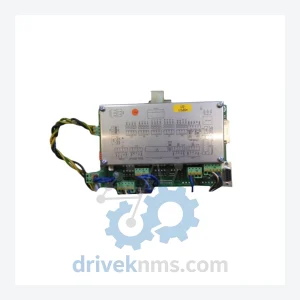
BERGHOF CCPU 8/8/4-CSC-1131 CPU Module – Compact PLC Controller
BERGHOF CCPU 8/8/4-CSC-1131 CPU Module: Procurement Strategy & Asset Return Value in a Constrained Supply Environment The BERGHOF CCPU 8/8/4-CSC-1131…
Model: RDIO 8/24-0.5 RDIO82405
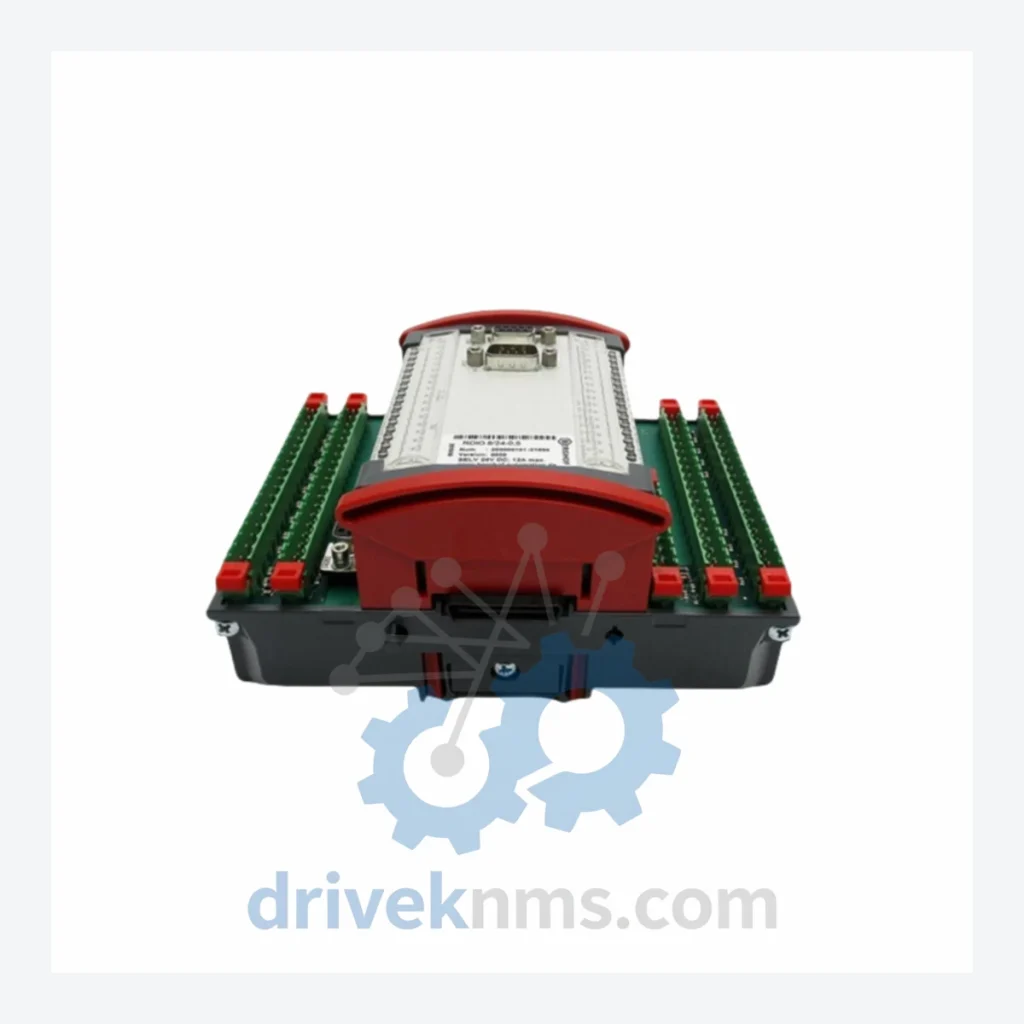
Product Overview
Commercial availability is handled through direct RFQ, model verification and export-oriented follow-up rather than public cart checkout.
Datasheet Preview
Use attached product manuals when available. If the manual is not public yet, request the full file directly through RFQ.
Commercial Path
Product pages on DRIVEKNMS are designed to verify model, brand and series first, then move the buyer into one clean quotation path.
Technical Dossier
The BERGHOF RDIO (Remote Digital I/O) series is a distributed I/O platform engineered for deployment in high-demand industrial environments including chemical processing plants, petroleum refineries, power generation facilities, and continuous-process manufacturing lines. Designed to interface directly with BERGHOF DCS and PLC backplane architectures, RDIO modules extend the I/O capacity of control systems across geographically distributed field cabinets without requiring additional CPU resources at each node. The series is characterized by its compact DIN-rail form factor, deterministic scan-cycle behavior, and robust EMC shielding — properties that have made it a standard specification in European heavy industry automation projects since the mid-1990s. Installed base data indicates significant deployment density in German, Dutch, and Scandinavian process industries, where BERGHOF hardware has maintained long-term vendor relationships with engineering contractors and system integrators.
The RDIO series was introduced as part of BERGHOF's modular automation platform to address the limitations of centralized I/O wiring in large-scale process plants. Early-generation RDIO modules communicated via proprietary parallel backplane buses, requiring physical proximity to the CPU rack. As fieldbus standards matured through the late 1990s and 2000s, BERGHOF evolved the RDIO architecture to support PROFIBUS-DP and later PROFINET communication layers, enabling true remote deployment over distances exceeding 1,000 meters from the master controller.
The RDIO 8/24-0.5 (RDIO82405) represents a mid-generation design optimized for 24 VDC digital I/O with a 0.5 A per-channel output current rating — a specification that balances solenoid valve actuation requirements with thermal dissipation constraints in enclosed field cabinets. Compatibility considerations are critical: RDIO modules from different sub-generations may share physical connectors but differ in firmware handshake protocols, requiring careful cross-referencing of hardware revision codes before substitution. Engineers replacing RDIO modules in legacy systems must verify backplane slot addressing, termination resistor configuration, and DIP-switch I/O mapping against the original system documentation.
The following SKUs represent verified components within the BERGHOF RDIO and associated remote I/O ecosystem. Each entry reflects a distinct functional role within distributed control architectures:
RDIO82405 / RDIO 8/24-0.5: 8-channel 24 VDC digital I/O module, 0.5 A output rating, DIN-rail mount.
RDIO 16/24-0.5: 16-channel 24 VDC digital I/O, 0.5 A per channel, extended I/O density variant.
RDIO 8/24-2.0: 8-channel 24 VDC digital I/O, 2.0 A high-current output for direct actuator drive.
RDIO 16/24-2.0: 16-channel 24 VDC digital I/O, 2.0 A per channel, high-load field device interface.
RDIO 8/48-0.5: 8-channel 48 VDC digital I/O module for higher-voltage field circuits.
RDIO AI 4/20mA: 4-channel analog input module, 4–20 mA current loop, 12-bit resolution.
RDIO AI 8/20mA: 8-channel analog input, 4–20 mA, for multi-sensor process measurement loops.
RDIO AO 4/20mA: 4-channel analog output, 4–20 mA, for control valve positioner signals.
RDIO AI 4/10V: 4-channel analog input, 0–10 VDC, for potentiometer and voltage-output transducers.
RDIO AO 4/10V: 4-channel analog output, 0–10 VDC, for variable-speed drive reference signals.
RDIO RTD 4: 4-channel RTD (Pt100/Pt1000) temperature input module, 3-wire configuration.
RDIO TC 4: 4-channel thermocouple input module, supports Type J, K, T, and E sensors.
RDIO PROFIBUS-DP: PROFIBUS-DP communication adapter, slave node interface for RDIO backplane.
RDIO PROFINET IO: PROFINET IO device adapter, 100 Mbit/s, for Ethernet-based RDIO integration.
RDIO PWR 24V: Dedicated 24 VDC power supply module for RDIO backplane bus distribution.
RDIO PWR 48V: 48 VDC power supply module for high-voltage RDIO segment rails.
RDIO COUPLER: Backplane bus coupler for extending RDIO segment across multiple DIN-rail sections.
The BERGHOF RDIO series has entered the mature-to-declining phase of its product lifecycle. BERGHOF has progressively shifted its automation portfolio toward newer controller platforms, and several RDIO sub-variants are no longer listed in active production catalogs. For plant operators running RDIO-based systems, this creates a sourcing challenge: OEM lead times for replacement modules can extend to 16–26 weeks where stock exists at all, and in many cases the original part numbers have been superseded without direct functional equivalents.
DriveKNMS maintains a dedicated inventory of BERGHOF RDIO modules sourced through authorized secondary-market channels, including decommissioned plant equipment, surplus dealer networks, and tested pull-outs from controlled dismantling projects. All units are cataloged by hardware revision code and firmware version where applicable. DriveKNMS provides lifecycle extension support for RDIO installations, including cross-reference analysis for discontinued part numbers, compatibility verification against customer-supplied system documentation, and multi-unit lot sourcing for planned maintenance shutdowns. Customers operating RDIO systems in regulated industries (nuclear, pharmaceutical, petrochemical) can request documentation packages including test records and traceability certificates.
RDIO modules present specific test challenges due to their backplane-dependent communication architecture. Functional verification requires replication of the BERGHOF backplane bus environment — standalone bench testing of individual modules without a compatible backplane will not validate communication integrity or I/O scan behavior. DriveKNMS operates a dedicated BERGHOF RDIO test bench that replicates the backplane electrical and protocol environment, enabling full functional verification of each module prior to shipment.
The test protocol for RDIO digital I/O modules includes: channel-by-channel input state verification under simulated field voltage, output load switching at rated current (0.5 A or 2.0 A depending on variant), short-circuit protection response validation, and backplane communication handshake confirmation across a minimum of 500 consecutive scan cycles. Analog I/O modules undergo additional calibration verification against NIST-traceable reference standards, with linearity and offset error recorded in the accompanying test certificate. All modules are subjected to a 24-hour burn-in cycle at 40°C ambient prior to final inspection.
Related Paths
BERGHOF CCPU 8/8/4-CSC-1131 CPU Module: Procurement Strategy & Asset Return Value in a Constrained Supply Environment The BERGHOF CCPU 8/8/4-CSC-1131…
BERGHOF RDC2-CENTROTHERM 500K (810-495659-006 / 810-072687-011): Sourcing Strategy & Asset Return Value in a Constrained Global Supply Chain The BERGHOF…
ALSTOM MVAJ105RA0802A Protection Relay: Supply Continuity Strategy for a Discontinued Critical Component The ALSTOM MVAJ105RA0802A is a numerical protection relay…