
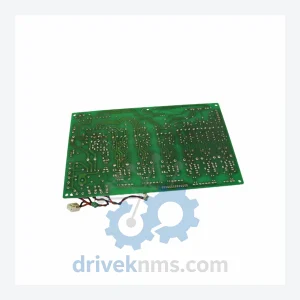
Sanken DK14256A Circuit Board: Specifications, Compatible Models & Availability
Sanken DK14256A Series: Comprehensive Module Range and Technical Overview The Sanken DK14256A is a purpose-built circuit board module deployed across…
Model: DSS 1.3
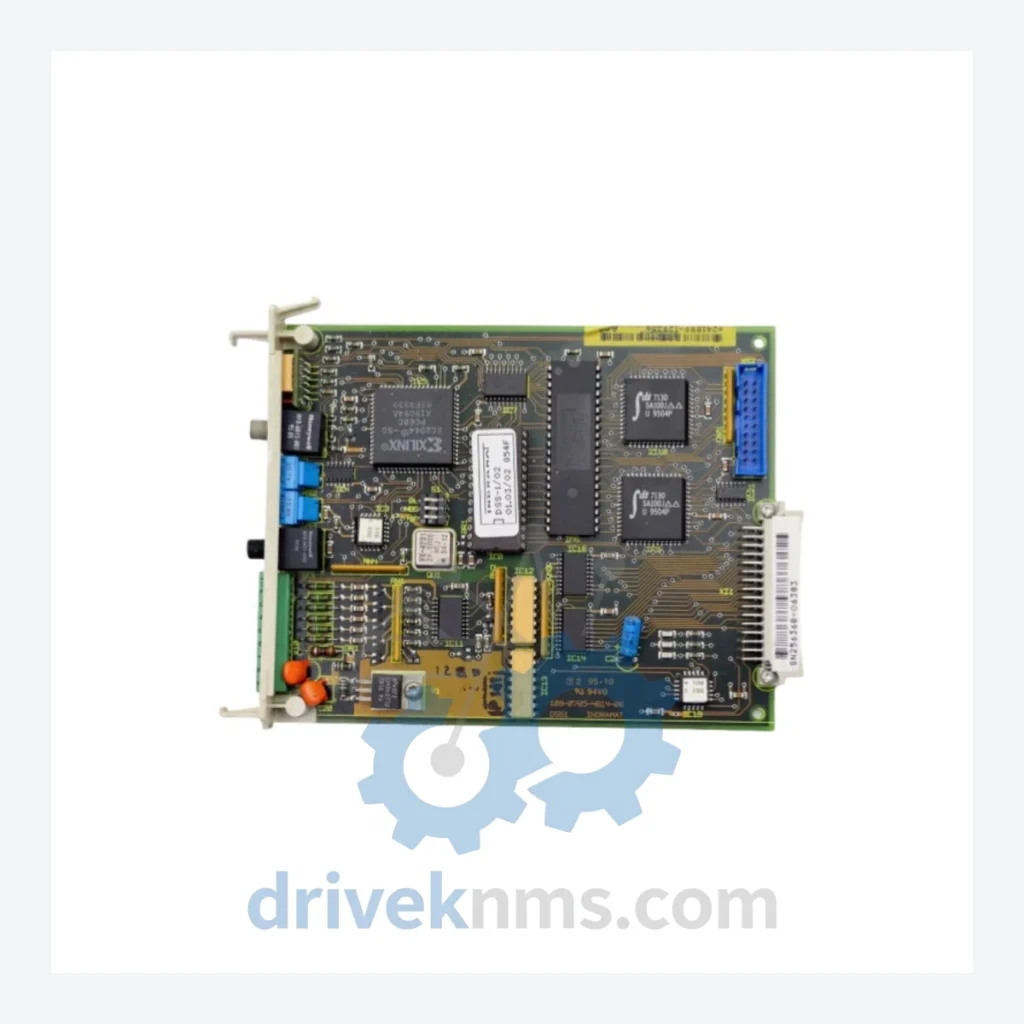
Product Overview
Commercial availability is handled through direct RFQ, model verification and export-oriented follow-up rather than public cart checkout.
Datasheet Preview
Use attached product manuals when available. If the manual is not public yet, request the full file directly through RFQ.
Commercial Path
Product pages on DRIVEKNMS are designed to verify model, brand and series first, then move the buyer into one clean quotation path.
Technical Dossier
The Bosch DSS series represents a generation of drive control and regulation cards deployed extensively across global heavy industry — including petrochemical refineries, nuclear power auxiliary systems, cement plants, steel rolling mills, and offshore processing platforms. The DSS 1.3 control card functions as the core regulation and firing-pulse interface within Bosch DC drive systems, governing armature current loops, speed feedback processing, and thyristor gate triggering. Its installed base spans decades of continuous operation in facilities where unplanned downtime carries six-figure hourly cost implications. As a result, the DSS series remains one of the most actively sourced legacy drive card families in the industrial spare parts market.
The Bosch DSS card family originated within the Bosch DIAX and Rexroth-era DC drive platforms, designed to interface with analog tachogenerator feedback and SCR (silicon-controlled rectifier) bridge assemblies. Early revisions — including the DSS 1.1 and DSS 1.2 — used discrete analog circuitry for PI current regulation, with manual potentiometer trimming for gain and offset calibration. The DSS 1.3 introduced improved EMC filtering on the feedback input stage and revised firing-angle linearization circuitry, making it the most widely adopted variant in the series.
Later revisions such as the DSS 1.4 and DSS 2.x sub-series incorporated surface-mount component density increases and revised EPROM-based parameter storage, though backward compatibility with existing drive chassis was maintained through consistent edge-connector pinouts. The DSS series has now entered its end-of-life phase; Bosch Rexroth no longer manufactures or provides OEM repair support for these cards. Industrial operators running DSS-equipped drives must rely on third-party spare parts suppliers and specialist repair houses for continued operation.
The following SKUs represent verified, commonly sourced models within the Bosch DSS control card family. Each entry reflects a distinct hardware revision or functional variant confirmed in field service documentation and industrial procurement records.
DSS 1.1: Early-revision armature current regulation card, discrete analog PI loop, potentiometer-set gain.
DSS 1.2: Revised feedback input filtering; improved noise immunity on tachogenerator signal path.
DSS 1.3: Standard production variant; enhanced EMC shielding, linearized firing-angle output, wide installed base.
DSS 1.4: SMD component revision; reduced board footprint, improved thermal margin on regulator ICs.
DSS 1.5: Final analog-architecture revision; added test-point headers for field diagnostics.
DSS 2.1: Hybrid analog/digital architecture; EPROM parameter storage, retained SCR gate drive compatibility.
DSS 2.2: Revised EPROM map; corrected current-limit response time in regenerative braking mode.
DSS 2.3: Extended temperature rating variant; specified for foundry and high-ambient environments.
DSS 3.1: Full digital regulation core; RS-485 diagnostic port, backward-compatible edge connector.
DSS 3.2: Expanded diagnostic register set; supports remote parameter readback via serial interface.
DSS 4.1: Transition-generation card; designed as drop-in replacement for DSS 1.x and 2.x in retrofit projects.
DSS 4.2: Revised gate drive output stage; compatible with higher-current SCR bridge assemblies.
DSS 5.1: Final-generation DSS architecture; integrated current transducer interface, reduced external wiring.
DSS 5.2: Variant with extended I/O connector for multi-axis coordination in tandem drive configurations.
DSS 6.1: Last catalogued DSS revision before series discontinuation; full digital, Profibus-DP option available.
DSS 6.2: Profibus-DP integrated variant; supports drive parameter management via fieldbus without local HMI.
DriveKNMS maintains a dedicated inventory program for end-of-life Bosch DSS control cards. Because OEM production of the DSS series has ceased, procurement teams at power generation facilities, chemical processing plants, and steel mills face extended lead times — often 16 to 52 weeks — when attempting to source these cards through standard distribution channels. DriveKNMS addresses this gap through three supply pathways: (1) new-old-stock (NOS) units sourced from decommissioned drive systems and verified against original Bosch part numbers; (2) professionally refurbished units that have undergone full component-level inspection and functional testing; and (3) cross-reference matching, where DSS variants with compatible pinouts and parameter sets are identified as functional substitutes for discontinued revisions. Customers operating DSS 1.x and DSS 2.x drives are advised to maintain a minimum buffer stock of two to three control cards per drive line, given the unpredictable availability of these components on the secondary market.
Bosch DSS control cards present specific test challenges due to their mixed analog/digital architecture and their role as the primary regulation interface in SCR drive systems. DriveKNMS applies a structured test protocol to all DSS units prior to dispatch. Each card undergoes visual inspection for PCB delamination, electrolytic capacitor bulge, and solder joint fatigue — failure modes common in cards that have operated in high-vibration or high-temperature environments. Functional testing is performed on a dedicated drive emulation bench that replicates the armature current feedback loop, tachogenerator input signal, and firing-pulse output load conditions. Current regulation accuracy is verified across the full operating range (typically 0–100% of rated armature current), and firing-angle linearity is confirmed against the original Bosch calibration specification. Cards exhibiting parameter drift outside tolerance are recalibrated using original-specification potentiometer settings before re-test. All units are issued a test report documenting pass/fail criteria and measured performance data.
Related Paths
Sanken DK14256A Series: Comprehensive Module Range and Technical Overview The Sanken DK14256A is a purpose-built circuit board module deployed across…
KEB COMBIVERT F5 Series: Comprehensive Module Range and Technical Overview The KEB COMBIVERT F5 is a general-purpose AC variable frequency…
YASKAWA F350604-1 Series: Comprehensive Module Range and Technical Overview The YASKAWA F350604-1 Drive Control Board is a core control component…