
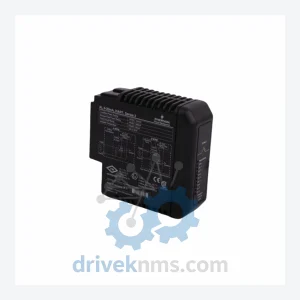
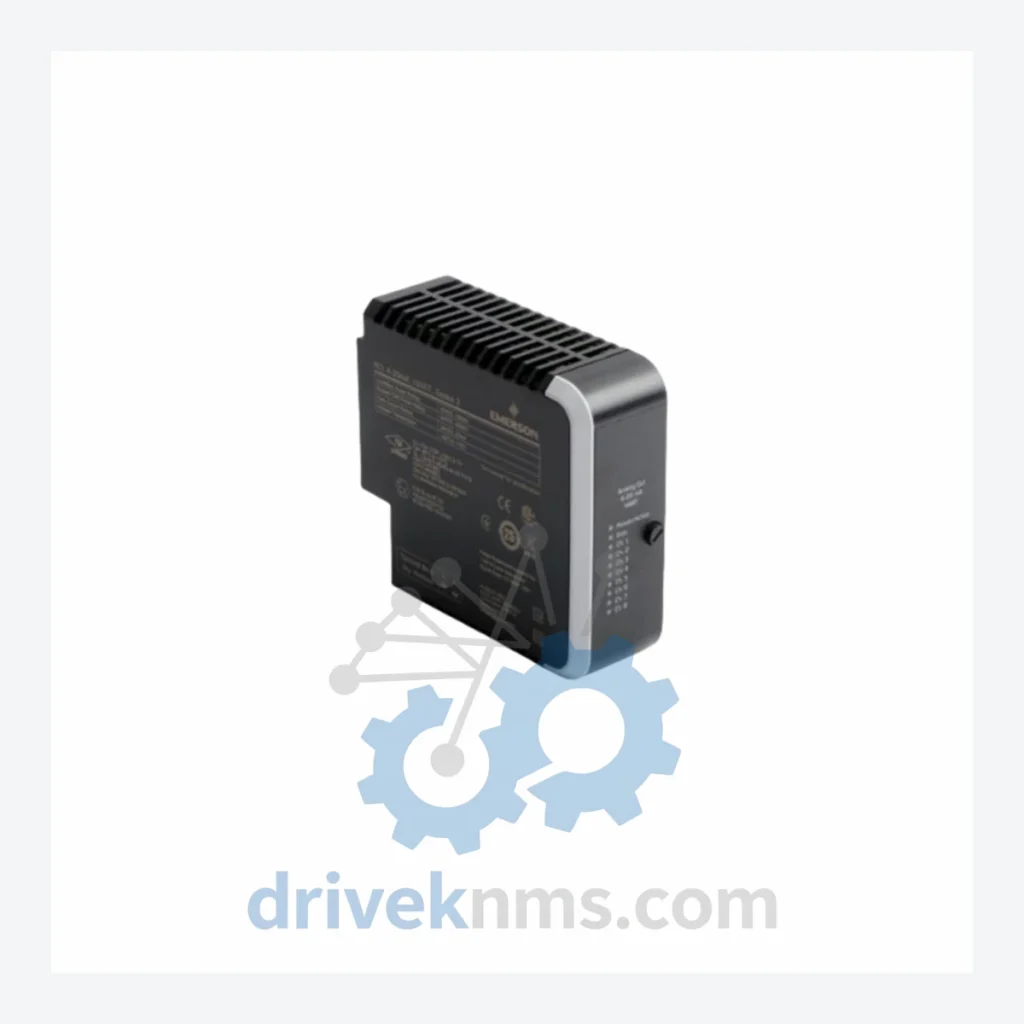
Emerson KJ3203X1-BA2 Input Module – Obsolete DeltaV Spare Part
Emerson KJ3203X1-BA2 is listed for DeltaV RFQ review. Confirm quantity, condition and destination before quotation.
RFQ-ready industrial model
Model: KJ3221X1£BA2
Product Overview
Commercial availability is handled through direct RFQ, model verification and export-oriented follow-up rather than public cart checkout.
Datasheet Preview
Use attached product manuals when available. If the manual is not public yet, request the full file directly through RFQ.
Commercial Path
Product pages on DRIVEKNMS are designed to verify model, brand and series first, then move the buyer into one clean quotation path.
Technical Dossier
The Emerson DeltaV distributed control system (DCS) is one of the most widely deployed process automation platforms in global heavy industry. Installed across petrochemical complexes, nuclear power stations, oil refineries, LNG terminals, and pharmaceutical manufacturing facilities, the DeltaV architecture is recognized for its scalability, redundancy options, and fieldbus integration capabilities. The KJ3221X1-BA2 is a representative I/O module within this ecosystem, designed for analog input signal conditioning in process-critical environments. DeltaV installations routinely span 20–30 year operational lifecycles, making long-term spare parts availability a primary concern for plant maintenance engineers and procurement teams worldwide.
The DeltaV platform was introduced by Fisher-Rosemount (later acquired by Emerson Electric) in the mid-1990s as a scalable, node-based DCS designed to replace legacy proprietary systems. The architecture evolved through several distinct generations:
Generation 1 (1996–2002): Initial S-series controllers (MD, MD Plus) with FOUNDATION Fieldbus and HART integration. I/O modules used the KJ-prefix naming convention with BA1 hardware revisions. Backplane communication relied on a proprietary serial bus.
Generation 2 (2002–2010): Introduction of the MD Controller with expanded memory, redundant controller pairs, and the KJ3xxx I/O module family. The BA2 hardware revision (as in KJ3221X1-BA2) introduced improved signal isolation and extended temperature tolerance. PROFIBUS DP and DeviceNet adapters were added to the catalog.
Generation 3 (2010–2018): DeltaV S-series controllers (S60, S60 Redundant), Electronic Marshalling with CHARM (Characterization Module) technology, and the introduction of wireless I/O via WirelessHART. Legacy KJ-series I/O remained backward-compatible via the same carrier and backplane infrastructure.
Generation 4 / Modern (2018–Present): DeltaV Virtualization, DeltaV Live HMI, and the introduction of the DeltaV PK Controller for edge applications. Many KJ-series modules are now classified as mature or end-of-active-production, though Emerson continues to provide repair and limited new-manufacture supply. Plants running Generation 1–2 hardware face increasing obsolescence risk and rely on third-party distributors for lifecycle extension.
The following SKUs represent verified, commonly stocked modules within the Emerson DeltaV ecosystem. Each entry reflects the module's primary functional role within a DeltaV node.
Analog Input Modules
KJ3221X1-BA2: 8-channel analog input, 4–20 mA HART, isolated, BA2 revision — the primary subject of this listing.
KJ3221X1-BA1: 8-channel analog input, 4–20 mA HART, isolated, earlier BA1 hardware revision; functionally equivalent, firmware-limited.
KJ3222X1-BA1: 8-channel analog input, thermocouple/RTD, multi-type temperature input module.
KJ3223X1-BA1: 8-channel analog input, voltage input (±10 V / 0–5 V), non-HART.
Analog Output Modules
KJ3241X1-BA1: 8-channel analog output, 4–20 mA HART, isolated, loop-powered.
KJ3242X1-BA1: 8-channel analog output, voltage output, 0–10 V range.
Digital Input Modules
KJ3001X1-BA1: 8-channel discrete input, 24 VDC, dry contact / wet contact selectable.
KJ3002X1-BA1: 8-channel discrete input, 120 VAC, optically isolated.
KJ3011X1-BA1: 16-channel discrete input, 24 VDC, high-density I/O carrier compatible.
Digital Output Modules
KJ3101X1-BA1: 8-channel discrete output, 24 VDC sourcing, 0.5 A per channel.
KJ3102X1-BA1: 8-channel discrete output, relay contact, 2 A per channel, Form C contacts.
Controller Modules
KJ2003X1-BA1: DeltaV MD Controller, primary process controller node, 100 Mbps control network.
KJ2005X1-BA1: DeltaV MD Plus Controller, expanded I/O capacity, redundancy-ready.
KJ2006X1-BA1: DeltaV S60 Controller, high-capacity node, supports up to 750 I/O channels.
Power Supply Modules
KJ1501X1-BA1: DeltaV I/O Power Supply, 24 VDC, 5 A, single-wide carrier mount.
KJ1502X1-BA1: DeltaV Redundant Power Supply module, hot-swap capable, dual-feed input.
Communication & Fieldbus Adapters
KJ3232X1-BA1: FOUNDATION Fieldbus H1 interface module, 2-segment, intrinsically safe option.
KJ3233X1-BA1: PROFIBUS DP interface module, 12 Mbps, DeltaV node integration.
DeltaV I/O modules operate within a tightly coupled backplane and control network architecture. Standard visual inspection and power-on testing are insufficient to validate module integrity for process-critical applications. DriveKNMS applies the following test protocol to all DeltaV modules prior to shipment:
Backplane Communication Verification: Each module is seated in a live DeltaV carrier and interrogated via the DeltaV Diagnostics tool to confirm node recognition, firmware version reporting, and channel-level communication integrity.
Channel-Level Signal Injection: For analog input modules (including KJ3221X1-BA2), all 8 channels are tested with calibrated 4–20 mA loop simulators. Output accuracy is verified against Emerson's published ±0.1% full-scale specification.
HART Pass-Through Test: HART communication is verified on each channel using a HART communicator to confirm secondary variable transmission and device descriptor (DD) compatibility.
Isolation Resistance Test: Channel-to-channel and channel-to-ground isolation is measured at 500 VDC to confirm dielectric integrity, particularly critical for modules returning from high-humidity or corrosive environments.
Continue The Model Path
Move from this exact model into the matching system hub, brand archive, model-family archive or lifecycle sourcing route before sending a final RFQ list.
Related Paths
Emerson KJ3203X1-BA2 is listed for DeltaV RFQ review. Confirm quantity, condition and destination before quotation.
Emerson A6500CC is listed for DeltaV RFQ review. Confirm quantity, condition and destination before quotation.
Emerson KJ3204X1-BA1 12P3275X032 VE4002S1T2B5 is listed for DeltaV RFQ review. Confirm quantity, condition and destination before quotation.