
Fisher 01984-4080-0001 Discrete Field Interface Module – DeltaV Series
Fisher 01984-4080-0001 is listed for DeltaV RFQ review. Confirm quantity, condition and destination before quotation.
RFQ-ready industrial model
Model: VE4031S2T2B1
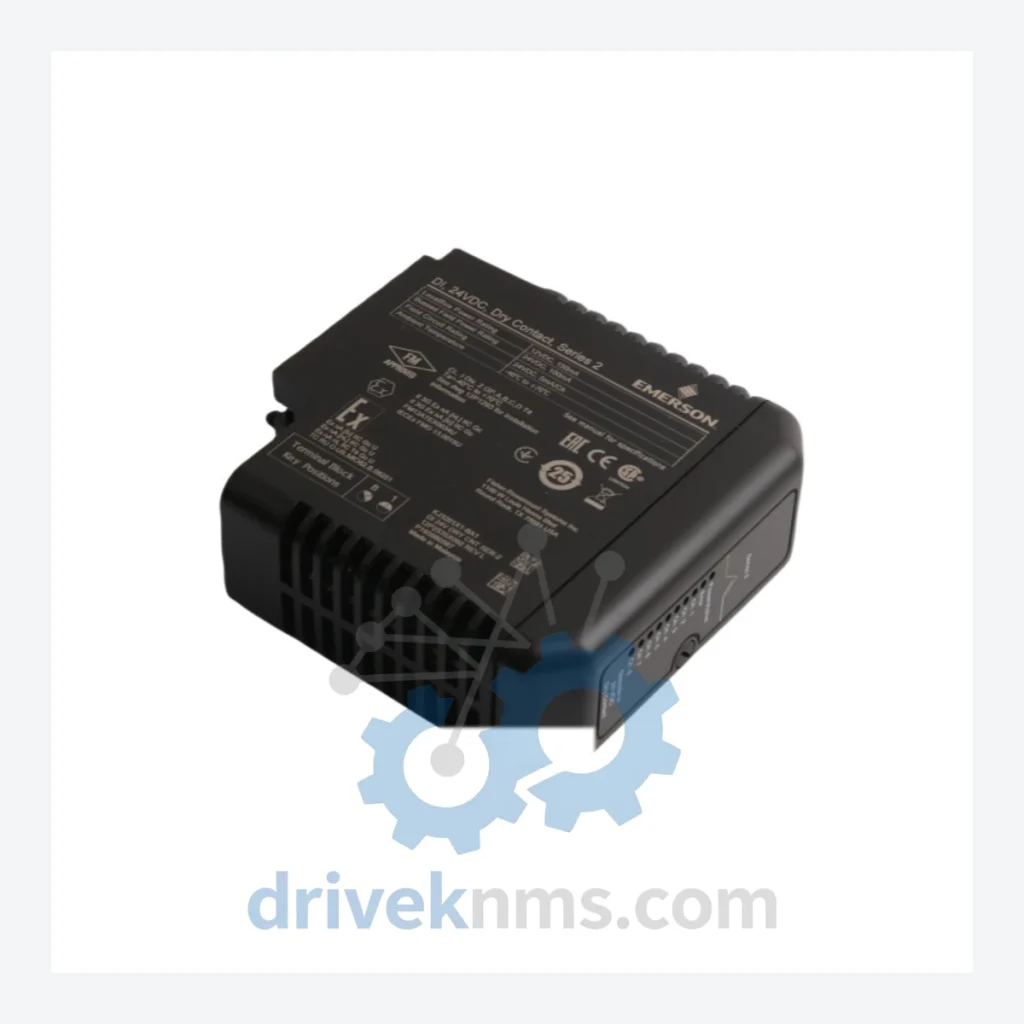
Product Overview
Commercial availability is handled through direct RFQ, model verification and export-oriented follow-up rather than public cart checkout.
Datasheet Preview
Use attached product manuals when available. If the manual is not public yet, request the full file directly through RFQ.
Commercial Path
Product pages on DRIVEKNMS are designed to verify model, brand and series first, then move the buyer into one clean quotation path.
Technical Dossier
The Emerson DeltaV distributed control system (DCS) is one of the most widely deployed process automation platforms in global heavy industry. Installed across petrochemical complexes, nuclear power facilities, offshore platforms, LNG terminals, and pharmaceutical manufacturing sites, the DeltaV architecture is recognized for its scalability, redundancy options, and deterministic I/O performance. The VE4031S2T2B1 is a representative module within the DeltaV I/O subsystem, designed for integration into DeltaV controller nodes operating under IEC 61511 functional safety requirements. DriveKNMS maintains an active inventory of DeltaV modules — including discontinued and long-lead-time variants — to support facilities operating legacy DeltaV installations where OEM supply chains have been discontinued or extended.
The DeltaV platform was introduced by Fisher-Rosemount Systems in 1996 and subsequently became an Emerson Process Management product following the Emerson acquisition. The architecture has evolved through several distinct hardware generations:
Generation 1 (1996–2002): Original DeltaV S-series controllers (MD, SD) with 2 Mbps DeltaV bus. I/O cards used the VE-prefix numbering convention. Limited redundancy options. Compatible with DeltaV v3.x–v6.x firmware.
Generation 2 (2002–2010): Introduction of the MD Plus and MD Controller with expanded I/O density. CHARM (Characterization Module) concept introduced in later revisions. DeltaV bus upgraded to support higher node counts. Firmware v7.x–v10.x.
Generation 3 (2010–2018): DeltaV S-series with SIS integration, Electronic Marshalling via CHARM I/O Cards (CIOC), and DeltaV SIS for safety instrumented systems. Firmware v11.x–v13.x. VE-series I/O modules remain backward compatible within this generation.
Generation 4 (2018–present): DeltaV Distributed Marshalling, wireless I/O integration, and DeltaV Live operator interface. Legacy VE-series I/O modules are supported via compatibility adapters but are no longer manufactured. Sites running Generation 1–2 hardware are advised to maintain spare parts inventories as OEM support has transitioned to best-effort basis.
The VE4031S2T2B1 belongs to the VE40xx I/O module family, which covers analog and discrete I/O functions within the DeltaV subsystem backplane. Compatibility spans DeltaV v6.x through v13.x with appropriate firmware alignment.
The following SKUs represent verified, commonly sourced modules within the Emerson DeltaV VE-series and associated controller/power/communication families. All models listed have documented installation bases in active industrial facilities.
Controller Modules
VE3005: DeltaV MD Controller, 100 Mbps Ethernet, 750 I/O capacity
VE3006: DeltaV MD Plus Controller, extended memory, redundancy-ready
VE3007: DeltaV SD Controller, simplex configuration, 60 I/O nodes
VE3008: DeltaV SD Plus Controller, enhanced diagnostics firmware
VE4001S2T2B2: DeltaV 8-channel AI module, 4–20 mA HART, simplex
VE4001S2T2B4: DeltaV 8-channel AI module, HART rev 7, redundant-capable
Analog Input (AI) Modules
VE4002S2T2B2: 8-channel AI, thermocouple/RTD input, isolated
VE4003S2T2B2: 8-channel AI, high-density mV input, DIN rail mount
VE4031S2T2B1: 8-channel AI, 4–20 mA HART, standard backplane mount, simplex
VE4032S2T2B1: 8-channel AI, HART, redundant backplane configuration
Analog Output (AO) Modules
VE4005S2T2B2: 8-channel AO, 4–20 mA HART, simplex
VE4006S2T2B2: 8-channel AO, HART rev 7, redundant-capable
VE4007S2T2B2: 4-channel AO, high-current output, isolated channels
Discrete Input (DI) Modules
VE4010S2T2B2: 8-channel DI, 24 VDC, dry contact, simplex
VE4011S2T2B2: 16-channel DI, 24 VDC, high-density discrete input
VE4012S2T2B2: 8-channel DI, 120 VAC input, isolated
Discrete Output (DO) Modules
VE4015S2T2B2: 8-channel DO, 24 VDC, solid-state output
VE4016S2T2B2: 8-channel DO, relay output, 2A per channel
VE4017S2T2B2: 16-channel DO, 24 VDC, high-density discrete output
Communication & Network Modules
VE4020S2T2B2: FOUNDATION Fieldbus H1 interface module, 2-segment
VE4021S2T2B2: PROFIBUS DP interface module, master mode
VE4022S2T2B2: DeviceNet interface module, scanner configuration
Power Supply Modules
VE4040S2T2B1: DeltaV I/O power supply, 24 VDC, 5A, simplex
VE4041S2T2B1: DeltaV I/O power supply, redundant pair configuration
DeltaV VE-series modules incorporate a multi-layer backplane communication architecture using the DeltaV bus protocol. Standard visual inspection and power-on testing are insufficient to validate module integrity for process-critical applications. DriveKNMS applies the following test procedures to all DeltaV modules prior to dispatch:
Backplane Bus Communication Test: Each module is seated in a DeltaV-compatible test chassis and polled via DeltaV bus protocol to confirm node registration, firmware version readback, and diagnostic register integrity.
Channel-Level I/O Verification: For AI modules including the VE4031S2T2B1, all 8 channels are stimulated across the 4–20 mA range using a calibrated current source. Output linearity, HART communication handshake, and channel isolation are verified against OEM datasheet tolerances.
HART Protocol Validation: HART rev 5/6/7 command set compatibility is confirmed using a HART communicator. Device descriptor (DD) registration and multi-drop addressing are tested where applicable.
Thermal Cycling: Modules flagged for long-term storage or with unknown service history undergo thermal cycling between 0°C and 60°C to identify latent solder joint or capacitor failures prior to shipment.
Revision Level Documentation: Hardware revision codes are recorded and disclosed to the customer. Revision-specific compatibility notes (e.g., firmware minimum version requirements) are included with shipment documentation.
Continue The Model Path
Move from this exact model into the matching system hub, brand archive, model-family archive or lifecycle sourcing route before sending a final RFQ list.
Related Paths
Fisher 01984-4080-0001 is listed for DeltaV RFQ review. Confirm quantity, condition and destination before quotation.
Emerson SPMD1404 is listed for DeltaV RFQ review. Confirm quantity, condition and destination before quotation.
Emerson SPMD1401 is listed for DeltaV RFQ review. Confirm quantity, condition and destination before quotation.