
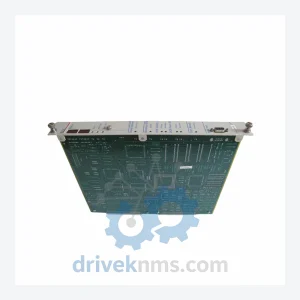
WESTINGHOUSE 4256A88G01 4256A88G04 PLC Controller – Ovation Series
Westinghouse 4256A88G01 4256A88G04 is listed for OVATION RFQ review. Confirm quantity, condition and destination before quotation.
RFQ-ready industrial model
Model: SPMA1402
Product Overview
Commercial availability is handled through direct RFQ, model verification and export-oriented follow-up rather than public cart checkout.
Datasheet Preview
Use attached product manuals when available. If the manual is not public yet, request the full file directly through RFQ.
Commercial Path
Product pages on DRIVEKNMS are designed to verify model, brand and series first, then move the buyer into one clean quotation path.
Technical Dossier
The Emerson Ovation SP Series represents a core tier of Emerson's Ovation Distributed Control System (DCS), deployed extensively across global heavy industry verticals including petrochemical refineries, nuclear power generation facilities, fossil fuel power plants, and chemical processing complexes. The SP Series I/O subsystem architecture provides the physical interface layer between the Ovation controller network and field instrumentation, handling analog inputs/outputs, digital inputs/outputs, and specialized signal conditioning tasks. Installations of Ovation SP Series modules are documented across hundreds of baseload power generation sites in North America, Europe, and Asia-Pacific, making this series one of the most widely maintained DCS I/O families in the industrial automation aftermarket. The SPMA1402 specifically is a Universal Analog Output module providing configurable 4–20 mA or 0–10 V DC output channels, used in final control element loops including control valve positioners and variable speed drive references.
The Ovation DCS platform was developed by Westinghouse Process Control before Emerson Electric acquired the division in 2004, integrating it into the Emerson Process Management portfolio. The SP Series I/O modules were designed to operate within the Ovation Remote I/O (RIO) cabinet architecture, communicating with Ovation controllers via a proprietary high-speed serial backplane bus. Early SP Series modules (circa late 1990s to early 2000s) used a 32-bit RISC-based local processor architecture for on-module signal processing, enabling distributed diagnostics independent of the main controller. The backplane interface uses a deterministic token-passing protocol, which differentiates it from later Ethernet-based I/O architectures. Compatibility constraints are significant: SP Series modules are keyed mechanically and electrically to specific backplane slot types; substitution across sub-families (e.g., replacing an analog input module with a digital input module in the same slot) is not supported without backplane reconfiguration. As Emerson transitioned to the Ovation 3.x and later software platforms, firmware compatibility between older SP Series hardware revisions and newer controller software versions became a documented maintenance concern, requiring revision-matched spare parts for seamless hot-swap replacement. The series is now in a mature/end-of-active-production lifecycle phase; Emerson continues to provide long-term maintenance support under its Lifecycle Services program, but new production runs of specific models are limited, making certified aftermarket sourcing a primary procurement channel for operating plants.
The following catalog covers verified Emerson Ovation SP Series module part numbers, organized by functional category. Each entry reflects a distinct hardware module with a defined I/O function within the Ovation RIO subsystem.
Analog Output Modules
Analog Input Modules
Digital Output Modules
Digital Input Modules
Communication & Specialty Modules
SP Series modules present specific test challenges due to their integrated backplane bus interface and on-module microprocessor architecture. DriveKNMS employs a multi-stage verification protocol for all SP Series units processed through its facility. Stage 1: Visual and mechanical inspection — backplane connector pin integrity, card edge condition, component-level inspection for capacitor degradation and solder joint integrity. Stage 2: Powered bench test using an Ovation-compatible RIO backplane test fixture, confirming module enumeration, firmware version readout, and self-diagnostic pass status. Stage 3: Channel-level functional test — for analog output modules including the SPMA1402, each output channel is loaded with a calibrated 250 Ω burden resistor and verified across the full 4–20 mA range at 0%, 25%, 50%, 75%, and 100% of span, with accuracy confirmed against NIST-traceable reference instrumentation. Stage 4: Burn-in cycle — 48-hour powered operation at elevated ambient temperature (50°C) to screen for early-life component failures. Units passing all four stages are issued a DriveKNMS test certificate and shipped with full traceability documentation.
Continue The Model Path
Move from this exact model into the matching system hub, brand archive, model-family archive or lifecycle sourcing route before sending a final RFQ list.
Related Paths
Westinghouse 4256A88G01 4256A88G04 is listed for OVATION RFQ review. Confirm quantity, condition and destination before quotation.
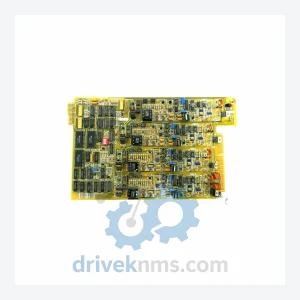
Westinghouse 2840A21G01 is listed for OVATION RFQ review. Confirm quantity, condition and destination before quotation.
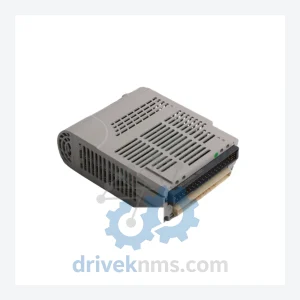
Ovation 5X00501G01 is listed for OVATION RFQ review. Confirm quantity, condition and destination before quotation.