
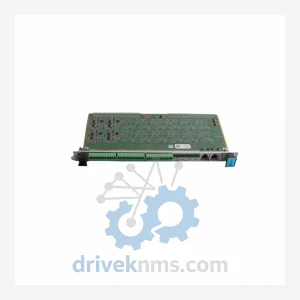
FAIVELEY 33.92.7202 Control Board – Knorr-Bremse Series
FAIVELEY 33.92.7202 Control Board: Strategic Sourcing in a Constrained Supply Environment The FAIVELEY 33.92.7202 is a specialized control board used…
Model: 33.60.6647
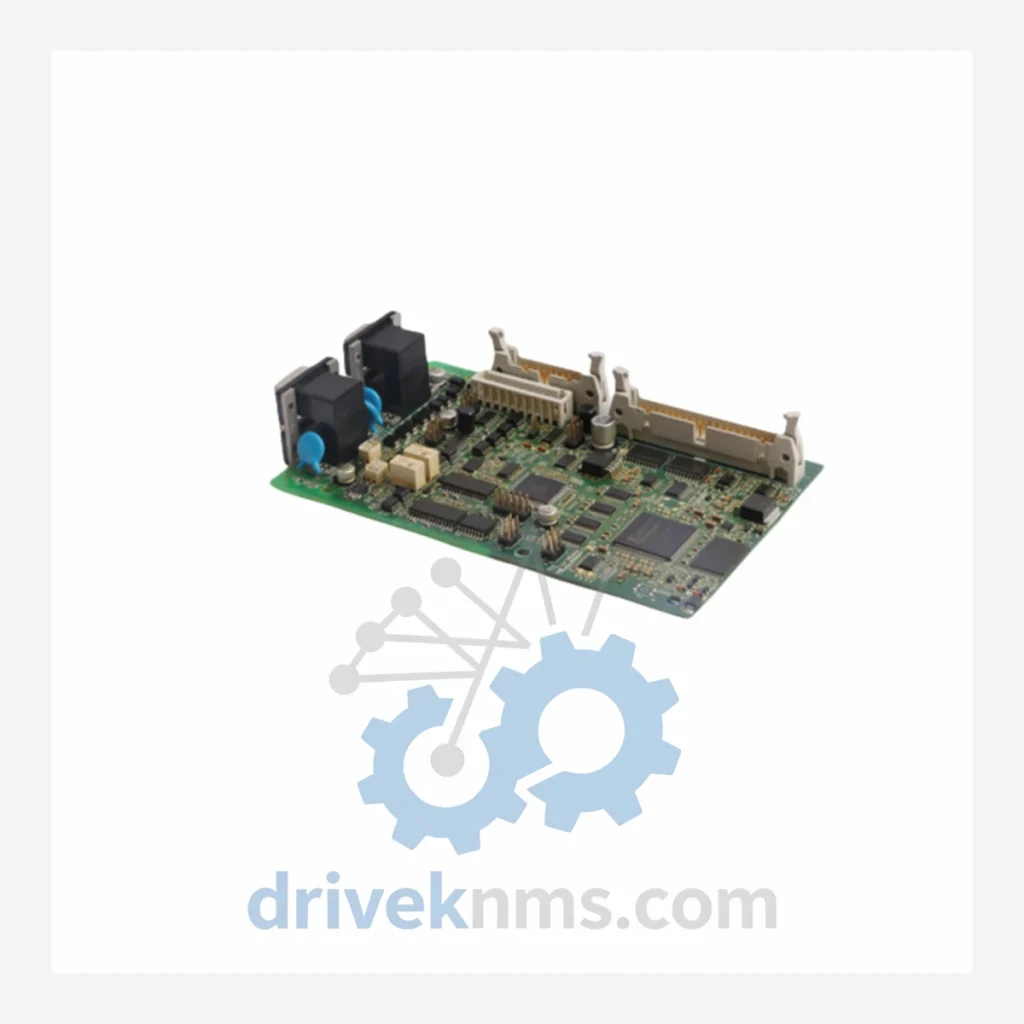
Product Overview
Commercial availability is handled through direct RFQ, model verification and export-oriented follow-up rather than public cart checkout.
Datasheet Preview
Use attached product manuals when available. If the manual is not public yet, request the full file directly through RFQ.
Commercial Path
Product pages on DRIVEKNMS are designed to verify model, brand and series first, then move the buyer into one clean quotation path.
Technical Dossier
The FAIVELEY 33.60 series represents a family of control and interface boards engineered for railway braking systems and industrial automation applications. Manufactured by Faiveley Transport (now Wabtec Corporation following the 2016 acquisition), these modules have accumulated significant installed base across heavy rail, metro, and light rail fleets globally. The 33.60 series is deployed in brake control units (BCU) and electropneumatic brake systems across operators in Europe, Asia-Pacific, and the Middle East. Their presence in safety-critical rolling stock environments — where mean time between failures (MTBF) requirements are stringent — means that lifecycle support for obsolete and end-of-life boards remains a persistent operational requirement for fleet maintenance teams.
The 33.60 series was developed as part of Faiveley Transport's modular brake electronics platform, designed to interface with electropneumatic brake actuators and wheel slide protection (WSP) systems. Early revisions of the 33.60 boards used through-hole component technology with discrete logic ICs, making them compatible with mid-1990s to early-2000s brake control architectures. Subsequent hardware revisions introduced surface-mount technology (SMT), improved EMC shielding, and revised firmware ROMs to address field-reported fault codes in WSP and anti-lock braking logic.
As Faiveley's product portfolio was absorbed into Wabtec's HVEC and brake systems divisions post-2016, the 33.60 series entered a managed end-of-life phase. OEM new production has ceased for the majority of part numbers in this family. Operators and maintenance depots are now dependent on aftermarket suppliers, refurbished exchange units, and specialist repair services to sustain fleet availability. Compatibility between hardware revisions must be verified against the applicable vehicle-specific brake system documentation (BSD) before substitution.
The following part numbers are documented within the FAIVELEY 33.60 control board family. Each entry reflects a distinct board function within the brake electronics architecture:
33.60.6647: Main brake control interface board, BCU signal processing and relay output logic.
33.60.6600: Base control board, primary logic carrier for electropneumatic brake unit.
33.60.6601: Revised base control board, SMT component layout, improved EMC compliance.
33.60.6610: Wheel slide protection (WSP) processing board, axle speed signal conditioning.
33.60.6611: WSP board variant, extended input channel count for 4-axle bogie configurations.
33.60.6620: Brake demand input board, interface for driver brake controller (DBC) signals.
33.60.6621: Brake demand board, variant with additional diagnostic output relay.
33.60.6630: Pressure transducer interface board, analog signal conditioning for brake cylinder pressure.
33.60.6631: Pressure interface board, dual-channel variant for redundant pressure sensing.
33.60.6640: Power supply regulation board, 24 VDC to internal logic rail conversion.
33.60.6641: Power board variant, extended input voltage range 18–36 VDC.
33.60.6650: Communication interface board, MVB (Multifunction Vehicle Bus) protocol adapter.
33.60.6651: Communication board, CANopen variant for non-MVB vehicle architectures.
33.60.6660: Diagnostic and event logging board, fault code storage and serial data output.
33.60.6670: Output relay board, high-current relay drivers for brake release and apply solenoids.
33.60.6680: Termination and backplane interface board, passive signal distribution within BCU chassis.
DriveKNMS maintains a dedicated procurement channel for FAIVELEY 33.60 series boards that are no longer available through OEM or authorized distributor channels. Our sourcing process covers three supply streams: (1) new-old-stock (NOS) units recovered from decommissioned vehicles or depot inventory liquidations; (2) professionally refurbished exchange units that have undergone full functional restoration; and (3) component-level repair of customer-supplied boards where the PCB substrate and connector housings are serviceable.
For fleet operators managing vehicles with 15+ year service lives, DriveKNMS provides long-term supply agreements (LTSA) that guarantee minimum annual unit availability for critical 33.60 part numbers. Requests for obsolete or low-volume part numbers are evaluated within 48 hours of inquiry submission. Cross-reference support is available for operators who need to identify the correct 33.60 board variant from vehicle-specific documentation or legacy part numbering systems.
All FAIVELEY 33.60 series boards processed by DriveKNMS undergo a structured test protocol prior to dispatch. The test sequence addresses the specific failure modes documented for this board family:
Visual and mechanical inspection: PCB for delamination, cracked solder joints, corroded connector pins, and damaged component bodies. Connector housings are checked against OEM pin-out specifications.
Power-on functional test: Board is energized at rated supply voltage. Logic rail voltages, oscillator frequency, and reset circuit behavior are verified against reference measurements from known-good units.
I/O channel verification: All digital input and output channels are exercised using a dedicated test harness that simulates BCU backplane signals. Relay output boards are tested under rated load current.
Communication bus test: For MVB and CANopen interface boards (33.60.6650, 33.60.6651), protocol-level communication is verified using a bus analyzer. Frame error rates must be zero under sustained test conditions.
Burn-in cycle: Boards are subjected to a minimum 8-hour thermal soak at operating temperature to screen for early-life component failures before shipment.
Related Paths
FAIVELEY 33.92.7202 Control Board: Strategic Sourcing in a Constrained Supply Environment The FAIVELEY 33.92.7202 is a specialized control board used…
Faiveley S-D-010.355 Analog Input Module – Obsolete Faiveley Spare Part When a Faiveley S-D-010.355 Analog Input Module fails in an…
FAIVELEY A544305 Control Board: Supply Continuity Strategy for a Discontinued Industrial Component The FAIVELEY A544305 is a control board used…