
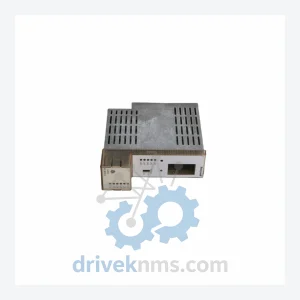
Honeywell XC Series Modules | XC5010C CPU Module
Honeywell XC Series: Comprehensive Module Range and Technical Overview The Honeywell XC Series represents a core control platform deployed across…
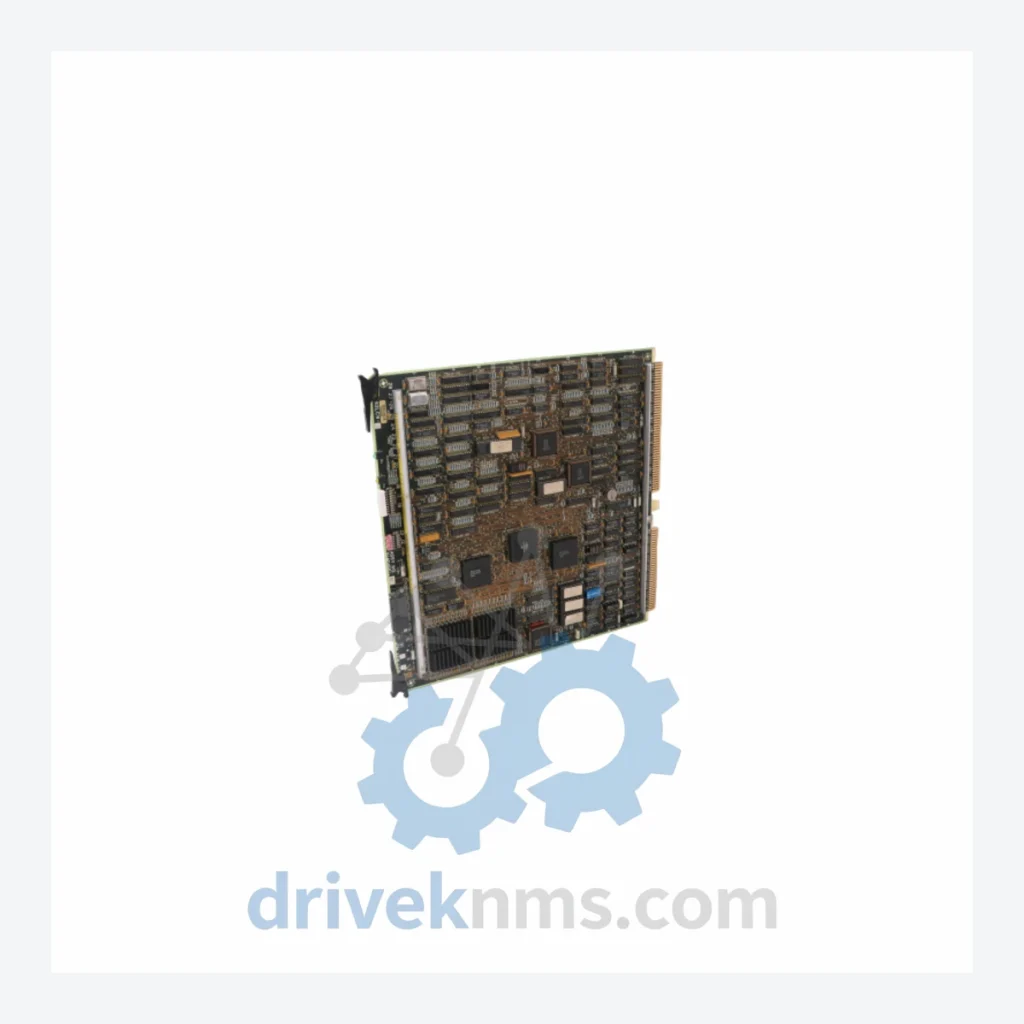
Model: K2LCN-8 51401551-801
Product Overview
Commercial availability is handled through direct RFQ, model verification and export-oriented follow-up rather than public cart checkout.
Datasheet Preview
Use attached product manuals when available. If the manual is not public yet, request the full file directly through RFQ.
Commercial Path
Product pages on DRIVEKNMS are designed to verify model, brand and series first, then move the buyer into one clean quotation path.
Technical Dossier
The Honeywell Local Control Network (LCN) is the core process control bus architecture of the TDC 3000 and Experion PKS distributed control systems. Deployed across refineries, petrochemical complexes, nuclear power stations, and large-scale chemical processing facilities worldwide, the LCN operates as a deterministic, token-passing coaxial network running at 5 Mbps. Its installed base spans several decades of continuous industrial operation, making it one of the most widely maintained legacy DCS architectures in heavy industry. Plants in the Middle East, Southeast Asia, Europe, and North America continue to operate LCN-based infrastructure, with many facilities extending system life well beyond original design horizons due to the prohibitive cost and risk of full DCS migration.
The LCN was introduced by Honeywell in the early 1980s as part of the TDC 3000 platform, replacing the earlier Highway architecture with a higher-bandwidth, more deterministic network topology. The original LCN used RG-6 coaxial cable with a dual-redundant ring configuration, providing fault tolerance at the network layer. Early nodes included the AM (Application Module), HM (History Module), and NIM (Network Interface Module), which interfaced the LCN to the Universal Control Network (UCN) and the plant-level data highway.
Through the 1990s, Honeywell introduced the K2LCN generation of modules, which offered increased processing power, expanded memory, and improved diagnostics over the original LCN node hardware. The K2LCN designation denotes second-generation LCN node cards, with the K4LCN series following as a further performance upgrade. By the 2000s, Honeywell's Experion PKS platform introduced the Server-Node architecture, which could coexist with legacy LCN nodes via the LCN-to-Experion bridge, allowing phased migration without full cutover. Today, the LCN series is in the mature-to-end-of-life phase. Honeywell has formally discontinued manufacturing for most LCN module variants. Spare parts availability through OEM channels is severely constrained, making third-party MRO suppliers the primary source for ongoing maintenance and emergency replacement.
The following SKUs represent verified, commonly sourced components within the Honeywell LCN ecosystem. Each entry reflects a distinct functional role within the TDC 3000 / Experion PKS architecture:
K2LCN-8 51401551-801: K2LCN node card, 8-slot backplane interface, second-generation LCN processor module for TDC 3000 AM/HM nodes.
K2LCN-4 51401550-100: K2LCN 4-slot variant, compact node processor for space-constrained LCN enclosures.
K4LCN-8 51304362-150: K4LCN enhanced processor, 8-slot, increased RAM and faster cycle time vs K2LCN generation.
K4LCN-4 51304362-100: K4LCN 4-slot processor, drop-in upgrade path from K2LCN-4 in compatible backplanes.
NIM 51401457-100: Network Interface Module, bridges LCN coaxial bus to UCN for field controller communication.
AM 51401457-200: Application Module, executes advanced control strategies and plant-wide calculations on the LCN.
HM 51401457-300: History Module, provides continuous process data archiving and trend storage on the LCN bus.
GUS 51401457-400: Global User Station interface card, connects operator workstation to LCN for real-time process display.
PHD 51401457-500: Process History Database node card, long-term historian data storage and retrieval module.
LCN Tap 51190494-100: Passive coaxial tap unit, connects individual node enclosures to the LCN dual-redundant coax ring.
LCN Terminator 51190494-200: Bus termination resistor assembly, required at each physical end of the LCN coaxial segment.
LCNP4 51304752-100: LCN Power Supply, 4-slot enclosure power module, provides regulated DC to node backplane.
LCNP8 51304752-200: LCN Power Supply, 8-slot enclosure variant, higher current capacity for fully populated backplanes.
51401491-100: LCN Coax Cable Assembly, pre-terminated RG-6 segment for inter-enclosure LCN ring wiring.
51401491-200: LCN Coax Cable Assembly, extended-length variant for rack-to-rack or building-to-building LCN runs.
51304487-100: LCN Backplane, 8-slot passive backplane for K2LCN and K4LCN node card installation.
51304487-200: LCN Backplane, 4-slot passive backplane, compatible with K2LCN-4 and K4LCN-4 processor cards.
51401551-802: K2LCN-8 variant with extended firmware revision, functionally equivalent to 51401551-801 with updated EEPROM.
51401551-100: Early-revision K2LCN-8 board, original production run, compatible with TDC 3000 R100–R400 software releases.
The Honeywell LCN series entered end-of-active-manufacturing status progressively from 2010 onward. Honeywell's MRO services for LCN hardware are limited to exchange and repair programs with extended lead times, and new-build availability for most K2LCN and K4LCN variants is no longer offered through OEM channels. DriveKNMS maintains a dedicated inventory of tested LCN spare parts sourced from decommissioned plant assets, controlled shutdowns, and authorized surplus channels globally.
For operators managing long-term LCN system life, DriveKNMS provides: verified functional stock of K2LCN-8, K2LCN-4, K4LCN-8, and K4LCN-4 processor cards; NIM, AM, HM, and GUS module inventory; LCN coaxial infrastructure components including taps, terminators, and cable assemblies; and board-level repair services for modules with repairable fault conditions. All sourced parts are cross-referenced against Honeywell part number databases to confirm revision compatibility with the target system software release.
LCN modules present specific test challenges due to their dependence on the LCN coaxial bus protocol and backplane communication architecture. DriveKNMS applies a structured verification process for all LCN inventory:
Each K2LCN and K4LCN processor card undergoes power-on self-test (POST) verification using a dedicated LCN test bench replicating the TDC 3000 backplane environment. Node communication is validated by confirming successful token acquisition on a live LCN test segment. NIM modules are tested for UCN bridge functionality, confirming bidirectional data transfer between the LCN and UCN test networks. Power supply modules are load-tested at rated current with output voltage measured at all backplane connector pins. Coaxial taps and terminators are verified for impedance compliance using a TDR (time-domain reflectometer) to detect any internal discontinuities. All modules are inspected for capacitor condition, solder joint integrity, and EEPROM firmware revision prior to dispatch. Test records are retained per unit and available upon request for critical plant applications.
Related Paths
Honeywell XC Series: Comprehensive Module Range and Technical Overview The Honeywell XC Series represents a core control platform deployed across…
Honeywell MP-DNCF02-200 Single-Phase Power Controller – Obsolete Limitrol Series Spare Part When a single-phase power controller fails inside a legacy…
Honeywell XDL Series: Comprehensive Module Range and Technical Overview The Honeywell XDL series is a core component family within the…