
Honeywell XC Series Modules | XC5010C CPU Module
Honeywell XC Series: Comprehensive Module Range and Technical Overview The Honeywell XC Series represents a core control platform deployed across…
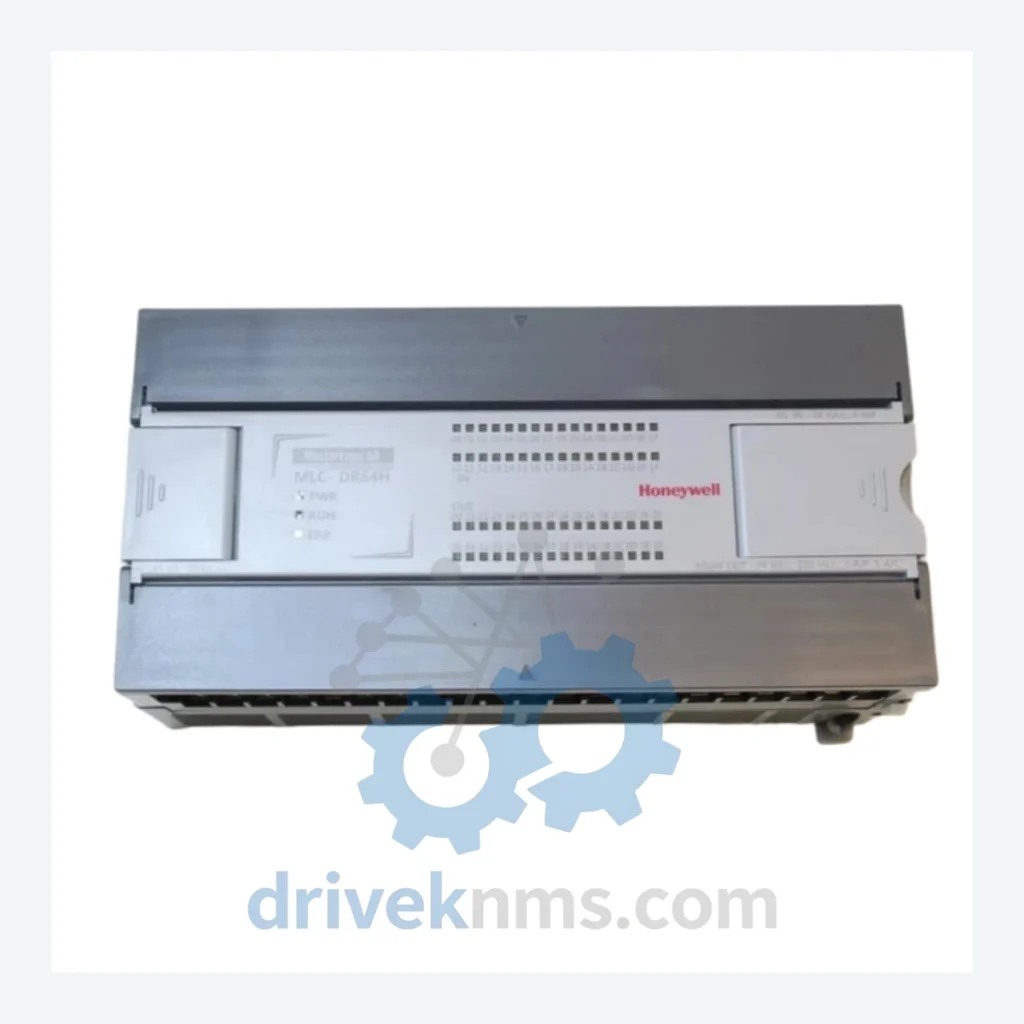
Model: MLC?DR64H
Product Overview
Commercial availability is handled through direct RFQ, model verification and export-oriented follow-up rather than public cart checkout.
Datasheet Preview
Use attached product manuals when available. If the manual is not public yet, request the full file directly through RFQ.
Commercial Path
Product pages on DRIVEKNMS are designed to verify model, brand and series first, then move the buyer into one clean quotation path.
Technical Dossier
The Honeywell MLC (Modular Logic Controller) Series represents a core I/O and control infrastructure deployed across global heavy industry, including petrochemical complexes, nuclear power stations, offshore platforms, and crude oil refineries. Engineered under Honeywell's TotalPlant Solution (TPS) and PlantScape DCS architecture, MLC modules operate as distributed I/O nodes communicating over the Local Control Network (LCN) and Universal Control Network (UCN). Their ruggedized backplane design, redundancy support, and deterministic scan cycles have made them a standard reference in facilities with 20–40 year operational lifecycles. Installed base density is highest in North America, the Middle East, and Southeast Asia, where Honeywell DCS infrastructure dominates refinery and chemical plant automation.
The MLC Series emerged from Honeywell's transition away from the original TDC 2000 and TDC 3000 hardware platforms during the late 1980s and through the 1990s. Early MLC modules were designed for direct integration with the High-Performance Process Manager (HPM) and the Application Module (AM), sharing a common backplane bus standard that allowed mixed-generation I/O deployment. The architecture uses a card-and-cage form factor: modules slot into a fixed-width chassis (typically 4-slot or 8-slot), with a passive backplane providing power distribution and data bus connectivity.
Through the 1990s, Honeywell introduced enhanced variants with expanded channel counts (32-point and 64-point digital modules), improved isolation ratings, and HART-capable analog modules. The MLC-DR64H/DC, for example, represents the high-density digital output generation — 64 discrete relay-contact outputs in a single module footprint, designed for DC load switching in motor control and valve actuation circuits. Compatibility constraints are significant: MLC modules are firmware-version sensitive and require matching the module generation to the HPM firmware revision. Cross-generation substitution without firmware validation is a documented failure mode in field maintenance records. As Honeywell has progressively migrated customers toward the Experion PKS platform (C300 controllers, EHPM), the MLC Series has entered a mature-to-declining lifecycle phase. Honeywell's official support for original MLC hardware has been reduced, making third-party lifecycle extension suppliers critical for ongoing plant operations.
Digital Output Modules
Digital Input Modules
Analog Input Modules
Analog Output Modules
Controller & Communication Modules
As Honeywell has reduced factory support for the MLC hardware generation, procurement of replacement modules through OEM channels has become unreliable, with lead times extending to 26–52 weeks or modules being declared end-of-life (EOL) without direct replacement. DriveKNMS maintains a dedicated inventory of MLC Series modules sourced from decommissioned plant assets, controlled factory surplus, and verified secondary market channels. All units are catalogued by part number, hardware revision, and firmware compatibility level. For facilities operating under long-term maintenance contracts or turnaround schedules, DriveKNMS provides advance reservation of critical spares, ensuring module availability aligns with planned outage windows. Obsolete MLC modules that have no direct Honeywell successor are cross-referenced against compatible third-party or upgraded Experion PKS equivalents where applicable, with full technical disclosure of any functional differences.
MLC Series modules present specific test challenges due to their backplane-dependent communication architecture. Functional verification requires a live MLC chassis environment — modules cannot be validated in isolation without the backplane bus and a compatible CPU module present. DriveKNMS operates dedicated MLC test rigs configured with period-correct HPM firmware versions to replicate the target plant environment. Each module undergoes the following verification sequence: visual inspection for capacitor aging, connector wear, and PCB corrosion; powered backplane insertion test to confirm bus enumeration and module self-diagnostics pass; channel-level I/O verification using calibrated signal sources and loads (4–20 mA loop calibrators for analog, 24 VDC switching loads for digital); HART communication validation on HART-capable analog modules using a HART master device; and thermal soak at 50°C for 4 hours to screen latent component failures. Modules that pass all stages are issued a DriveKNMS test certificate with date, technician ID, and chassis firmware version used during test. Failed modules are quarantined and not returned to inventory.
Related Paths
Honeywell XC Series: Comprehensive Module Range and Technical Overview The Honeywell XC Series represents a core control platform deployed across…
Honeywell MP-DNCF02-200 Single-Phase Power Controller – Obsolete Limitrol Series Spare Part When a single-phase power controller fails inside a legacy…
Honeywell XDL Series: Comprehensive Module Range and Technical Overview The Honeywell XDL series is a core component family within the…