
Honeywell XC Series Modules | XC5010C CPU Module
Honeywell XC Series: Comprehensive Module Range and Technical Overview The Honeywell XC Series represents a core control platform deployed across…
Model: MLM-DR16S
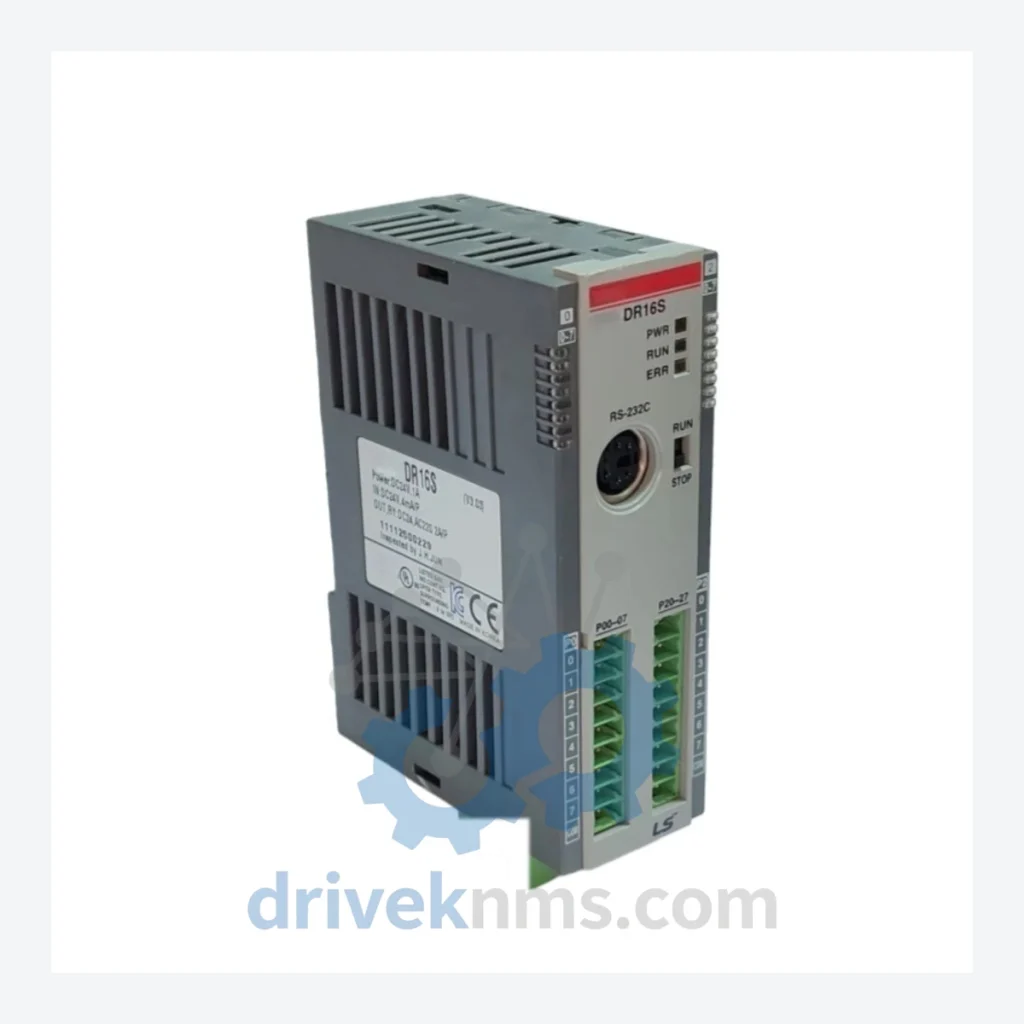
Product Overview
Commercial availability is handled through direct RFQ, model verification and export-oriented follow-up rather than public cart checkout.
Datasheet Preview
Use attached product manuals when available. If the manual is not public yet, request the full file directly through RFQ.
Commercial Path
Product pages on DRIVEKNMS are designed to verify model, brand and series first, then move the buyer into one clean quotation path.
Technical Dossier
The Honeywell MLM (Modular Logic Module) Series represents a foundational control platform deployed across global heavy industry verticals, including petrochemical complexes, nuclear power generation facilities, offshore oil and gas platforms, and large-scale refinery operations. Engineered under Honeywell's industrial automation division, the MLM Series was designed to meet the deterministic scan-cycle requirements of continuous process environments where unplanned downtime carries direct safety and financial consequences. Installed base figures place the MLM Series among the most widely maintained legacy PLC platforms in North America, Europe, and the Middle East, with active installations documented at facilities operating under IEC 61511 and ISA-84 functional safety frameworks.
The MLM Series was introduced as a modular successor to Honeywell's earlier fixed-I/O controller platforms, addressing the scalability limitations of monolithic rack designs. Early-generation MLM hardware (circa late 1990s) utilized a parallel backplane bus architecture with a proprietary inter-module communication protocol, supporting scan rates in the 5–50 ms range depending on I/O density. Mid-generation revisions introduced enhanced CPU modules with expanded memory maps and support for Modbus RTU and HART pass-through communication, enabling integration with field instrumentation without gateway hardware.
Later MLM variants incorporated dual-port Ethernet options for supervisory SCADA connectivity, bridging the gap between legacy serial fieldbus environments and modern OPC-DA/OPC-UA data architectures. As of 2026, the MLM Series is classified as a mature/end-of-life platform by Honeywell's lifecycle management policy. Honeywell has formally transitioned customers toward the Experion PKS and Safety Manager SC platforms. However, the installed base remains substantial, and direct hardware replacement is not economically viable for many facilities operating under long-term maintenance contracts. Compatibility between MLM generations requires careful attention to backplane revision levels, firmware versions, and I/O bus addressing schemes — cross-generation substitution without engineering validation is not recommended.
CPU & Controller Modules
Digital Input (DI) Modules
Digital Output (DO) Modules
Analog Input (AI) Modules
Analog Output (AO) Modules
Communication & Adapter Modules
Power Supply Modules
With the MLM Series formally classified as end-of-life by Honeywell, OEM factory supply for many modules — particularly first- and second-generation CPU boards, legacy communication adapters, and high-density I/O cards — has been discontinued. DriveKNMS maintains a dedicated inventory program for MLM Series lifecycle extension, sourcing verified surplus, refurbished, and new-old-stock (NOS) units through a global network of industrial equipment distributors, decommissioned plant auctions, and authorized secondary market channels.
DriveKNMS stocks or can source the following categories of MLM parts: CPU modules across all three hardware revisions, full-range I/O modules (DI, DO, AI, AO), communication adapters including legacy PROFIBUS and Modbus variants, rack backplane assemblies, and power supply modules. All units are catalogued with firmware revision data where available, enabling compatibility verification prior to shipment. For facilities operating under long-term service agreements or turnaround maintenance schedules, DriveKNMS offers reserved inventory allocation and multi-year supply contracts to ensure continuity of spare parts availability beyond standard market lead times.
The MLM Series presents specific quality control challenges due to its backplane bus architecture and the age profile of available surplus inventory. DriveKNMS applies a multi-stage inspection and functional test protocol to all MLM modules prior to dispatch. Visual inspection covers PCB condition, capacitor health, connector pin integrity, and conformal coating status. Functional testing is performed on dedicated MLM rack test benches replicating the original backplane bus electrical environment, verifying correct module enumeration, I/O channel response, and communication protocol handshaking.
For analog modules, calibration verification is performed against NIST-traceable reference standards, with channel-by-channel accuracy documentation provided on request. Communication modules are tested for protocol compliance using hardware protocol analyzers. All tested units are issued a DriveKNMS inspection certificate with test date, firmware version recorded, and technician identification. Units that fail any test stage are quarantined and not returned to inventory.
Related Paths
Honeywell XC Series: Comprehensive Module Range and Technical Overview The Honeywell XC Series represents a core control platform deployed across…
Honeywell MP-DNCF02-200 Single-Phase Power Controller – Obsolete Limitrol Series Spare Part When a single-phase power controller fails inside a legacy…
Honeywell XDL Series: Comprehensive Module Range and Technical Overview The Honeywell XDL series is a core component family within the…