
Hyundai DIM16 Digital Input Module – Obsolete PLC Spare Part
Hyundai DIM16 Digital Input Module – Obsolete PLC Spare Part When a Hyundai DIM16 digital input module fails on the…
Model: DOM16
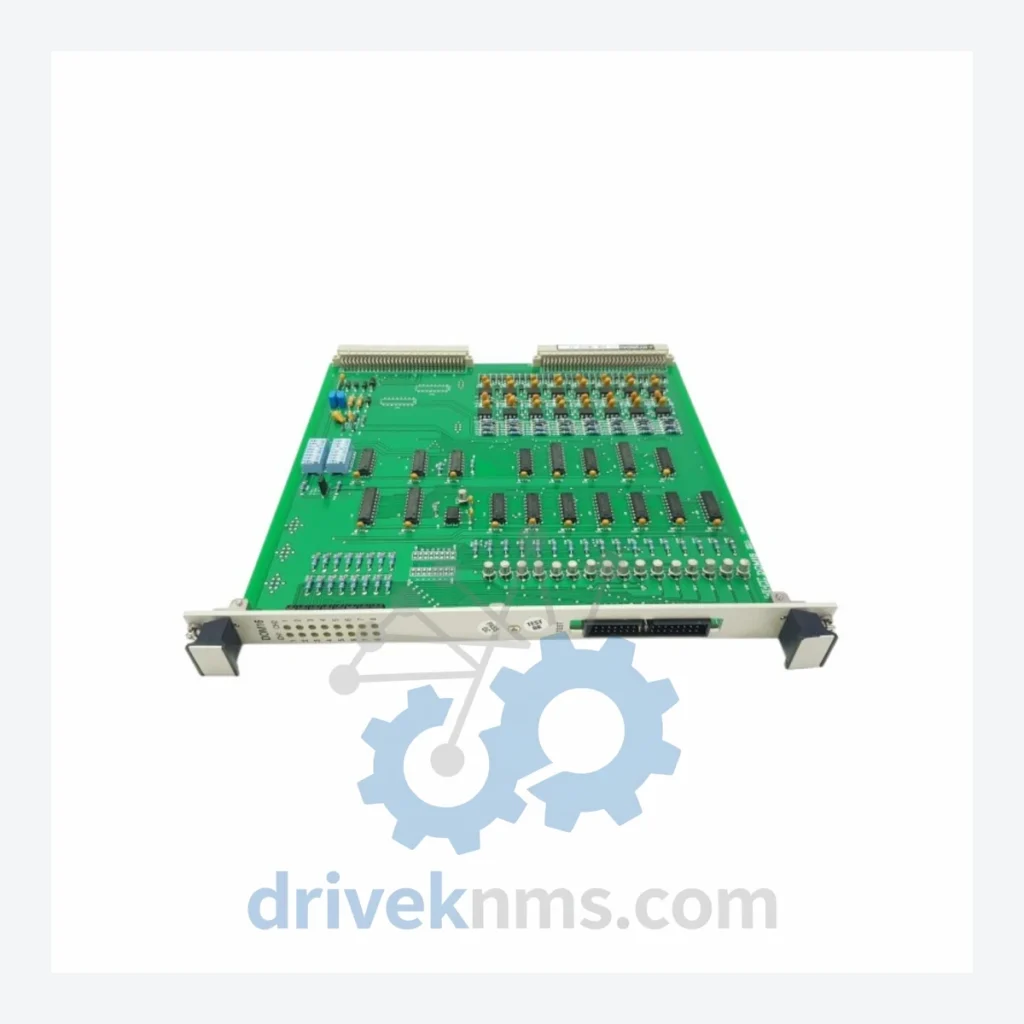
Product Overview
Commercial availability is handled through direct RFQ, model verification and export-oriented follow-up rather than public cart checkout.
Datasheet Preview
Use attached product manuals when available. If the manual is not public yet, request the full file directly through RFQ.
Commercial Path
Product pages on DRIVEKNMS are designed to verify model, brand and series first, then move the buyer into one clean quotation path.
Technical Dossier
The HYUNDAI DOM (Digital Output Module) series represents a core component family within HYUNDAI Heavy Industries' programmable logic controller and distributed control system (DCS) infrastructure. Deployed extensively across global heavy industry sectors — including petrochemical refineries, nuclear power generation facilities, offshore platforms, and large-scale chemical processing plants — the DOM series provides reliable discrete output signal control for field actuators, relay drivers, solenoid valves, and motor starters. HYUNDAI's industrial automation division, operating under the Hi-PLC and Hi-DCS product umbrellas, established the DOM series as a standardized output interface layer compatible with both legacy backplane architectures and modern rack-mounted control systems. Installed base records indicate DOM-series modules remain operational in facilities across South Korea, Southeast Asia, the Middle East, and Eastern Europe, many of which were commissioned in the 1990s and 2000s and continue to operate under long-term maintenance contracts.
The HYUNDAI DOM series evolved through three identifiable generations tied to the broader development of HYUNDAI's Hi-PLC platform. The first generation, introduced in the early 1990s, used parallel backplane communication with TTL-level logic interfaces and supported 8- or 16-point discrete output configurations at 24VDC or 110/220VAC load ratings. These modules were designed for direct rack insertion into HYUNDAI's original 5-slot and 10-slot base units and relied on optocoupler isolation rated at 500V AC.
The second generation, emerging in the late 1990s, introduced enhanced diagnostics — including per-channel short-circuit detection and blown-fuse indication — and expanded the output density to 32 points per module. Backplane communication shifted to a proprietary serial bus, improving noise immunity in high-EMI environments such as motor control centers and arc furnace control rooms. Compatibility with first-generation racks required adapter backplanes in most configurations.
The third generation aligned with IEC 61131-3 programming standards and introduced fieldbus-compatible variants supporting PROFIBUS-DP and Modbus RTU. These modules maintained physical form-factor compatibility with second-generation racks but introduced firmware-configurable output behavior, including pulse-width modulation output modes and configurable watchdog timeout responses. As of 2026, the DOM series is classified as mature-to-end-of-life, with HYUNDAI's current automation portfolio transitioning to the Hi-DCS 3.0 platform. Long-term maintenance support for DOM-series modules is available exclusively through authorized spare parts distributors and specialist MRO suppliers.
The following represents the verified DOM series module catalog, organized by output type and channel density. Each entry reflects a distinct orderable part number within the HYUNDAI Hi-PLC ecosystem.
Digital Output Modules — Transistor (DC) Output Type
Digital Output Modules — Relay Output Type
Digital Output Modules — Triac (AC) Output Type
High-Density & Specialty Output Modules
The HYUNDAI DOM series entered end-of-active-production status progressively between 2015 and 2022, with individual model discontinuation dates varying by output type and channel density. OEM replacement stock is no longer available through standard distribution channels for the majority of DOM-series part numbers. DriveKNMS maintains a dedicated inventory program for obsolete and hard-to-find HYUNDAI automation components, with DOM-series modules held in climate-controlled storage to preserve relay contact integrity and optocoupler performance.
DriveKNMS sources DOM-series modules through decommissioned plant buybacks, authorized surplus liquidations, and verified secondary market channels. All units are subject to incoming inspection before entering available inventory. For facilities operating HYUNDAI Hi-PLC systems under long-term service agreements, DriveKNMS offers consignment stocking arrangements to ensure critical spare availability without capital commitment. Customers requiring cross-reference support — identifying compatible replacement modules from current HYUNDAI or third-party manufacturers — can submit their existing part numbers for engineering review.
DOM-series modules present specific test challenges due to their backplane-dependent communication architecture and the age-related degradation patterns common in relay and optocoupler output stages. DriveKNMS applies a structured multi-stage test protocol to all DOM-series units prior to shipment.
Incoming units undergo visual inspection for PCB corrosion, relay contact oxidation, and connector pin deformation. Functional testing is performed using a HYUNDAI-compatible backplane test fixture that replicates the Hi-PLC rack communication environment, allowing full channel-by-channel output verification under rated load conditions. Relay output modules are tested for contact resistance (target: <100mΩ per contact), coil pull-in voltage, and release voltage. Transistor output modules are tested for leakage current, saturation voltage, and short-circuit protection response time. Triac output modules undergo zero-crossing verification and thermal cycling to confirm junction integrity.
Modules that pass all functional tests are issued a DriveKNMS test certificate documenting channel count verified, test date, and technician ID. Units with marginal performance on individual channels are quarantined and not offered for sale. Refurbished units — where relay contacts or optocouplers have been replaced with OEM-equivalent components — are clearly identified as refurbished in all quotations and shipping documentation.
Related Paths
Hyundai DIM16 Digital Input Module – Obsolete PLC Spare Part When a Hyundai DIM16 digital input module fails on the…
HYUNDAI AIM16 Block Enclosed Autotransformer: Global Sourcing Strategy & Asset Return Value The HYUNDAI AIM16 is a block-enclosed autotransformer from…
ALSTOM MVAJ105RA0802A Protection Relay: Supply Continuity Strategy for a Discontinued Critical Component The ALSTOM MVAJ105RA0802A is a numerical protection relay…