
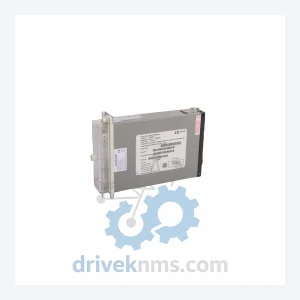
ALSTOM MVAJ105RA0802A Protection Relay – MiCOM Series
ALSTOM MVAJ105RA0802A Protection Relay: Supply Continuity Strategy for a Discontinued Critical Component The ALSTOM MVAJ105RA0802A is a numerical protection relay…
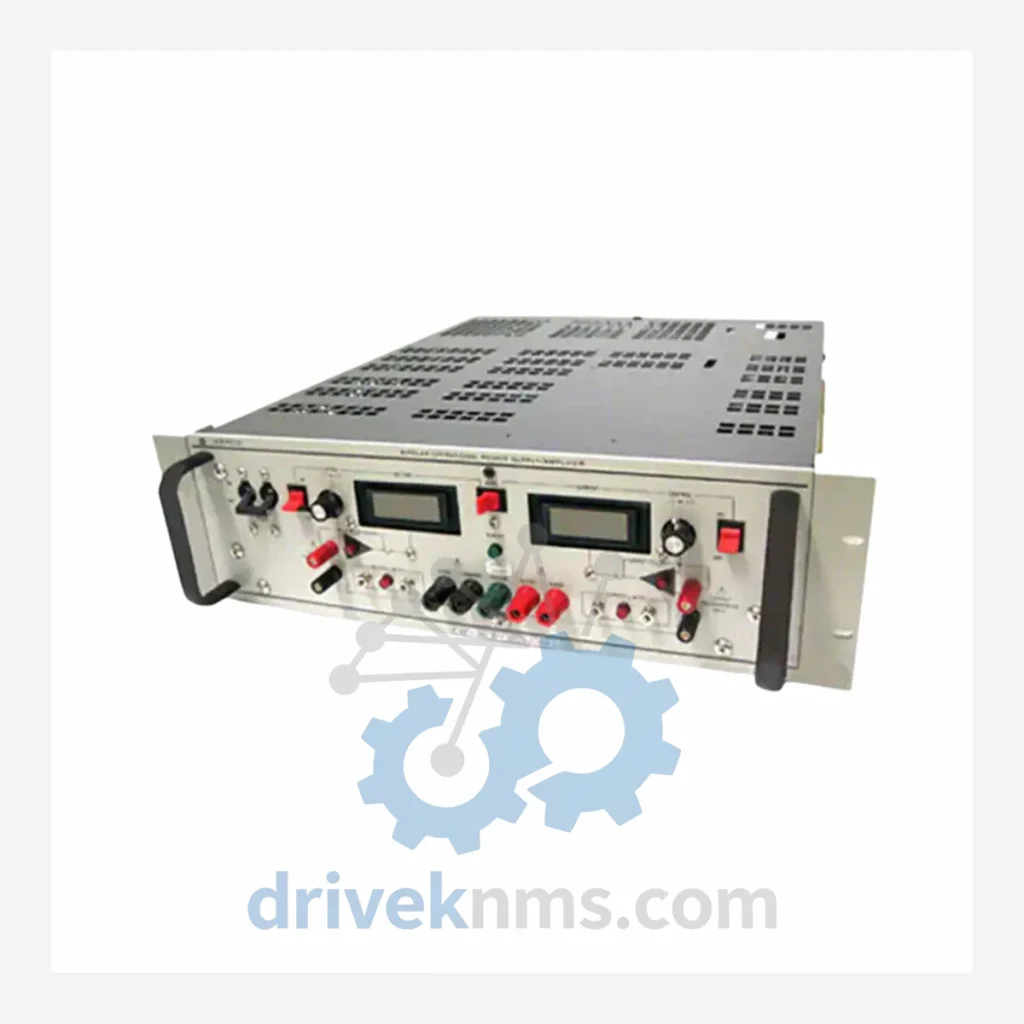
Model: BOP-20-20M
Product Overview
Commercial availability is handled through direct RFQ, model verification and export-oriented follow-up rather than public cart checkout.
Datasheet Preview
Use attached product manuals when available. If the manual is not public yet, request the full file directly through RFQ.
Commercial Path
Product pages on DRIVEKNMS are designed to verify model, brand and series first, then move the buyer into one clean quotation path.
Technical Dossier
The KEPCO BOP (Bipolar Operational Power Supply) series represents one of the most widely deployed families of laboratory-grade and industrial bipolar DC power supplies in global heavy industry. Installed across chemical processing plants, nuclear research facilities, semiconductor fabrication lines, oil refineries, and defense test systems, the BOP series is recognized for its four-quadrant operation capability — sourcing and sinking both voltage and current without relay switching. This characteristic makes it the reference standard for applications requiring precise, continuous polarity reversal, including magnet power supplies, electrochemical process control, and servo amplifier simulation. The series spans output voltages from ±5 V to ±1000 V and current ratings from ±1 A to ±100 A, covering a power envelope from 200 W to 1000 W per unit. KEPCO BOP units are manufactured in the United States and conform to IEEE 488.2 (GPIB) and RS-232 interface standards, with later models adding USB and LAN (LXI) connectivity.
The BOP series was introduced by KEPCO in the 1970s as a successor to its earlier unipolar regulated supplies, addressing the growing demand for bipolar operation in nuclear instrumentation and early automated test equipment (ATE). The original analog-controlled BOP units used discrete linear amplifier stages with transformer-coupled output, providing extremely low output noise — a characteristic that has been preserved across all subsequent generations.
In the 1990s, KEPCO introduced the BOP-GL (GPIB/LAN) sub-series, integrating IEEE 488.2 programmability directly into the front panel controller, replacing the earlier BOP-M (manual) variants that required external programming via analog input. This transition aligned the BOP series with the emerging SCPI (Standard Commands for Programmable Instruments) command set, enabling integration with LabVIEW, MATLAB, and Python-based test automation environments.
The current production BOP-GL generation retains the linear (non-switching) output stage architecture, deliberately avoiding switch-mode topologies to maintain sub-millivolt output ripple specifications. This design decision creates a compatibility constraint: BOP units cannot be paralleled for increased current without the optional KEPCO parallel operation kit, and series connection for higher voltage requires careful attention to common-mode voltage limits. Legacy BOP-M units remain in service at facilities with analog control infrastructure, and DriveKNMS maintains stock of both generations to support mixed-generation installations.
The following SKUs represent verified, commonly deployed models within the KEPCO BOP series. Units are classified by their primary output parameter set (voltage × current) and interface generation.
BOP-5-20M: ±5 V / ±20 A, 100 W, manual analog control, four-quadrant bipolar output.
BOP-5-20GL: ±5 V / ±20 A, 100 W, GPIB + LAN (LXI) programmable interface.
BOP-10-10M: ±10 V / ±10 A, 100 W, manual control, low-noise linear output stage.
BOP-10-10GL: ±10 V / ±10 A, 100 W, GPIB/LAN, SCPI command set, front-panel display.
BOP-20-10M: ±20 V / ±10 A, 200 W, manual bipolar supply, analog programming input.
BOP-20-20M: ±20 V / ±20 A, 400 W, manual control, four-quadrant, rack-mountable 3U chassis.
BOP-20-20GL: ±20 V / ±20 A, 400 W, GPIB + LAN programmable, SCPI, USB optional.
BOP-36-12M: ±36 V / ±12 A, 432 W, manual, high-voltage bipolar for magnet applications.
BOP-36-12GL: ±36 V / ±12 A, 432 W, GPIB/LAN, suitable for electromagnet coil control.
BOP-50-8M: ±50 V / ±8 A, 400 W, manual, used in electrochemical and plating process control.
BOP-50-8GL: ±50 V / ±8 A, 400 W, GPIB/LAN programmable, LXI Class C compliant.
BOP-100-4M: ±100 V / ±4 A, 400 W, manual, high-voltage bipolar for capacitor forming and dielectric testing.
BOP-100-4GL: ±100 V / ±4 A, 400 W, GPIB/LAN, SCPI, front-panel keypad programming.
BOP-200-2M: ±200 V / ±2 A, 400 W, manual, used in high-voltage semiconductor characterization.
BOP-200-2GL: ±200 V / ±2 A, 400 W, GPIB/LAN, suitable for ATE integration in defense test systems.
BOP-500-1M: ±500 V / ±1 A, 500 W, manual, high-voltage bipolar for insulation and breakdown testing.
BOP-1000-0.5M: ±1000 V / ±0.5 A, 500 W, manual, maximum voltage variant for research-grade HV applications.
The KEPCO BOP series spans multiple decades of production, and a significant portion of installed units — particularly BOP-M (manual) variants manufactured prior to 2000 — are no longer available through standard distribution channels. KEPCO has formally discontinued several early BOP-M models, and OEM lead times for in-production GL variants can extend to 16–24 weeks due to linear transformer and precision amplifier component constraints.
DriveKNMS maintains a dedicated inventory of both current-production and end-of-life BOP series units, sourced through certified secondary market channels. All units are subject to full electrical verification before dispatch. For facilities operating legacy BOP-M units in long-term service contracts — particularly in nuclear, defense, or continuous-process chemical environments where supply interruption carries significant operational risk — DriveKNMS offers consignment stock agreements and priority allocation programs. Inquiries for specific model numbers, including units with non-standard output configurations or factory options (e.g., isolated analog programming, extended temperature range), should be directed to the sales team with full model number and quantity requirements.
KEPCO BOP units employ a linear four-quadrant output topology with precision internal reference circuits and high-gain error amplifiers. The test protocol applied by DriveKNMS to all BOP series units addresses the specific failure modes associated with this architecture:
Output stage linearity verification is performed across the full four-quadrant operating envelope — positive voltage/positive current, positive voltage/negative current, negative voltage/positive current, and negative voltage/negative current — using a calibrated electronic load capable of bidirectional current operation. Voltage and current programming accuracy is verified against the unit's published specifications at 10%, 50%, and 100% of rated output. Ripple and noise measurement is conducted using a 20 MHz bandwidth oscilloscope with the output terminated into a resistive load, verifying compliance with the specified <1 mV RMS noise floor. For GL-series units, GPIB and LAN interface functionality is verified using a SCPI command sequence covering output enable, voltage setpoint, current setpoint, and status register readback. Front-panel display calibration and keypad response are confirmed. Units exhibiting output offset drift, programming nonlinearity, or interface communication errors are quarantined for component-level repair before re-evaluation.
Related Paths
ALSTOM MVAJ105RA0802A Protection Relay: Supply Continuity Strategy for a Discontinued Critical Component The ALSTOM MVAJ105RA0802A is a numerical protection relay…
MOORE 16137 Series: Comprehensive Module Range and Technical Overview The MOORE 16137 Series represents a core component family within Moore…
FUJI EP-3364B-CA-Z2 Inverter Control Board: Supply Continuity Strategy for a Discontinued Critical Spare The FUJI EP-3364B-CA-Z2 is a control board…