
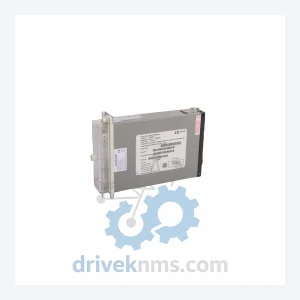
ALSTOM MVAJ105RA0802A Protection Relay – MiCOM Series
ALSTOM MVAJ105RA0802A Protection Relay: Supply Continuity Strategy for a Discontinued Critical Component The ALSTOM MVAJ105RA0802A is a numerical protection relay…
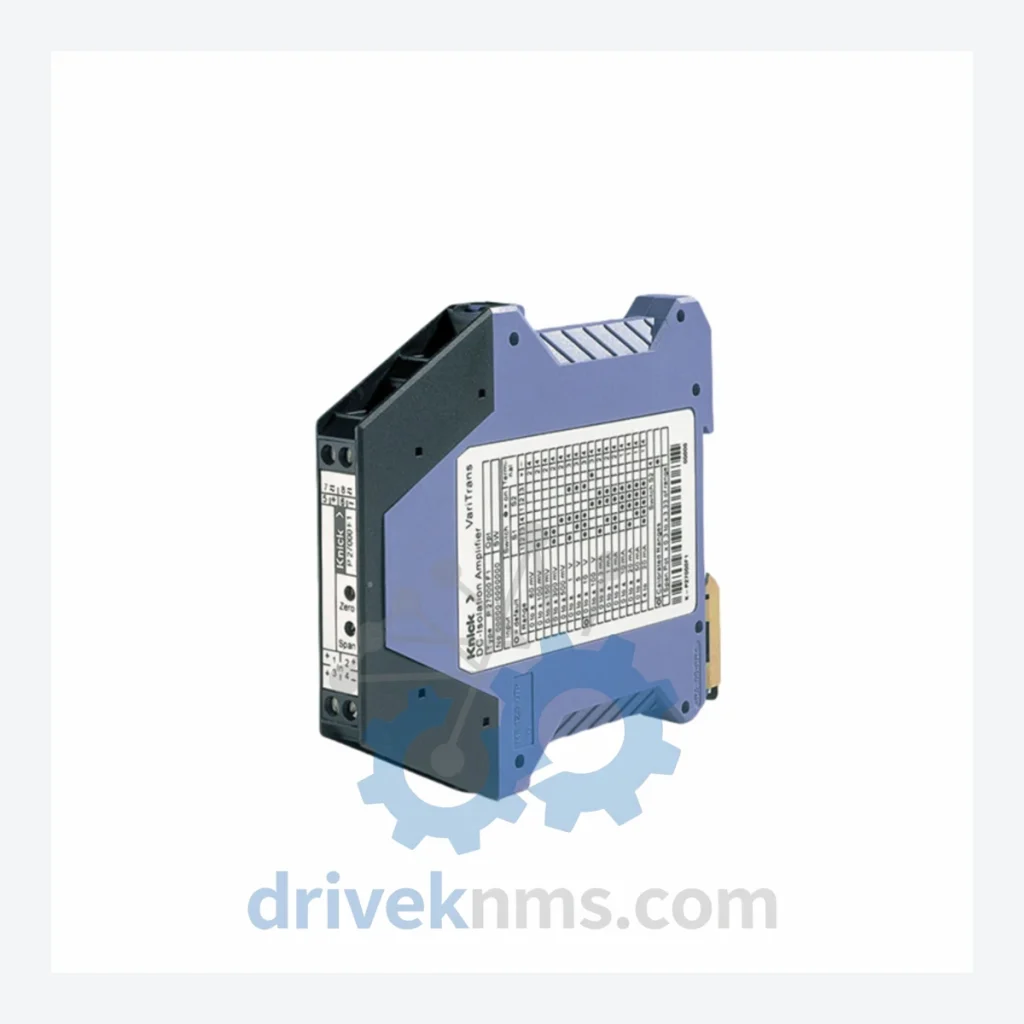
Model: P27000-H1
Product Overview
Commercial availability is handled through direct RFQ, model verification and export-oriented follow-up rather than public cart checkout.
Datasheet Preview
Use attached product manuals when available. If the manual is not public yet, request the full file directly through RFQ.
Commercial Path
Product pages on DRIVEKNMS are designed to verify model, brand and series first, then move the buyer into one clean quotation path.
Technical Dossier
The Knick P27000 series is a family of precision signal conditioners engineered for industrial process measurement and isolation. Manufactured in Germany by Knick Elektronische Messgeräte GmbH & Co. KG, these modules are deployed across critical infrastructure sectors including chemical processing plants, oil refineries, nuclear power facilities, and offshore platforms. The P27000 series provides galvanic isolation, signal conversion, and transmitter power supply functions that are fundamental to safe and accurate process control loops. Their compact DIN-rail form factor and wide input/output configurability have made them a standard reference component in distributed control system (DCS) and programmable logic controller (PLC) architectures globally. The series is fully compliant with NAMUR NE43 and IEC 60947 standards, and units are rated for operation in Zone 2 hazardous areas when paired with appropriate barriers.
The P27000 series was introduced as part of Knick's second-generation signal conditioning platform, succeeding the earlier P10000 and P20000 families. Early P27000 variants were designed around analog isolation amplifier technology with fixed input/output ranges, targeting 4–20 mA current loop and ±10 V voltage signal conversion. As industrial automation evolved through the 1990s and 2000s, Knick expanded the P27000 catalog to include HART-transparent variants, enabling pass-through communication for smart field devices without signal degradation. The H1 suffix designation (as in P27000-H1) denotes the first hardware revision of the base module, optimized for standard 4–20 mA input with 4–20 mA isolated output and integrated transmitter power supply. Later revisions introduced wider supply voltage tolerance (19.2–31.2 V DC), improved EMC shielding to EN 61000-4, and extended temperature ratings down to –20 °C for outdoor cabinet installations. The P27000 series is now in its mature lifecycle phase. Knick continues to supply spare units and provides cross-reference compatibility with its successor Stratos and ProLine series for new installations, but the P27000 remains the dominant installed base in legacy DCS environments where form-factor and wiring compatibility are non-negotiable constraints.
The following SKUs represent the verified active and legacy catalog of the Knick P27000 signal conditioner series, classified by functional category. Each model is a discrete, independently orderable unit.
Current Input / Output Isolators (4–20 mA)
Voltage Input / Current Output Converters
Thermocouple & RTD Input Modules
Frequency / Pulse Input Modules
Transmitter Power Supply / Loop Isolators
Resistance / Potentiometer Input Modules
Each P27000 unit processed by DriveKNMS undergoes a structured functional verification protocol before shipment. The test sequence addresses the specific failure modes documented for this series, including isolation barrier degradation, output drift under thermal cycling, and HART modem circuit failure in H3/T3 variants. The standard test procedure includes: (1) dielectric withstand test at 500 V AC across input/output isolation barrier for 60 seconds; (2) loop calibration verification — input signal sweep from 4 mA to 20 mA with output accuracy check to ±0.1% of span; (3) transmitter supply voltage verification under load (600 Ω burden); (4) HART communication integrity check using a Fluke 710 HART calibrator for HART-capable variants; (5) thermal soak at 55 °C for 30 minutes to identify latent component failures. Units that fail any stage are quarantined and not dispatched. Test records are retained and available upon request for quality-critical procurement processes.
© 2026 DriveKNMS. All trademarks belong to their respective owners. Specifications are for reference only and subject to change without notice. Verify all parameters against official documentation before installation.
Related Paths
ALSTOM MVAJ105RA0802A Protection Relay: Supply Continuity Strategy for a Discontinued Critical Component The ALSTOM MVAJ105RA0802A is a numerical protection relay…
MOORE 16137 Series: Comprehensive Module Range and Technical Overview The MOORE 16137 Series represents a core component family within Moore…
FUJI EP-3364B-CA-Z2 Inverter Control Board: Supply Continuity Strategy for a Discontinued Critical Spare The FUJI EP-3364B-CA-Z2 is a control board…