
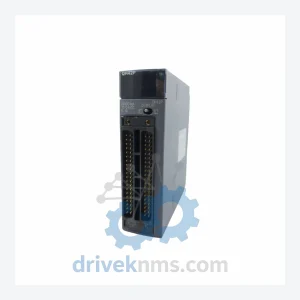
Mitsubishi QX48Y57 BD627B662G51 Combination Unit – PLC Module
Mitsubishi QX48Y57 BD627B662G51 PLC Combination Unit: Supply Continuity Strategy for Mission-Critical Operations The Mitsubishi QX48Y57 BD627B662G51 is a combination I/O…
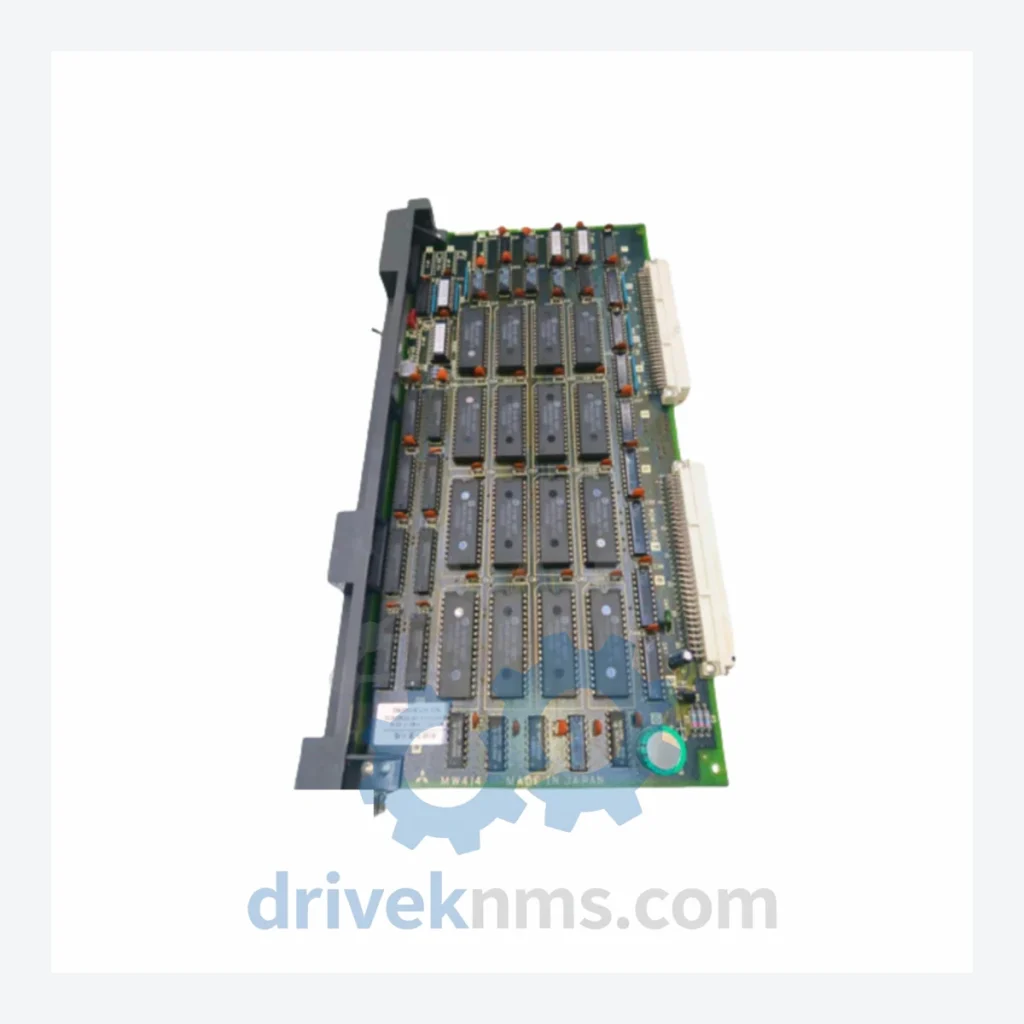
Model: MW414 MW414B
Product Overview
Commercial availability is handled through direct RFQ, model verification and export-oriented follow-up rather than public cart checkout.
Datasheet Preview
Use attached product manuals when available. If the manual is not public yet, request the full file directly through RFQ.
Commercial Path
Product pages on DRIVEKNMS are designed to verify model, brand and series first, then move the buyer into one clean quotation path.
Technical Dossier
The Mitsubishi Electric MW400 series represents a generation of industrial circuit board modules deployed extensively across heavy-process industries including petrochemical refining, nuclear power auxiliary systems, steel manufacturing, and large-scale water treatment facilities. These boards operate as core processing and I/O interface components within Mitsubishi's distributed control and programmable controller architectures. The MW414 and MW414B are among the most widely referenced part numbers in this series, serving as replacement and maintenance targets in plants with equipment installed from the late 1980s through the 2000s. Their continued demand reflects the long operational lifecycles typical of heavy industrial installations, where control system replacement cycles span 20–30 years.
The MW400 series was developed as part of Mitsubishi Electric's broader MELSEC and proprietary DCS control platform expansion during the late 1980s. Early variants in the MW400 line used through-hole PCB construction with discrete logic ICs, making them robust under high-vibration and high-temperature industrial environments. As the series matured into the 1990s, surface-mount technology (SMT) was progressively introduced, improving component density and reducing board footprint. The MW414B designation typically indicates a revised board revision of the MW414, incorporating component substitutions or minor circuit modifications to address field reliability issues or component obsolescence — a standard practice in Mitsubishi's industrial product lifecycle management.
Compatibility considerations are critical for MW400 series maintenance. Substituting an MW414 with an MW414B (or vice versa) requires verification of firmware revision, backplane connector pinout, and bus communication protocol version. In multi-rack configurations, mismatched board revisions can cause communication faults or silent data errors. Engineers maintaining legacy systems must cross-reference the system's original BOM and Mitsubishi's revision history documentation before substitution.
The following SKUs represent verified part numbers within or closely associated with the Mitsubishi MW400 series and its adjacent control board families. Each entry reflects a distinct functional role within the control system architecture:
MW414: Primary circuit board module, core processing and signal routing for MW400 rack systems.
MW414B: Revised board variant of MW414; component-level updates for extended field reliability.
MW411: Base I/O interface board; handles discrete input signal conditioning in MW400 configurations.
MW412: Analog input processing board; 4–20 mA signal acquisition and conversion module.
MW413: Analog output board; drives field actuators via isolated current loop outputs.
MW415: Communication interface board; supports serial and parallel bus connectivity within the rack.
MW416: Power distribution board; manages internal DC bus regulation across MW400 backplane.
MW417: Redundancy switching board; enables hot-standby controller failover in critical process loops.
MW418: Diagnostic and status monitoring board; provides system health registers accessible via HMI.
MW421: High-density digital input module; 32-channel discrete input with optical isolation.
MW422: High-density digital output module; 32-channel transistor output for relay and solenoid drive.
MW431: Thermocouple input board; multi-channel temperature acquisition with cold junction compensation.
MW432: RTD input board; Pt100/Pt1000 resistance temperature detector signal processing.
MW441: Pulse counter and encoder interface board; used in flow measurement and motor speed feedback.
MW451: PROFIBUS-DP communication adapter; integrates MW400 rack into PROFIBUS field device networks.
MW461: Ethernet communication board; provides TCP/IP connectivity for SCADA and historian integration.
The MW400 series has entered the mature-to-end-of-life phase of its product lifecycle. Mitsubishi Electric has progressively discontinued active production of MW400 series boards, with most part numbers no longer available through standard distribution channels. For plant operators committed to maintaining existing installations without full DCS migration, sourcing from specialist industrial spare parts suppliers is the primary strategy.
MW400 series circuit boards present specific testing challenges due to their backplane bus architecture and mixed analog/digital signal paths. DriveKNMS applies the following verification procedures to all MW400 series units prior to dispatch:
Visual Inspection: Full PCB examination for capacitor bulge, solder joint cracking, corrosion on edge connectors, and trace damage — failure modes common in boards with 15+ years of service.
Power-On Functional Test: Each board is energized at rated DC supply voltage. Onboard LED status indicators and diagnostic registers are checked against Mitsubishi's reference states.
Bus Communication Verification: For boards with backplane communication functions (e.g., MW415, MW451), bus signal integrity is verified using protocol analyzers to confirm correct frame timing and error-free data exchange.
Analog Signal Calibration Check: Analog I/O boards (MW412, MW413, MW431, MW432) are tested against calibrated signal sources. Output accuracy is verified within ±0.1% of rated span.
Burn-In Cycle: Boards are subjected to a thermal cycling burn-in period to screen for latent component failures before shipment.
Related Paths
Mitsubishi QX48Y57 BD627B662G51 PLC Combination Unit: Supply Continuity Strategy for Mission-Critical Operations The Mitsubishi QX48Y57 BD627B662G51 is a combination I/O…
Mitsubishi PD21 PD21B Series: Comprehensive Module Range and Technical Overview The Mitsubishi PD21 and PD21B are DC power supply modules…
Mitsubishi MR-S12-02A-E01 Servo Drive: Procurement Strategy & Supply Chain Risk Assessment The Mitsubishi MR-S12-02A-E01 is a compact servo drive from…