
MOOG IMI220-411A001 Total Machine Controller – TMC400 Series
MOOG IMI220-411A001 Total Machine Controller: Global Sourcing Strategy & Asset Return Value in a Constrained Supply Environment The MOOG IMI220-411A001…
Model: IMI220-422B001
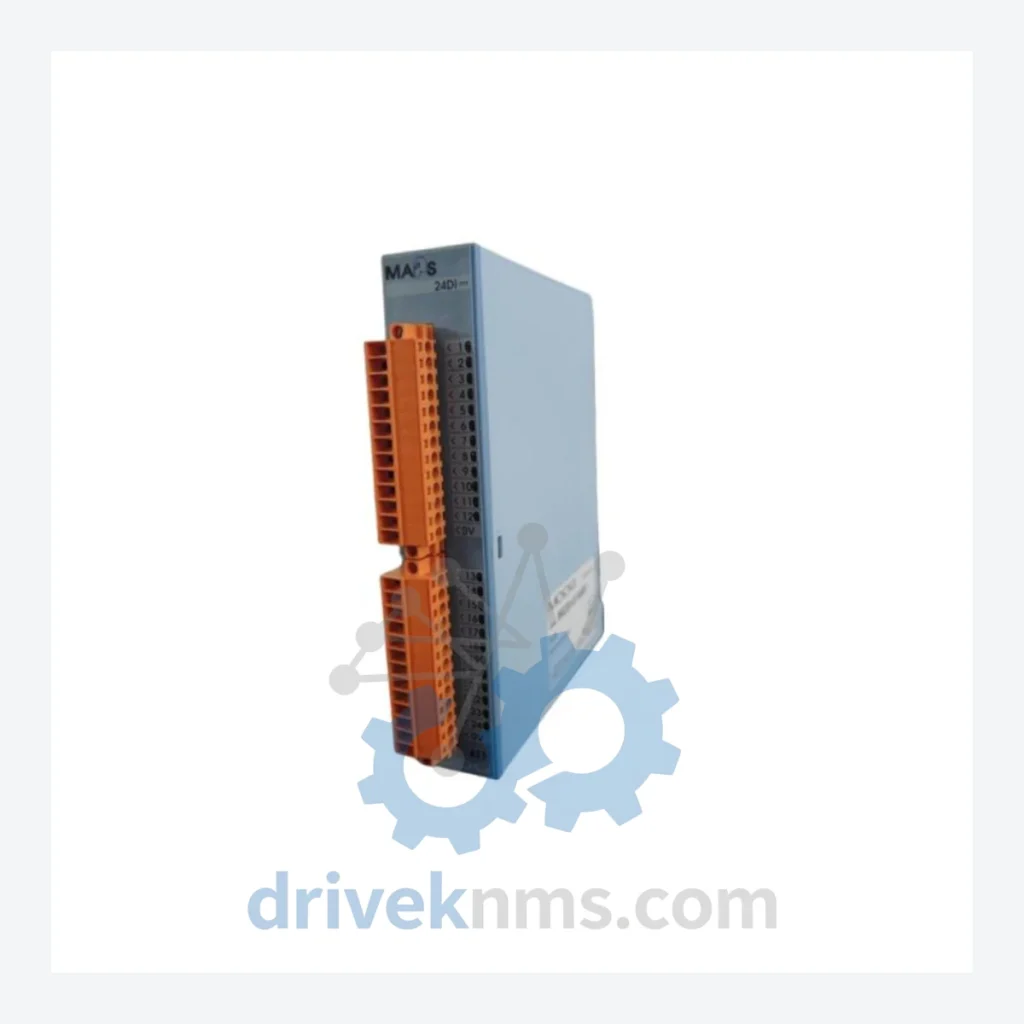
Product Overview
Commercial availability is handled through direct RFQ, model verification and export-oriented follow-up rather than public cart checkout.
Datasheet Preview
Use attached product manuals when available. If the manual is not public yet, request the full file directly through RFQ.
Commercial Path
Product pages on DRIVEKNMS are designed to verify model, brand and series first, then move the buyer into one clean quotation path.
Technical Dossier
The Moog TMC400 (Total Machine Controller 400) series represents one of Moog's most widely deployed motion control platforms in precision industrial applications. Installed across aerospace test rigs, hydraulic press lines, injection molding machines, and heavy-duty simulation systems, the TMC400 architecture has served as the backbone of closed-loop electrohydraulic and electromechanical control for over two decades. Its presence in capital-intensive production environments — where a single controller governs multi-axis force, position, and velocity loops simultaneously — means that hardware failure carries consequences far beyond the cost of the module itself. Unplanned downtime on a TMC400-controlled press line or test stand can halt production schedules measured in weeks, not days. DriveKNMS maintains sourcing channels for TMC400 modules including the IMI220-422B001, providing procurement support for facilities that cannot afford to wait on standard distribution lead times.
The TMC400 platform was developed by Moog Industrial Group as a successor to earlier analog servo controller generations, introducing a fully digital, real-time control architecture capable of multi-axis coordination with deterministic cycle times. The series was designed around a modular backplane topology, allowing system integrators to configure controller nodes, I/O expansion, and communication interfaces within a single rack. Early TMC400 deployments used proprietary Moog fieldbus protocols for inter-module communication; later revisions introduced compatibility with EtherCAT and CANopen, extending the platform's integration reach into broader automation architectures. The transition from legacy analog command interfaces to digital setpoint communication was a defining characteristic of the TMC400's mid-lifecycle evolution. As the platform has matured, Moog has progressively shifted its active development focus toward the newer Moog Motion Controller (MMC) and Moog Servo Controller (MSC) product lines. TMC400 hardware is no longer in active production for most module types, placing the series firmly in the sustained-support and end-of-life management phase. Facilities running TMC400 systems must now source replacement modules through specialist distributors rather than standard Moog channels.
The following SKUs represent confirmed TMC400 series modules across controller, I/O, power, and communication categories. Each entry reflects the module's primary functional role within a TMC400 rack configuration.
Controllers & CPU Modules
Analog Input / Output Modules
Digital Input / Output Modules
Communication & Fieldbus Adapters
Power Supply Modules
TMC400 modules present specific reliability challenges that standard incoming inspection procedures do not adequately address. The following test protocol is applied to all TMC400 units processed by DriveKNMS:
Related Paths
MOOG IMI220-411A001 Total Machine Controller: Global Sourcing Strategy & Asset Return Value in a Constrained Supply Environment The MOOG IMI220-411A001…
MOOG IMI220 Series: Comprehensive Module Range and Technical Overview The MOOG IMI220 series represents a class of industrial interface modules…
MOOG IMI220-418A001 Input Module – Obsolete MARS Microset Spare Part When a MOOG IMI220-418A001 Microset Input Module fails in a…