
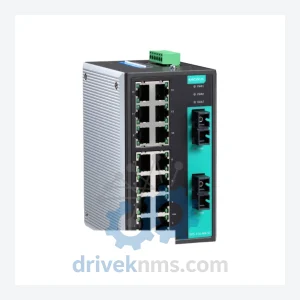
MOXA EDS-316 Series Modules
MOXA EDS-316 Series: Comprehensive Module Range and Technical Overview The MOXA EDS-316 series is a line of managed industrial Ethernet…
Model: EDR-810-2GSFP
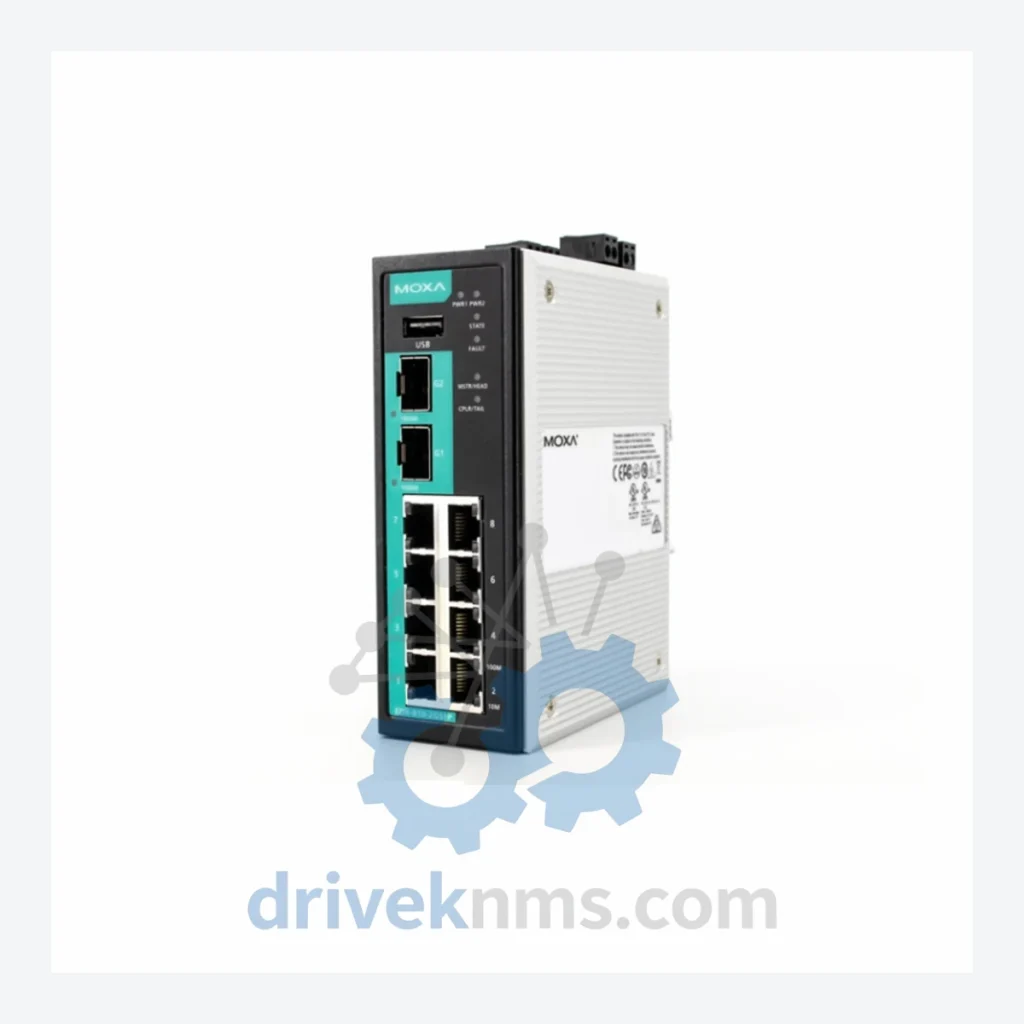
Product Overview
Commercial availability is handled through direct RFQ, model verification and export-oriented follow-up rather than public cart checkout.
Datasheet Preview
Use attached product manuals when available. If the manual is not public yet, request the full file directly through RFQ.
Commercial Path
Product pages on DRIVEKNMS are designed to verify model, brand and series first, then move the buyer into one clean quotation path.
Technical Dossier
The MOXA EDR-810 series is a line of industrial-grade secure routers designed for deployment in mission-critical network infrastructure across heavy industry verticals including petrochemical plants, nuclear power facilities, offshore oil refineries, water treatment systems, and railway control networks. The EDR-810 platform integrates firewall, NAT, VPN, and managed Layer 2 switch functionality into a single DIN-rail-mountable unit, making it the reference architecture for IEC 62443-compliant network segmentation in operational technology (OT) environments. Its wide operating temperature range (−40°C to 75°C), redundant power input design, and IEC 61850-3 / IEEE 1613 compliance position it as a standard component in substation automation and SCADA network hardening projects globally.
The EDR-810 series was introduced by MOXA as part of its industrial cybersecurity portfolio to address the convergence of IT and OT networks in legacy industrial environments. Early revisions focused on basic stateful packet inspection and NAT routing for isolated SCADA subnets. Subsequent firmware generations introduced IPsec/OpenVPN tunnel support, enabling encrypted site-to-site connectivity between remote RTUs and central control rooms without replacing existing field devices.
The architecture evolved to support up to 8 Fast Ethernet ports combined with 2 Gigabit uplink ports (copper or SFP fiber), accommodating the bandwidth demands of modern HMI systems and historian servers. The introduction of SFP-based fiber uplinks — as implemented in the EDR-810-2GSFP variant — addressed long-distance backbone connectivity in large plant topologies where copper runs exceed 100 meters. Hardware revision B added enhanced cryptographic acceleration and TLS 1.2 management session support, aligning the platform with NERC CIP and IEC 62443-3-3 security level SL2 requirements. The series is now in a mature/sustained phase; MOXA continues to provide firmware security patches and long-term spare parts availability, making lifecycle extension support a primary procurement consideration for installed base operators.
The following SKUs represent verified production and end-of-life models within the MOXA EDR-810 series, classified by uplink interface, power input configuration, and protocol-aware inspection capability:
EDR-810-2GSFP: 8-port FE + 2-port Gigabit SFP fiber uplink, dual DC power input, DIN-rail mount.
EDR-810-2GSFP-T: EDR-810-2GSFP variant rated for extended temperature −40°C to 75°C operation.
EDR-810-2GSFP-HV: High-voltage DC/AC input (88–300 VDC / 85–264 VAC) with dual SFP Gigabit uplinks.
EDR-810-2GSFP-HV-T: High-voltage input + extended temperature variant with SFP fiber uplinks.
EDR-810-VPN-2GSFP: SFP uplink model with factory-enabled IPsec/OpenVPN license for encrypted tunnel termination.
EDR-810-VPN-2GSFP-T: VPN-enabled SFP variant with extended temperature rating −40°C to 75°C.
EDR-810-2GSFP-EIP: EtherNet/IP-aware firewall with deep packet inspection for CIP protocol traffic.
EDR-810-2GSFP-EIP-T: EtherNet/IP DPI variant with extended temperature specification.
EDR-810-2GSFP-PN: PROFINET-aware firewall supporting PN-IO protocol inspection for PROFINET networks.
EDR-810-2GSFP-PN-T: PROFINET variant with extended temperature rating for harsh environments.
EDR-810-VPN: 8-port FE + 2-port Gigabit copper uplink with VPN license, standard temperature.
EDR-810-VPN-T: VPN copper uplink variant with extended temperature rating −40°C to 75°C.
EDR-810: Base model, 8-port FE + 2-port Gigabit copper uplink, no VPN license, standard temperature.
EDR-810-T: Base copper uplink model with extended temperature rating for harsh industrial environments.
EDR-810-HV: Base model with high-voltage AC/DC power input and copper Gigabit uplinks.
EDR-810-HV-T: High-voltage input + extended temperature, copper uplink base configuration.
EDR-810-VPN-HV: VPN-enabled high-voltage input variant with copper Gigabit uplinks.
EDR-810-VPN-HV-T: VPN + high-voltage + extended temperature, copper uplink full-spec configuration.
DriveKNMS maintains a dedicated inventory program for MOXA EDR-810 series units, including models that have transitioned to end-of-active-production status. For plant operators running EDR-810 deployments in brownfield SCADA or DCS environments, replacing a failed unit with an identical SKU is frequently the only viable option — re-engineering the network segment to accommodate a next-generation platform requires change management, re-validation, and potential downtime that is operationally unacceptable in continuous-process industries.
DriveKNMS sources EDR-810 units through verified secondary market channels, performs incoming inspection against MOXA factory specifications, and provides traceability documentation for each unit. Stock is maintained for both standard and extended-temperature variants, including high-voltage input models. Customers with multi-unit requirements or standing maintenance contracts are encouraged to submit a consolidated parts list for volume pricing and lead-time commitment.
Each EDR-810 unit processed by DriveKNMS undergoes a structured functional verification protocol prior to dispatch. The test sequence covers: power input acceptance across the rated voltage range (including HV variants), all 8 Fast Ethernet port link negotiation and throughput verification, Gigabit uplink port (copper or SFP) connectivity validation, firewall rule-set load and stateful inspection confirmation, VPN tunnel establishment test (for VPN-licensed SKUs), management interface access via HTTPS and SSH, and factory-default restore verification to confirm firmware integrity. SFP transceiver slots are tested with both single-mode and multi-mode optics where applicable. Units exhibiting any anomaly in backplane communication, port isolation behavior, or cryptographic function are quarantined and not released for sale. Test records are retained and available upon request for quality-audited procurement processes.
Related Paths
MOXA EDS-316 Series: Comprehensive Module Range and Technical Overview The MOXA EDS-316 series is a line of managed industrial Ethernet…
Moxa EDS-518E-4GTXSFP-T Industrial Managed Switch – Obsolete EDS-518E Spare Part When a single network switch fails inside a legacy distributed…
Moxa MOX12/4U-P3509B Switching Power Supply Module – Obsolete MOX Series Spare Part When a power supply module fails inside a…