
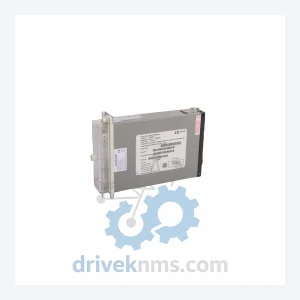
ALSTOM MVAJ105RA0802A Protection Relay – MiCOM Series
ALSTOM MVAJ105RA0802A Protection Relay: Supply Continuity Strategy for a Discontinued Critical Component The ALSTOM MVAJ105RA0802A is a numerical protection relay…
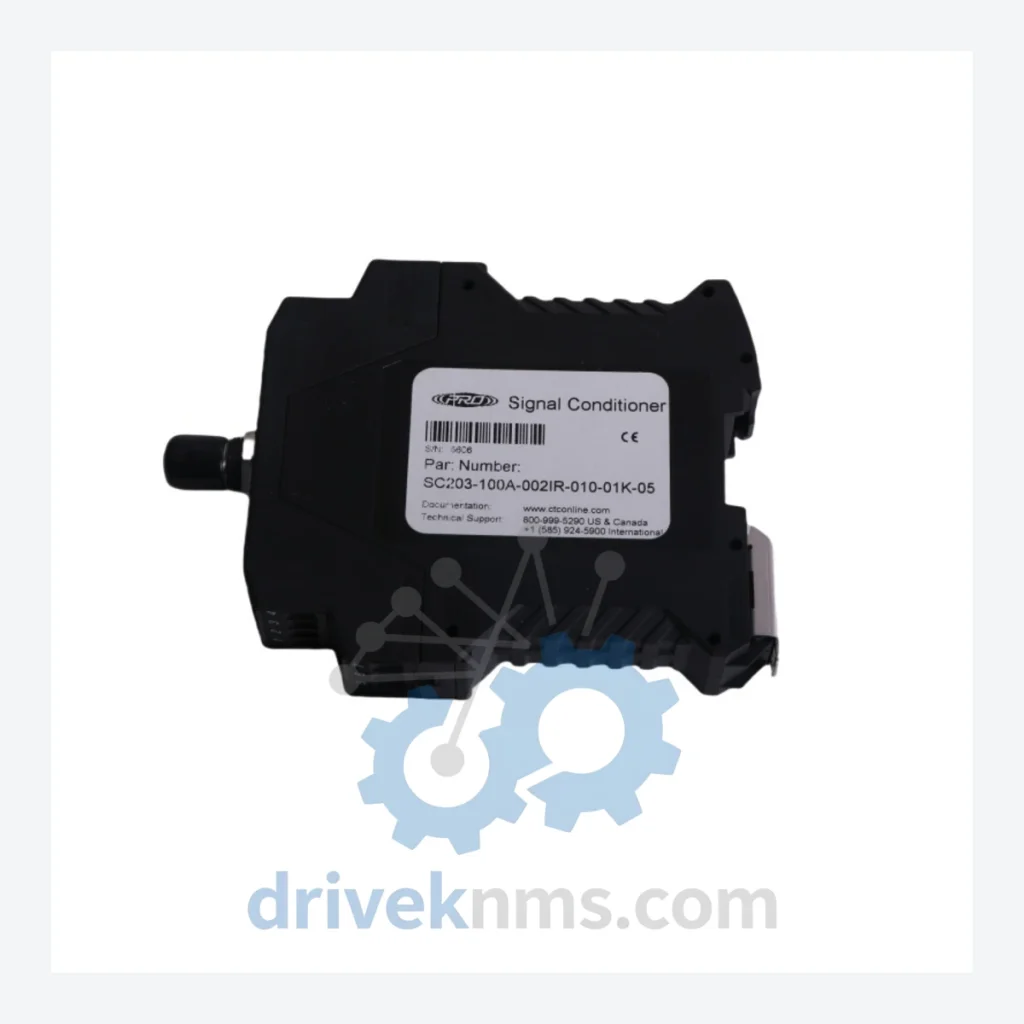
Model: SC203-100A-002IR-010-01K-05
Product Overview
Commercial availability is handled through direct RFQ, model verification and export-oriented follow-up rather than public cart checkout.
Datasheet Preview
Use attached product manuals when available. If the manual is not public yet, request the full file directly through RFQ.
Commercial Path
Product pages on DRIVEKNMS are designed to verify model, brand and series first, then move the buyer into one clean quotation path.
Technical Dossier
The SC203 series represents a standardized line of industrial signal conditioning modules deployed extensively across heavy process industries including petrochemical refineries, nuclear power generation facilities, offshore platforms, and continuous chemical manufacturing plants. These modules serve as the interface layer between field instrumentation (thermocouples, RTDs, pressure transmitters, flow meters) and distributed control system (DCS) or PLC backplane buses, performing isolation, scaling, linearization, and signal conversion functions critical to process integrity. The SC203 platform has achieved widespread adoption in facilities requiring IEC 61511 functional safety compliance, where signal fidelity and galvanic isolation between field and control circuits are mandatory design requirements. Installed base across global heavy industry is estimated in the hundreds of thousands of units, with significant concentrations in facilities operating Yokogawa CENTUM, Honeywell TDC/TPS, ABB Advant, and Siemens TELEPERM legacy DCS architectures.
The SC203 architecture originated in the late 1980s as a DIN-rail-mountable signal conditioning platform designed to address the growing need for field-bus isolation in analog I/O subsystems. Early variants operated exclusively on ±15 VDC dual-rail power supplies and supported only 4–20 mA current loop inputs with fixed-range scaling. By the mid-1990s, the series expanded to include thermocouple and RTD linearization modules with onboard cold-junction compensation, responding to the proliferation of temperature measurement points in refinery and power generation applications.
The second-generation SC203 architecture introduced configurable input ranges via DIP switch or EEPROM-based parameter storage, eliminating the need for hardware range resistors and reducing commissioning time. Galvanic isolation ratings were upgraded to 1500 VAC working isolation, meeting the requirements of IEC 60664 for industrial environments with transient overvoltage exposure. Third-generation variants introduced HART pass-through capability, allowing asset management systems to communicate with HART-enabled field devices through the signal conditioner without breaking the 4–20 mA loop.
The SC203-100A-002IR-010-01K-05 specifically represents a mature third-generation variant: 100A input class, dual-channel IR (infrared/resistance) input type, 0–10 V output range, 1 kΩ output impedance, revision 05. Compatibility with earlier SC203 backplane connectors (26-pin DIN 41612 format) is maintained, enabling direct replacement of first- and second-generation modules without backplane modification. However, firmware-configurable modules require parameter migration when replacing EEPROM-based predecessors.
The following SKUs represent verified members of the SC203 signal conditioner series, organized by functional category. Each entry reflects a distinct input type, output range, or channel configuration variant within the platform.
Current Input / 4–20 mA Loop Conditioners
SC203-100A-001AI-420-01K-03: Single-ch 4–20 mA input, 4–20 mA isolated output, 1 kΩ load, rev 03
SC203-100A-001AI-420-01K-05: Single-ch 4–20 mA input, 4–20 mA isolated output, 1 kΩ load, rev 05
SC203-100A-002AI-420-01K-05: Dual-ch 4–20 mA input, 4–20 mA isolated output, 1 kΩ load, rev 05
SC203-100A-001AI-010-01K-05: Single-ch 4–20 mA input, 0–10 V isolated output, 1 kΩ impedance, rev 05
Voltage Input Conditioners
SC203-100A-001VI-010-01K-04: Single-ch 0–10 V input, 0–10 V isolated output, unity gain, rev 04
SC203-100A-001VI-055-01K-05: Single-ch ±5 V input, ±5 V isolated output, bipolar range, rev 05
SC203-100A-002VI-010-01K-05: Dual-ch 0–10 V input, 0–10 V isolated output, 1 kΩ, rev 05
Resistance / IR Input Conditioners
SC203-100A-001IR-010-01K-05: Single-ch resistance input, 0–10 V output, 0–1 kΩ range, rev 05
SC203-100A-002IR-010-01K-05: Dual-ch resistance/IR input, 0–10 V output, 1 kΩ impedance, rev 05 — current page SKU
SC203-100A-002IR-420-01K-05: Dual-ch resistance input, 4–20 mA output, loop-powered, rev 05
SC203-100A-001IR-010-05K-05: Single-ch resistance input, 0–10 V output, 0–5 kΩ extended range, rev 05
Thermocouple Input Conditioners
SC203-100A-001TC-420-CJC-05: Single-ch thermocouple input, 4–20 mA output, onboard CJC, rev 05
SC203-100A-002TC-420-CJC-05: Dual-ch thermocouple input, 4–20 mA output, onboard CJC, rev 05
SC203-100A-001TC-010-CJC-04: Single-ch thermocouple input, 0–10 V output, onboard CJC, rev 04
RTD Input Conditioners
SC203-100A-001RT-420-PT100-05: Single-ch PT100 RTD input, 4–20 mA output, 3-wire connection, rev 05
SC203-100A-002RT-420-PT100-05: Dual-ch PT100 RTD input, 4–20 mA output, 3-wire, rev 05
SC203-100A-001RT-010-PT1000-05: Single-ch PT1000 RTD input, 0–10 V output, rev 05
Frequency / Pulse Input Conditioners
SC203-100A-001FQ-420-10K-05: Single-ch frequency input 0–10 kHz, 4–20 mA output, rev 05
SC203-100A-001PL-010-NPN-05: Single-ch pulse/NPN input, 0–10 V scaled output, rev 05
The SC203 series has entered the mature-to-declining phase of its product lifecycle. Several first- and second-generation variants (revision 01–03) have been formally discontinued by the original manufacturer, with no announced production restart. End-of-life notifications were issued between 2015 and 2021 for the earliest variants. Facilities operating these modules face a sourcing gap: OEM channels no longer stock revision 03 and earlier parts, and lead times for any remaining new-old-stock (NOS) inventory through distribution have extended to 26–52 weeks where available at all.
SC203 signal conditioner modules present specific test challenges due to their multi-channel backplane architecture, precision analog signal paths, and galvanic isolation barriers. DriveKNMS applies the following test protocol to all SC203 units processed through its facility:
Isolation Barrier Verification: Each module is subjected to a 1500 VAC hipot test across input-to-output and input-to-power-supply isolation barriers, per IEC 61010-1 requirements. Leakage current is measured and must remain below 1 mA throughout the test duration.
Input Accuracy Calibration: For resistance/IR input variants including SC203-100A-002IR-010-01K-05, a precision decade resistance box is used to inject reference resistance values at 0%, 25%, 50%, 75%, and 100% of the rated input span. Output voltage is measured at each point using a calibrated 6.5-digit DMM. Linearity error must not exceed ±0.1% of full scale.
Channel Independence Test (Dual-Channel Variants): Cross-talk between channels is measured by driving channel 1 to full-scale input while channel 2 input is held at zero. Channel 2 output deviation must remain below 0.05% of full scale, confirming adequate inter-channel isolation on the shared backplane.
Thermal Stability Check: Modules are operated at 55°C ambient for 30 minutes prior to final calibration verification, confirming that thermal drift of onboard reference components remains within the manufacturer's specified temperature coefficient.
Backplane Connector Inspection: DIN 41612 connector pins are inspected under 10× magnification for fretting corrosion, bent contacts, and solder joint integrity. Corroded contacts are cleaned or the module is rejected from serviceable inventory.
Test records are retained for each unit and are available to customers upon request for traceability documentation.
© 2026 DriveKNMS. All trademarks belong to their respective owners. Specifications are for reference only and subject to change without notice. Verify all parameters against official documentation before installation.
Related Paths
ALSTOM MVAJ105RA0802A Protection Relay: Supply Continuity Strategy for a Discontinued Critical Component The ALSTOM MVAJ105RA0802A is a numerical protection relay…
MOORE 16137 Series: Comprehensive Module Range and Technical Overview The MOORE 16137 Series represents a core component family within Moore…
FUJI EP-3364B-CA-Z2 Inverter Control Board: Supply Continuity Strategy for a Discontinued Critical Spare The FUJI EP-3364B-CA-Z2 is a control board…