
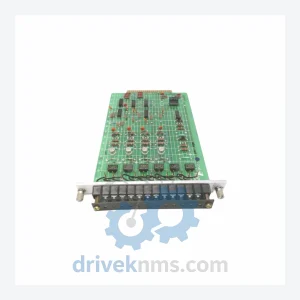
Reliance Electric 0-51820-1 PC Board – Obsolete Automax Series Spare Part
Reliance Electric 0-51820-1 PC Board – Obsolete Automax Series Spare Part When a PC board fails inside a legacy Reliance…
Model: 57C410A
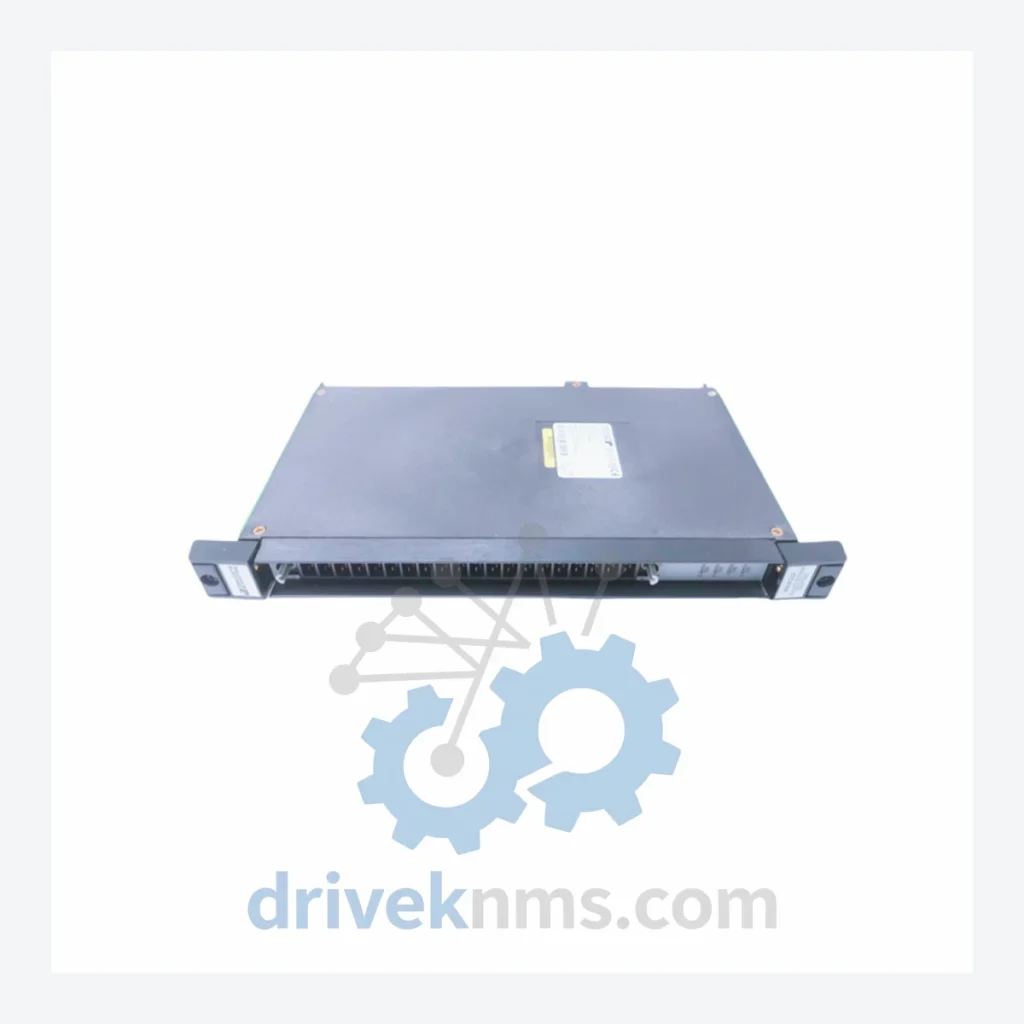
Product Overview
Commercial availability is handled through direct RFQ, model verification and export-oriented follow-up rather than public cart checkout.
Datasheet Preview
Use attached product manuals when available. If the manual is not public yet, request the full file directly through RFQ.
Commercial Path
Product pages on DRIVEKNMS are designed to verify model, brand and series first, then move the buyer into one clean quotation path.
Technical Dossier
The Reliance Electric 57C Series represents a core component of Reliance's modular process control architecture, deployed extensively across global heavy industry sectors including petrochemical refineries, pulp and paper mills, steel processing plants, and power generation facilities. Originally engineered to operate within Reliance Electric's AutoMax distributed control environment, the 57C platform established a standardized backplane bus architecture that allowed mixed analog and digital I/O expansion within a single rack chassis. Its installation base spans facilities built between the late 1980s and early 2000s, many of which remain operational under long-term maintenance contracts. The 57C410A specifically functions as an analog output module, providing precision voltage or current signal conditioning for final control elements such as control valves and variable speed drives.
The 57C Series was introduced as part of Reliance Electric's second-generation modular control platform, succeeding earlier discrete relay-based systems. Its backplane architecture uses a parallel bus structure that supports synchronous data exchange between the CPU module and up to 16 I/O slots per rack. Early revisions of the 57C platform used EPROM-based firmware stored on socketed ICs, which allowed field firmware updates without module replacement — a significant serviceability advantage for remote installations. As Rockwell Automation acquired Reliance Electric in 1995, the 57C Series entered a managed lifecycle phase. Firmware revisions were frozen, and the platform was positioned as a legacy system alongside Rockwell's Allen-Bradley ControlLogix and PLC-5 families. Compatibility between 57C racks and AutoMax supervisory software versions 3.x through 6.x has been documented, though integration with modern OPC-UA or EtherNet/IP networks requires third-party protocol converters. Sites migrating away from 57C hardware typically transition to Allen-Bradley ControlLogix 1756 or Rockwell's PlantPAx DCS, though the capital cost and process risk of full migration sustains demand for original 57C spare parts well into the 2020s.
The following SKUs represent verified, commonly sourced modules within the Reliance Electric 57C Series. Modules are classified by functional category.
Analog Output (AO) Modules
Analog Input (AI) Modules
Digital Input (DI) Modules
Digital Output (DO) Modules
CPU / Controller Modules
Power Supply Modules
Communication / Adapter Modules
The Reliance Electric 57C Series was formally discontinued following Rockwell Automation's consolidation of the Reliance product line. OEM factory support, including firmware updates and new unit sales, is no longer available through standard distribution channels. DriveKNMS maintains a dedicated inventory of tested 57C Series modules sourced from decommissioned plant equipment, controlled factory overstock, and verified third-party refurbishers. For facilities operating under long-term maintenance agreements or regulatory frameworks that prohibit mid-lifecycle control system changes (common in nuclear, pharmaceutical, and chemical processing environments), DriveKNMS provides a structured lifecycle extension service. This includes module-level replacement supply, cross-reference mapping to functionally equivalent alternatives where direct replacements are unavailable, and documentation support for site-specific spare parts qualification processes. Inquiries for bulk quantities, emergency same-day dispatch, or multi-year supply agreements are handled directly by the technical sales team.
Each 57C Series module processed by DriveKNMS undergoes a defined inspection and functional test sequence prior to dispatch. Visual inspection covers backplane connector pin condition, PCB surface for corrosion or heat damage, and component-level checks on known failure-prone areas including electrolytic capacitors and optocoupler arrays. Functional testing is performed using a dedicated 57C rack test fixture that replicates the AutoMax backplane bus environment. Analog modules are tested across the full signal range with calibrated reference sources; output accuracy is verified against the original Reliance Electric factory specification. Digital I/O modules are cycled through all channel states under load. CPU modules are booted under AutoMax OS and subjected to memory read/write verification across the full address space. Modules that pass all test stages are assigned a test record number and shipped with a DriveKNMS inspection certificate.
Related Paths
Reliance Electric 0-51820-1 PC Board – Obsolete Automax Series Spare Part When a PC board fails inside a legacy Reliance…
Reliance Electric 57C415 / 57415-A Controller Card Module: Global Sourcing Strategy & Asset Return Value The Reliance Electric 57C415 (alternate…
RELIANCE 0-57405-D Drive Analog I/O Module: Global Sourcing Strategy & Asset Return Value The RELIANCE 0-57405-D (also referenced as 57405-D)…