
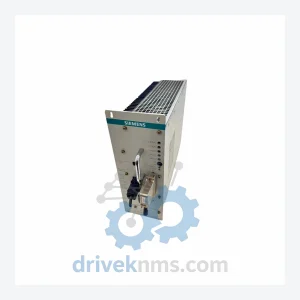
Siemens S31043 Rectifier Modules — S31043-K1166-X
Siemens S31043 Series: Comprehensive Module Range and Technical Overview The Siemens S31043 series comprises rectifier and power supply modules deployed…
Model: ULC0065
Product Overview
Commercial availability is handled through direct RFQ, model verification and export-oriented follow-up rather than public cart checkout.
Datasheet Preview
Use attached product manuals when available. If the manual is not public yet, request the full file directly through RFQ.
Commercial Path
Product pages on DRIVEKNMS are designed to verify model, brand and series first, then move the buyer into one clean quotation path.
Technical Dossier
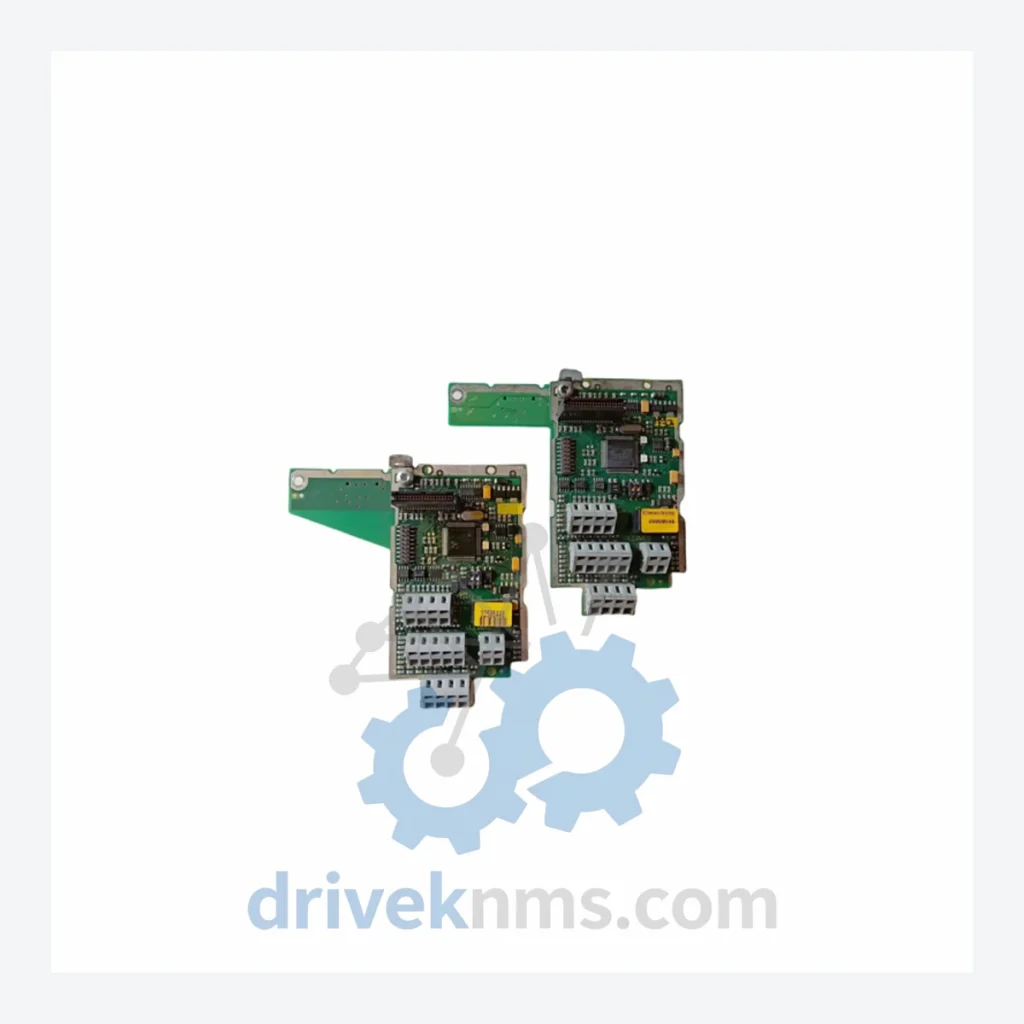
The Siemens ULC (Unitary Logic Controller) series is a purpose-built line of programmable control boards deployed extensively across global heavy industry — including petrochemical refineries, chemical processing plants, nuclear power facilities, and large-scale HVAC infrastructure. Engineered to Siemens' industrial-grade reliability standards, ULC modules operate as standalone or networked controllers within distributed automation architectures. Their compact form factor, deterministic scan cycles, and compatibility with Siemens communication backbones have made them a long-term fixture in facilities where control system replacement carries prohibitive downtime costs. The ULC0065, in particular, functions as a primary control board responsible for logic execution, I/O coordination, and inter-module communication within its host system.
The ULC series was introduced as part of Siemens' broader push to standardize programmable logic control across building automation and light industrial segments. Early-generation ULC modules relied on proprietary Siemens bus protocols and required dedicated programming terminals. Mid-generation revisions introduced expanded memory addressing, improved analog I/O resolution, and compatibility with PROFIBUS-DP, enabling integration into larger DCS environments. Later variants added Ethernet-based commissioning interfaces and expanded diagnostic registers accessible via Siemens SIMATIC toolchains.
Compatibility across ULC generations is not guaranteed. Backplane pinouts, firmware revision dependencies, and communication protocol versions differ between early and late production runs. Facilities operating mixed-generation ULC installations must verify hardware revision codes before substituting modules. As the ULC series has entered its mature-to-declining lifecycle phase, Siemens has progressively migrated new projects toward the SIMATIC S7-300 and S7-1200 platforms. However, the installed base of ULC hardware in operational facilities remains substantial, and direct replacement modules continue to be required for maintenance and emergency repair scenarios.
The following SKUs represent verified, commonly sourced modules within the Siemens ULC series. Each entry reflects the module's primary functional role within a ULC-based control system.
ULC0065: Primary logic control board; handles scan cycle execution and I/O arbitration.
ULC0100: Expanded-memory CPU module; supports larger ladder logic programs and extended data tables.
ULC0200: High-density digital input module; 32-channel 24VDC discrete input acquisition.
ULC0201: High-density digital output module; 32-channel transistor sink output, 24VDC.
ULC0210: Mixed digital I/O module; 16 DI / 16 DO in a single slot form factor.
ULC0300: Analog input module; 8-channel, 4–20mA / 0–10V configurable per channel.
ULC0301: Analog output module; 4-channel, 4–20mA isolated output for process control loops.
ULC0310: Mixed analog I/O module; 4 AI / 2 AO, suited for compact panel installations.
ULC0400: PROFIBUS-DP communication adapter; slave mode, supports up to 244 bytes I/O.
ULC0401: Modbus RTU communication module; RS-485 interface, master/slave configurable.
ULC0402: Ethernet communication module; 10/100 Mbps, supports Modbus TCP and proprietary Siemens protocol.
ULC0500: 24VDC power supply module; 5A rated output, integrated short-circuit protection.
ULC0501: Redundant power supply module; hot-swap capable, for high-availability panel configurations.
ULC0600: Backplane bus extender; extends ULC rack capacity across physically separated enclosures.
ULC0700: Diagnostic and status display module; local HMI interface for fault code readout and parameter inspection.
ULC0800: Temperature input module; 8-channel thermocouple / RTD, supports J, K, T, PT100 types.
ULC0900: Counter and pulse input module; high-speed 100kHz pulse counting for encoder and flow meter integration.
As Siemens has reduced active production of ULC series hardware, procurement through standard distribution channels has become increasingly unreliable. Lead times from authorized distributors for low-volume ULC modules frequently exceed 20 weeks, and several SKUs have been formally discontinued with no direct Siemens replacement offered.
DriveKNMS maintains a dedicated inventory of ULC series modules sourced from decommissioned systems, verified surplus stock, and controlled refurbishment pipelines. All units are cataloged by hardware revision and firmware version to ensure compatibility matching with the customer's installed system. For facilities operating under long-term maintenance contracts or requiring guaranteed spare parts availability over a 5–10 year horizon, DriveKNMS offers lifecycle extension agreements covering the full ULC module range. Customers are advised to provide their existing hardware revision codes when inquiring to ensure exact-match sourcing.
ULC series modules present specific testing challenges due to their integrated backplane communication logic and proprietary bus arbitration circuits. Standard bench power-up testing is insufficient to validate full module functionality. DriveKNMS applies a multi-stage verification protocol to all ULC modules processed through its facility.
Stage 1 — Visual and physical inspection: PCB surface examination for corrosion, capacitor bulge, solder joint fatigue, and connector pin integrity. Stage 2 — Powered functional test: Module is installed in a reference ULC rack and subjected to a full I/O scan cycle under controlled load conditions. Stage 3 — Communication bus validation: PROFIBUS-DP and serial communication ports are tested against a reference master device to confirm protocol compliance and data integrity. Stage 4 — Thermal soak: Module operates at rated load for a minimum of 4 hours to screen for latent thermal failures. Stage 5 — Revision verification: Hardware revision markings are cross-referenced against Siemens documentation to confirm the module matches the customer's system compatibility requirements. All modules that pass the full protocol are issued a test report and shipped with a 12-month warranty against functional defects.
Related Paths
Siemens S31043 Series: Comprehensive Module Range and Technical Overview The Siemens S31043 series comprises rectifier and power supply modules deployed…
Siemens RW3045-1AB14 Soft Starter: Supply Chain Acquisition Strategy & Asset Return Value The Siemens RW3045-1AB14 is a SIRIUS-series soft starter…
Siemens TELEPERM M Series: Comprehensive Module Range and Technical Overview The Siemens TELEPERM M is a distributed control system (DCS)…