
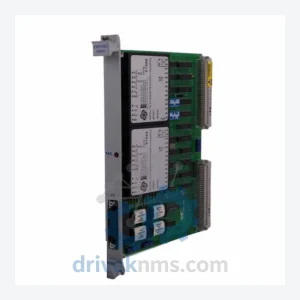
VMIC VMIVME Series Modules | VMIVME-4900
VMIC VMIVME Series: Comprehensive Module Range and Technical Overview The VMIC VMIVME series represents one of the most widely deployed…
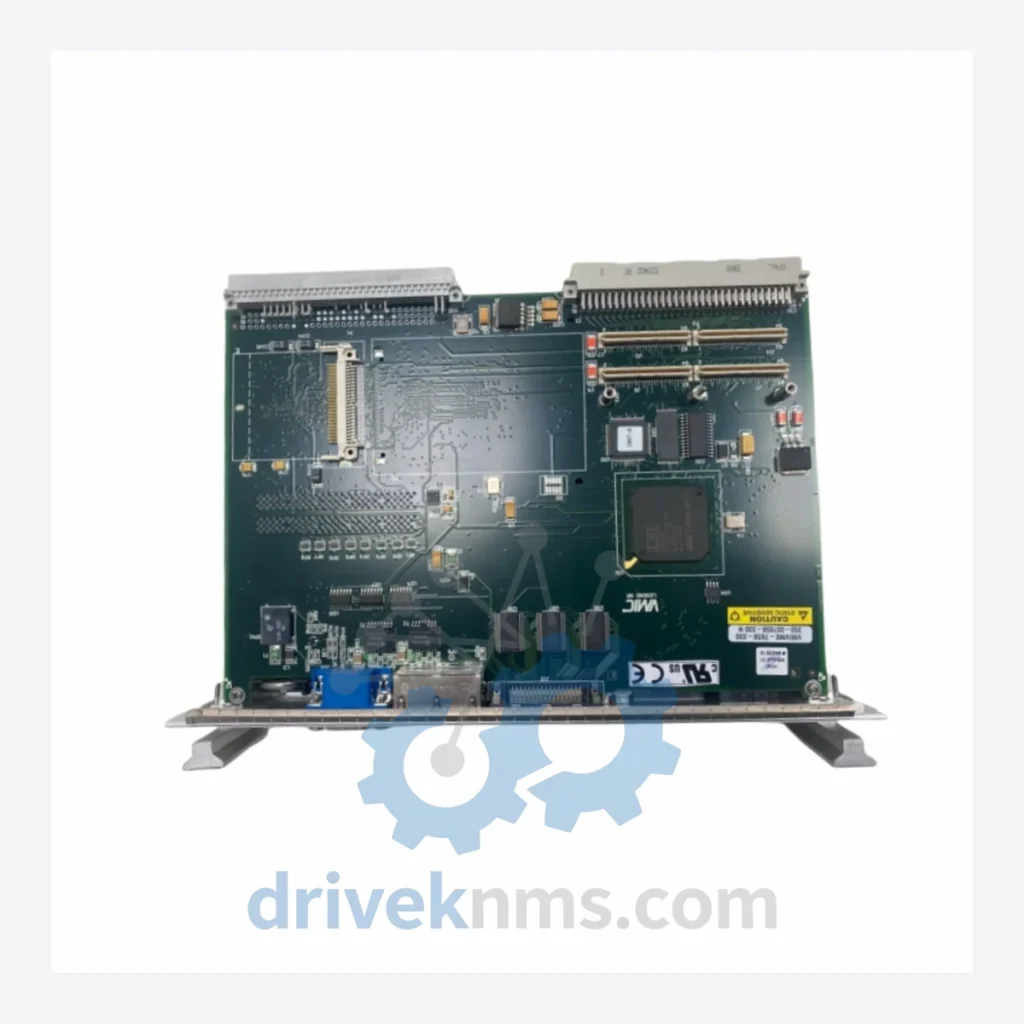
Model: VMIVME7658 VMIVME-7658-330
Product Overview
Commercial availability is handled through direct RFQ, model verification and export-oriented follow-up rather than public cart checkout.
Datasheet Preview
Use attached product manuals when available. If the manual is not public yet, request the full file directly through RFQ.
Commercial Path
Product pages on DRIVEKNMS are designed to verify model, brand and series first, then move the buyer into one clean quotation path.
Technical Dossier
The VMIC (now GE Intelligent Platforms / Abaco Systems) VMIVME-7658 series represents a line of VMEbus-based single board computers (SBCs) that achieved widespread deployment across global heavy industry sectors including petrochemical refineries, nuclear power generation facilities, offshore oil platforms, and continuous-process chemical plants. Built on the VMEbus (IEEE 1014) standard, these boards served as the computational backbone of distributed control systems (DCS) and supervisory control architectures throughout the 1990s and 2000s. Their rugged construction, deterministic real-time performance, and long production lifecycles made them a preferred platform for safety-critical and high-availability applications where system uptime is measured in decades, not years. The VMIVME-7658-330 variant, operating at 330 MHz, represents a mature revision within this family, commonly found in legacy DCS racks still in active service.
The VMIVME-7658 series traces its lineage to VMIC's broader VMEbus SBC portfolio, which began with lower-clock-speed variants based on the PowerPC architecture. Early revisions in the VMIVME-7658 family operated at sub-200 MHz clock rates and were paired with limited onboard DRAM, targeting basic real-time control tasks. As process control software grew in complexity through the late 1990s, VMIC introduced progressively faster clock variants — culminating in the -330 suffix designating 330 MHz operation — while maintaining backward compatibility with the VME64 backplane standard.
The architecture centers on a PowerPC processor core, onboard DRAM (typically 64 MB to 256 MB depending on revision), Flash storage for boot firmware, dual Ethernet interfaces (10/100BaseT), and a full VMEbus interface supporting both master and slave operation. The board implements VxWorks and LynxOS real-time operating system compatibility, which was critical for integration into existing DCS environments. Compatibility challenges arise primarily when mixing early -100 and -200 MHz variants with later -330 units in the same chassis, as firmware revisions and memory map differences can require reconfiguration of the VMEbus arbiter settings.
Following VMIC's acquisition by GE Fanuc Automation (later GE Intelligent Platforms, now Abaco Systems), the VMIVME-7658 series entered a managed end-of-life phase. Modern functional equivalents include the Abaco SVME/DMV-183 and SBC6712 series, but direct drop-in replacement is not possible without software porting effort, making long-term spares support for the original VMIVME-7658 hardware a persistent operational requirement for installed-base customers.
The following SKUs represent verified models within the VMIVME-7658 family and closely related VMIC VMEbus SBC product lines. Each entry reflects a distinct hardware configuration or clock/memory variant:
VMIVME-7658-100: 100 MHz PowerPC VMEbus SBC, early production revision, 64 MB DRAM baseline.
VMIVME-7658-200: 200 MHz PowerPC VMEbus SBC, mid-generation revision, expanded memory support.
VMIVME-7658-330: 330 MHz PowerPC VMEbus SBC, primary production variant, 128–256 MB DRAM, dual Ethernet.
VMIVME-7658-330-256: 330 MHz variant with 256 MB onboard DRAM, extended memory configuration.
VMIVME-7657: Predecessor single board computer, lower clock, same VME64 form factor.
VMIVME-7659: Successor SBC variant within VMIC VMEbus family, enhanced I/O capability.
VMIVME-7750: High-performance VMEbus SBC, Pentium III-based, targeted at compute-intensive DCS tasks.
VMIVME-7751: Pentium III VMEbus SBC with extended temperature range for harsh environments.
VMIVME-7752: Dual-processor VMEbus SBC variant for redundant control architectures.
VMIVME-7755: VMEbus SBC with integrated PMC expansion site for additional I/O mezzanine cards.
VMIVME-5565: Reflective memory node card, used alongside 7658 SBCs for high-speed inter-node data sharing.
VMIVME-5588: Fiber-optic reflective memory module, companion card for distributed DCS node communication.
VMIVME-2128: 128-channel digital input module, commonly rack-paired with 7658-series SBCs.
VMIVME-2514: 64-channel digital output module, standard I/O complement for 7658-based control racks.
VMIVME-3113A: 16-channel 16-bit analog input module, precision process variable acquisition.
VMIVME-4116: 16-channel analog output module, 16-bit resolution, used for actuator command signals.
VMIVME-7587: Earlier-generation VMEbus SBC, PowerPC-based, direct architectural predecessor to the 7658 line.
The VMIVME-7658 series has been formally discontinued by Abaco Systems (formerly GE Intelligent Platforms / VMIC). OEM new-stock availability is exhausted. Facilities operating DCS architectures built around this platform — including Honeywell TDC 3000, Foxboro I/A Series, and custom VMEbus-based SCADA systems — face a binary choice: execute a full control system migration (capital-intensive, high-risk during production) or maintain the existing hardware through verified aftermarket spare parts channels.
DriveKNMS maintains a dedicated inventory program for the VMIVME-7658 series and associated VMIC VMEbus modules. Stock is sourced from decommissioned plant equipment, verified against original VMIC hardware revision documentation, and subjected to full functional testing prior to dispatch. For end-users requiring long-term maintenance agreements or consignment stock arrangements for the VMIVME-7658-330 and related variants, DriveKNMS provides multi-year supply planning support. Inquiries for bulk quantities, specific firmware revision requirements, or matched-pair redundant units should be directed to the sales team with full part number and quantity details.
VMEbus single board computers present specific quality verification challenges distinct from standard I/O modules. The VMIVME-7658-330 and its variants incorporate complex multi-layer PCB assemblies with high-density BGA-packaged processors, DDR DRAM arrays, and dual Ethernet PHY circuits — all of which require targeted diagnostic procedures beyond simple power-on testing.
DriveKNMS applies the following test protocol to all VMIVME-7658 series units: (1) Visual inspection of VMEbus P1/P2 connector pins for bend, corrosion, and contact wear. (2) Board-level power rail verification across all voltage domains (3.3 V, 5 V, 12 V) under load. (3) POST (Power-On Self-Test) completion verification via serial console output, confirming processor initialization, DRAM sizing, and Flash integrity. (4) VMEbus master/slave arbitration test using a calibrated VME analyzer to confirm correct bus grant and interrupt response timing. (5) Dual Ethernet port loopback test at 10/100 Mbps. (6) Extended burn-in cycle (minimum 48 hours) at operational temperature to screen for latent component failures. (7) Final firmware revision documentation and labeling prior to packaging.
Related Paths
VMIC VMIVME Series: Comprehensive Module Range and Technical Overview The VMIC VMIVME series represents one of the most widely deployed…
VMIC VME7671-42000A Single Board Computer – Obsolete VMEbus Spare Part When a VMEbus single board computer fails in a legacy…
VMIC VMIVME Series: Comprehensive Module Range and Technical Overview The VMIC VMIVME series represents a family of VMEbus-based industrial I/O…