
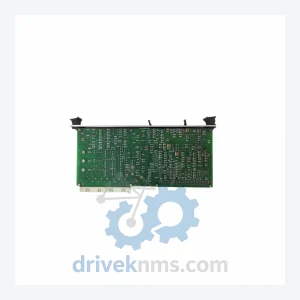
Yokogawa K9634DA-01 TCD Card Modules
Yokogawa K9634DA Series: Comprehensive Module Range and Technical Overview The Yokogawa K9634DA series TCD (Thermocouple/mV Input) cards are field-proven I/O…
Model: NFAI835-S51
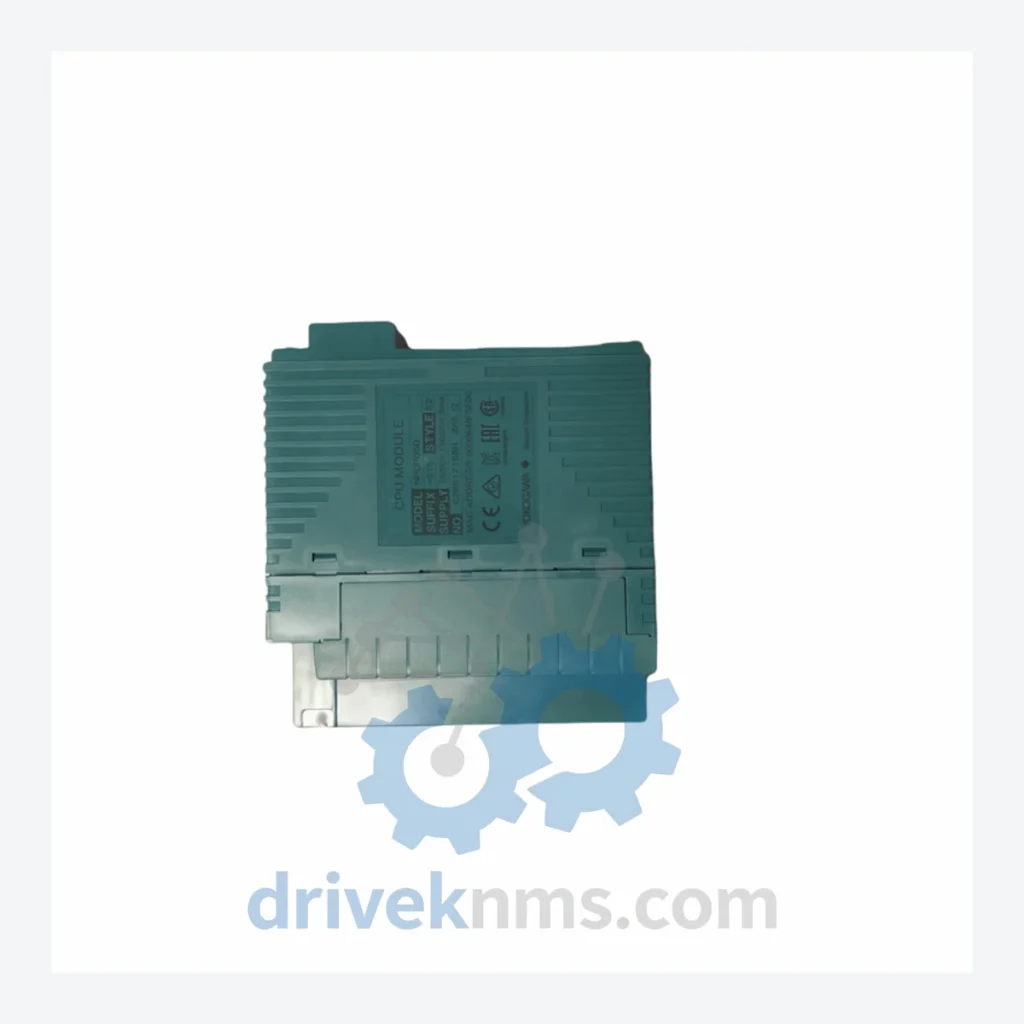
Product Overview
Commercial availability is handled through direct RFQ, model verification and export-oriented follow-up rather than public cart checkout.
Datasheet Preview
Use attached product manuals when available. If the manual is not public yet, request the full file directly through RFQ.
Commercial Path
Product pages on DRIVEKNMS are designed to verify model, brand and series first, then move the buyer into one clean quotation path.
Technical Dossier
The Yokogawa NFAI835 series represents a core analog input/output module family deployed within Yokogawa's CENTUM VP Distributed Control System (DCS) and ProSafe-RS Safety Instrumented System (SIS) architectures. These modules are installed across global heavy industry verticals including petrochemical refineries, nuclear power generation facilities, LNG processing plants, and large-scale chemical manufacturing operations. The NFAI835 family provides high-density, high-accuracy analog signal conditioning for field instrumentation — including 4–20 mA transmitters, thermocouples, and RTDs — and interfaces directly with the CENTUM VP Field Control Station (FCS) backplane via Yokogawa's proprietary V-net/IP or Vnet communication bus. Their role in safety-critical process control loops makes them among the most frequently maintained and replaced modules in long-lifecycle DCS installations worldwide.
The NFAI835 module lineage traces its origins to Yokogawa's CENTUM CS 3000 platform, introduced in the late 1990s, which established the modular I/O philosophy that persists in CENTUM VP today. Early-generation analog input modules in this family used parallel backplane communication and supported 8-channel configurations with 12-bit resolution. As process industries demanded higher channel density and improved signal fidelity, Yokogawa evolved the architecture to support 16-channel configurations with 16-bit A/D conversion and HART pass-through capability, enabling asset management integration via Yokogawa's Plant Resource Manager (PRM).
The transition from CENTUM CS 3000 to CENTUM VP (circa 2008–2012) introduced significant backplane protocol changes. NFAI835-series modules designed for CENTUM VP are not backward-compatible with CS 3000 Node Units without adapter hardware, a critical consideration for brownfield plant upgrades. The S51 suffix variant (e.g., NFAI835-S51) denotes a specific hardware revision incorporating enhanced EMC shielding and extended operating temperature tolerance, targeting installations in electrically noisy environments such as motor control centers and high-voltage switchgear rooms.
As of 2024, the NFAI835 series has entered the mature/end-of-active-production phase. Yokogawa continues to provide long-term maintenance support (LTMS) under its VigilantPlant lifecycle program, but lead times for new manufacture have extended significantly. Plants operating CENTUM VP R5 and earlier are advised to establish strategic spare parts inventories for NFAI835 modules to mitigate unplanned downtime risk.
The following SKUs represent verified models within the Yokogawa NFAI835 and closely related NFAI/NFAO analog I/O module family for CENTUM VP and ProSafe-RS platforms. Each entry includes a concise functional descriptor:
NFAI835-S51: 16-ch analog input module, 4–20 mA, HART, S51 EMC revision
NFAI835-S11: 16-ch analog input module, 4–20 mA, standard revision, CENTUM VP FCS
NFAI835-S21: 16-ch analog input, extended voltage input range, CENTUM VP
NFAI835-S31: 16-ch analog input, thermocouple/RTD multi-input, CENTUM VP
NFAI835-S41: 16-ch analog input, high-speed sampling variant, FCS Node Unit
NFAO835-S51: 8-ch analog output module, 4–20 mA, HART, S51 revision
NFAO835-S11: 8-ch analog output, standard revision, CENTUM VP FCS backplane
NFAO835-S21: 8-ch analog output, extended load drive capability, field bus ready
NFAI531-S51: 8-ch analog input, ProSafe-RS SIS platform, SIL2 certified
NFAI531-S11: 8-ch analog input, ProSafe-RS, standard revision, IEC 61511
NFAO531-S51: 4-ch analog output, ProSafe-RS SIS, SIL2, 4–20 mA loop-powered
NFAI141-S51: 4-ch high-accuracy analog input, CENTUM VP, ±0.05% FS accuracy
NFAI141-S11: 4-ch analog input, standard accuracy, CENTUM VP Node Unit
NFAO141-S51: 2-ch analog output, high-resolution 16-bit DAC, CENTUM VP
NFAI543-S51: 16-ch analog input, FOUNDATION Fieldbus H1 interface, CENTUM VP
NFAI543-S11: 16-ch analog input, PROFIBUS PA interface, CENTUM VP FCS
NFAI835-S51/KS: NFAI835-S51 with factory-installed Korean market certification (KS mark)
NFAI835-S51/CE: NFAI835-S51 with CE marking for European hazardous area compliance
DriveKNMS maintains a dedicated inventory program for Yokogawa NFAI835 series modules, with particular focus on variants that have transitioned to limited or discontinued manufacture status. Our sourcing network spans certified Yokogawa channel partners, decommissioned plant asset recovery, and factory-refurbished stock channels across Asia-Pacific, the Middle East, and Europe.
For plants operating CENTUM VP R4.01 through R6.06, NFAI835 modules represent a non-trivial procurement challenge when sourced through standard distribution channels. DriveKNMS provides lifecycle extension support including: verified surplus stock with full traceability documentation, cross-reference analysis to identify compatible replacement modules where direct substitution is feasible, and consignment inventory programs for operators managing multi-site CENTUM VP installations. All modules are supplied with test reports, and serialized units are cross-checked against Yokogawa's published hardware revision matrices to confirm firmware compatibility with the target FCS version.
NFAI835 modules present specific test challenges due to their multi-channel analog front-end architecture and direct backplane bus integration. DriveKNMS applies the following test protocol to all NFAI835 units processed through our facility:
Backplane Interface Verification: Each module is seated in a CENTUM VP-compatible Node Unit test fixture and subjected to V-net communication handshake validation to confirm bus arbitration and module address recognition. Analog Channel Accuracy Test: All 16 input channels are stimulated with calibrated 4–20 mA signals at 0%, 25%, 50%, 75%, and 100% of span. Output linearity and zero/span error are recorded against Yokogawa's published ±0.1% FS specification. HART Communication Test: HART pass-through functionality is verified on a per-channel basis using a HART communicator, confirming device descriptor (DD) polling and variable read/write integrity. Isolation Test: Channel-to-channel and channel-to-backplane isolation resistance is measured at 500 VDC to confirm dielectric integrity of the analog front-end. Thermal Cycling: Modules flagged for long-term storage or critical-path sparing are subjected to a 0°C to +55°C thermal cycle to screen for latent solder joint failures. All test data is archived and supplied with the module shipment as a traceable quality record.
© 2026 DriveKNMS. All trademarks belong to their respective owners. Specifications are for reference only and subject to change without notice. Verify all parameters against official documentation before installation.
Related Paths
Yokogawa K9634DA Series: Comprehensive Module Range and Technical Overview The Yokogawa K9634DA series TCD (Thermocouple/mV Input) cards are field-proven I/O…
Yokogawa UT350-01 Digital Indicating Controller – Obsolete UT Series Spare Part When a Yokogawa UT350-01 fails on the plant floor,…
YOKOGAWA K9403 Series: Comprehensive Module Range and Technical Overview The YOKOGAWA K9403 series Field Indication Device (FID) cards are deployed…