
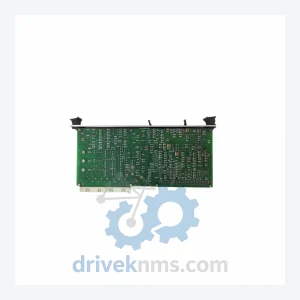
Yokogawa K9634DA-01 TCD Card Modules
Yokogawa K9634DA Series: Comprehensive Module Range and Technical Overview The Yokogawa K9634DA series TCD (Thermocouple/mV Input) cards are field-proven I/O…
Model: NFTR8S-00
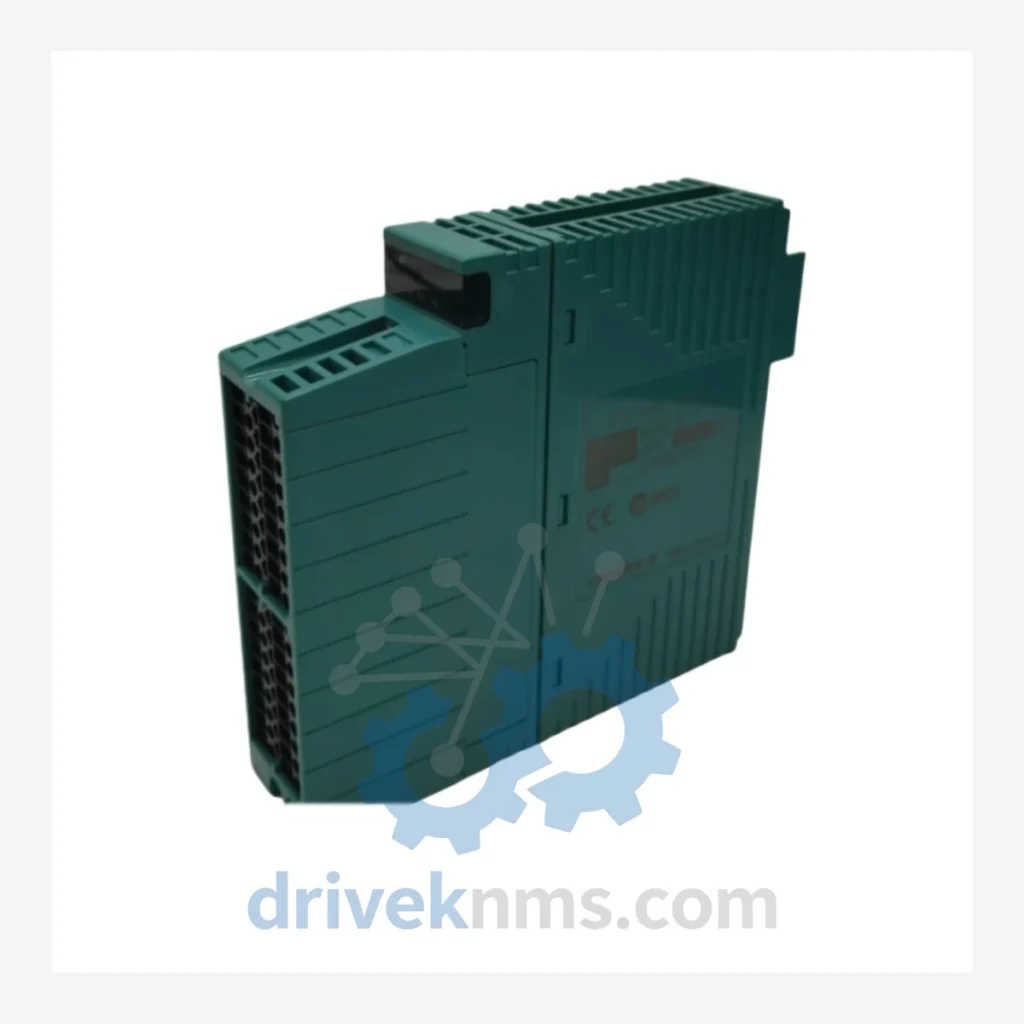
Product Overview
Commercial availability is handled through direct RFQ, model verification and export-oriented follow-up rather than public cart checkout.
Datasheet Preview
Use attached product manuals when available. If the manual is not public yet, request the full file directly through RFQ.
Commercial Path
Product pages on DRIVEKNMS are designed to verify model, brand and series first, then move the buyer into one clean quotation path.
Technical Dossier
The Yokogawa NFTR series represents a core component family within the CENTUM VP and CENTUM CS 3000 distributed control systems — platforms that have accumulated decades of installed base across global heavy industry. Refineries in the Middle East, chemical complexes in Europe, and nuclear auxiliary systems in East Asia have standardized on CENTUM architecture for its deterministic control performance and proven field reliability. The NFTR series specifically handles Foundation Fieldbus (FF) and related field communication functions, acting as the interface layer between the DCS controller domain and field instrumentation. Losing a single NFTR module in a live process environment does not merely interrupt one loop — it can take down an entire fieldbus segment, affecting dozens of field devices simultaneously. Replacement lead times from OEM channels for mature CENTUM hardware routinely exceed 16 weeks. DriveKNMS maintains physical stock of NFTR series modules to eliminate that exposure.
Yokogawa's fieldbus communication architecture evolved in parallel with the broader adoption of IEC 61158 Foundation Fieldbus H1 in process industries during the late 1990s and 2000s. Early CENTUM CS 3000 installations used discrete fieldbus interface cards that required manual segment configuration and offered limited diagnostic transparency. The NFTR series introduced a more integrated approach: each module manages its own H1 segment independently, with onboard diagnostics accessible through the CENTUM engineering environment without requiring physical intervention at the marshalling cabinet.
As CENTUM VP succeeded CS 3000, Yokogawa maintained backward hardware compatibility at the node level, meaning NFTR modules qualified for CS 3000 installations can in many cases operate within CENTUM VP cabinets — a deliberate design decision that protects long-term asset investments. However, firmware version alignment between the NFTR module and the FCU (Field Control Unit) remains a critical compatibility variable. Plants running mixed-generation CENTUM hardware must verify firmware revision tables before substituting modules. The NFTR series has entered the mature phase of its product lifecycle; Yokogawa's current roadmap directs new projects toward FOUNDATION Fieldbus HSE and HART-IP architectures, making NFTR spares increasingly dependent on the secondary market.
The following models represent the documented NFTR series range within the CENTUM CS 3000 and CENTUM VP ecosystems. Each entry reflects a distinct hardware configuration or channel density variant.
NFTR8S-00: Foundation Fieldbus H1 communication module, 8-segment capacity, standard I/O bus interface for CENTUM CS 3000 / VP node units.
NFTR4S-00: Foundation Fieldbus H1 module, 4-segment variant, reduced channel density for smaller process nodes.
NFTR8D-00: Dual-redundant FF H1 communication module, 8 segments, supports redundant fieldbus segment topology.
NFTR4D-00: Dual-redundant FF H1 module, 4-segment configuration, for redundancy-critical applications.
NFTB8S-00: Foundation Fieldbus H1 bus interface module, 8-segment, terminal bus variant for specific cabinet configurations.
NFTB4S-00: Foundation Fieldbus H1 bus interface module, 4-segment, terminal bus variant.
NFTB8D-00: Dual-redundant FF H1 bus interface, 8-segment, terminal bus architecture.
NFTB4D-00: Dual-redundant FF H1 bus interface, 4-segment, terminal bus architecture.
NFCP100-S00: Fieldbus coupler/power conditioner module, supports H1 segment power and signal conditioning.
NFCP100-D00: Redundant fieldbus coupler/power conditioner, dual-channel configuration.
NFAI135-H00: Analog input module, 16-channel, 4–20 mA HART, compatible with NFTR-based node architecture.
NFAO135-H00: Analog output module, 8-channel, 4–20 mA HART, node-compatible.
NFDI135-H00: Digital input module, 32-channel, 24 VDC, for discrete field signal acquisition within CENTUM nodes.
NFDO135-H00: Digital output module, 16-channel, 24 VDC, for discrete actuator control.
NFPS135-00: Node power supply module, provides regulated DC power to CENTUM VP/CS 3000 I/O node assemblies.
NFBU100-S00: Node bus unit, single configuration, manages internal communication backplane for CENTUM I/O nodes.
NFBU100-D00: Node bus unit, dual/redundant configuration, for high-availability node backplane communication.
CENTUM CS 3000 reached end-of-sale status, and Yokogawa's official spare parts support for the oldest CS 3000 hardware generations operates on a diminishing inventory basis. Plants that have not transitioned to CENTUM VP — or that operate hybrid CS 3000 / VP environments — face a structural sourcing problem: OEM channels deprioritize discontinued hardware, and standard industrial distributors do not stock low-volume DCS-specific modules.
DriveKNMS operates as a specialist secondary-market supplier for Yokogawa CENTUM hardware. Our NFTR inventory is sourced through decommissioned plant asset recovery, authorized surplus channels, and long-term storage programs. Each unit undergoes condition assessment before listing. For plants managing a 5–10 year maintenance horizon on existing CENTUM infrastructure, establishing a pre-positioned spare inventory of NFTR modules — rather than sourcing reactively during an unplanned outage — is the operationally sound approach. A single unplanned fieldbus segment outage in a refinery context carries downtime costs that dwarf the cost of maintaining a two-unit NFTR buffer stock.
NFTR modules present specific inspection challenges due to their role as active communication controllers rather than passive I/O cards. DriveKNMS applies the following test protocol to all NFTR series units prior to dispatch:
1. Visual and Physical Inspection: Examination of connector pins, backplane edge connectors, and housing for corrosion, mechanical damage, or evidence of thermal stress. NFTR modules installed in high-humidity environments frequently show early-stage pin oxidation that is not visible without magnification.
2. Electrolytic Capacitor Assessment: Onboard capacitors on communication modules are subject to electrolyte degradation over time, particularly in installations with elevated ambient temperatures. Units showing capacitor bulge or leakage are quarantined and not offered for sale.
3. Firmware Version Verification: The firmware revision of each NFTR module is read and documented. Compatibility with specific CENTUM VP and CS 3000 FCU firmware versions is cross-referenced against Yokogawa's published compatibility matrices. Mismatched firmware is a known cause of segment initialization failures.
4. Functional Communication Test: Where test bench infrastructure permits, modules are powered and segment communication is verified against a reference CENTUM node configuration.
5. Packaging and ESD Protection: All units are shipped in anti-static packaging with desiccant. NFTR modules are sensitive to electrostatic discharge; improper handling during transit is a documented failure mode for refurbished DCS hardware.
Related Paths
Yokogawa K9634DA Series: Comprehensive Module Range and Technical Overview The Yokogawa K9634DA series TCD (Thermocouple/mV Input) cards are field-proven I/O…
Yokogawa UT350-01 Digital Indicating Controller – Obsolete UT Series Spare Part When a Yokogawa UT350-01 fails on the plant floor,…
YOKOGAWA NFDR Series: Comprehensive Module Range and Technical Overview The YOKOGAWA NFDR series relay output modules are core field control…