
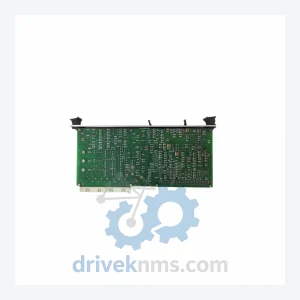
Yokogawa K9634DA-01 TCD Card Modules
Yokogawa K9634DA Series: Comprehensive Module Range and Technical Overview The Yokogawa K9634DA series TCD (Thermocouple/mV Input) cards are field-proven I/O…
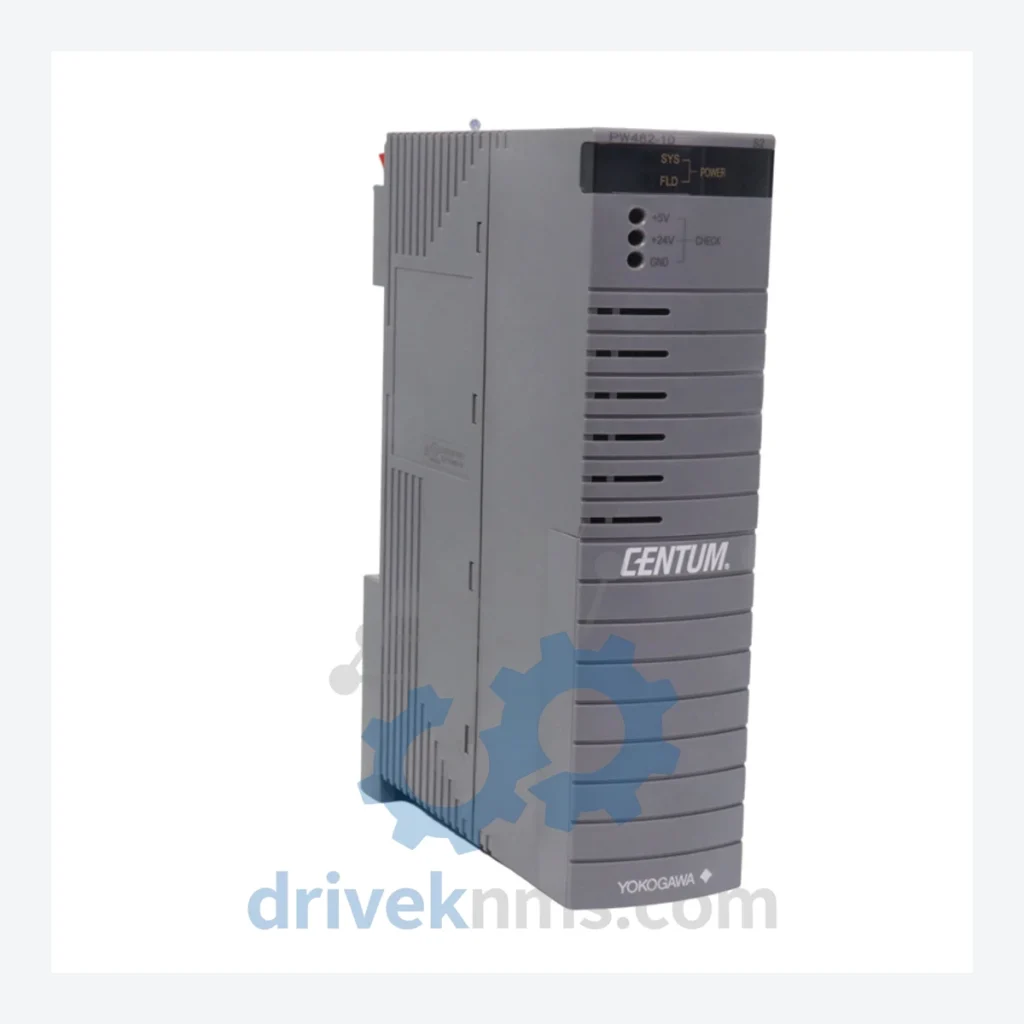
Model: PW482-10 S2
Product Overview
Commercial availability is handled through direct RFQ, model verification and export-oriented follow-up rather than public cart checkout.
Datasheet Preview
Use attached product manuals when available. If the manual is not public yet, request the full file directly through RFQ.
Commercial Path
Product pages on DRIVEKNMS are designed to verify model, brand and series first, then move the buyer into one clean quotation path.
Technical Dossier
The Yokogawa PW4xx power supply series forms the backbone of field power distribution within the CENTUM CS 3000 and CENTUM VP distributed control systems — platforms that remain in active operation across refineries, petrochemical complexes, LNG terminals, and nuclear auxiliary systems worldwide. These modules deliver regulated DC power to I/O field cards, communication buses, and node units within the Field Control Station (FCS) architecture. Their role is not peripheral: a failed power module triggers a cascading loss of I/O node availability, directly threatening process continuity. Installed base figures for CENTUM CS 3000 alone exceed tens of thousands of FCS units globally, the majority of which continue to operate on original PW4xx hardware.
The PW482-10 S2 is a dual-redundant-capable power supply module rated for the CENTUM CS 3000 and CENTUM VP node unit environments. It provides stable 24 VDC field power output with built-in protection against overcurrent and reverse polarity. The S2 suffix denotes the second hardware revision, incorporating improved thermal management and extended MTBF over the original S1 variant.
Yokogawa introduced the PW4xx power supply family alongside the CENTUM CS 3000 platform in the late 1990s. The initial release addressed the need for modular, hot-swappable field power within the FCS node unit — a departure from the centralized power architecture of the earlier CENTUM XL and CENTUM-V generations.
The first-generation PW481 and PW482 modules established the physical form factor and backplane connector standard that persists across the entire CS 3000 and VP product lifecycle. The S2 revision introduced in the mid-2000s improved capacitor specifications and EMI filtering, extending reliable service life in high-ambient-temperature environments such as Middle Eastern refinery control rooms.
With Yokogawa's transition toward the CENTUM VP R6 platform and the eventual introduction of the Unified Controller (UCN) architecture, the PW4xx series entered a maintenance-only lifecycle phase. Yokogawa no longer manufactures new PW4xx units for open-market sale; procurement is limited to certified spare stock, refurbished units, and third-party industrial surplus channels. Plants operating CS 3000 systems face a defined end-of-support horizon, making pre-emptive spare inventory a direct operational risk management decision.
The following models represent the verified PW4xx series range as deployed across CENTUM CS 3000 and CENTUM VP installations. Each entry reflects confirmed hardware function based on Yokogawa FCS node unit architecture documentation.
PW481-11: Single-output 24 VDC field power supply, standard node unit, non-redundant configuration.
PW481-11 S2: Revised single-output 24 VDC supply with improved thermal rating, CS 3000 node unit.
PW482-10: Dual-output field power module, supports redundant power bus in FCS node unit.
PW482-10 S2: Second-revision dual-output module; enhanced EMI filtering and extended MTBF rating.
PW482-11: Dual-output variant with alternate output voltage configuration for specific I/O card sets.
PW483-11: High-capacity power supply for expanded node unit configurations with increased I/O density.
PW484-11: Power module for CENTUM VP RIO (Remote I/O) node units, field-side installation.
PW484-11 S2: Revised RIO power module with updated connector locking mechanism.
PW485-11: Compact power supply for ESB (Expanded Signal Bus) node unit applications.
PW401-11: Early-generation FCS power module, CENTUM CS 3000 initial release hardware.
PW402-11: Dual-rail power supply for legacy CS 3000 FCS cabinet configurations.
PW411-11: Intermediate-series power module bridging CS 3000 and early VP hardware generations.
PW412-11: Dual-output intermediate-series module for VP transition-era node units.
PW421-11: Power supply module for CENTUM VP standard FCS, single-output configuration.
PW422-11: Dual-output VP-era power module, direct functional successor to PW482-10 in VP-native deployments.
DriveKNMS maintains dedicated stock of PW4xx series power modules sourced through verified industrial surplus channels, decommissioned plant asset recovery, and long-term storage inventory. All units undergo condition assessment prior to listing.
The practical challenge with PW4xx procurement is not simply availability — it is verified compatibility. The S1 and S2 hardware revisions are not always interchangeable depending on FCS firmware version and node unit backplane revision. DriveKNMS technical staff cross-reference customer FCS configuration data against known hardware compatibility matrices before confirming shipment.
For plants managing CENTUM CS 3000 systems under extended lifecycle agreements, DriveKNMS recommends establishing a minimum buffer stock of two PW482-10 S2 units per FCS cabinet. Power supply failures in redundant configurations typically present as gradual voltage drift before hard failure — a pattern that allows planned replacement if spare inventory is on-site. Reactive procurement after failure, by contrast, exposes the plant to lead times of 8–20 weeks through standard channels.
The cost calculus is direct: a single unplanned FCS shutdown in a refinery or chemical plant environment carries a production loss exposure measured in hundreds of thousands of dollars per day. A pre-positioned spare power module at a fraction of that cost is not a discretionary purchase — it is a risk transfer instrument.
Power supply modules present specific failure modes that require targeted inspection beyond standard visual assessment. DriveKNMS applies the following verification steps to all PW4xx units processed through its facility:
1. Electrolytic Capacitor Assessment: All bulk and filter capacitors are measured for ESR (Equivalent Series Resistance) and capacitance retention. Units with capacitors showing >20% capacitance loss or elevated ESR are flagged for recapping before dispatch.
2. Output Voltage Calibration: Each module is bench-tested under load conditions representative of a populated CS 3000 node unit. Output voltage stability, ripple, and transient response are recorded against Yokogawa factory specification tolerances.
3. Backplane Connector Inspection: The PW4xx backplane connector is a known wear point in hot-swap environments. Pin condition, contact plating integrity, and mechanical retention force are verified on every unit.
4. Thermal Cycling Verification: Units are subjected to a controlled thermal cycle to identify cold-solder joints and component delamination not visible under static inspection.
5. Firmware and Hardware Revision Logging: The hardware revision marking (S1 / S2) is confirmed and documented. Units are labeled with their verified revision status to prevent compatibility mismatches at the customer site.
Related Paths
Yokogawa K9634DA Series: Comprehensive Module Range and Technical Overview The Yokogawa K9634DA series TCD (Thermocouple/mV Input) cards are field-proven I/O…
Yokogawa UT350-01 Digital Indicating Controller – Obsolete UT Series Spare Part When a Yokogawa UT350-01 fails on the plant floor,…
YOKOGAWA NFDR Series: Comprehensive Module Range and Technical Overview The YOKOGAWA NFDR series relay output modules are core field control…