
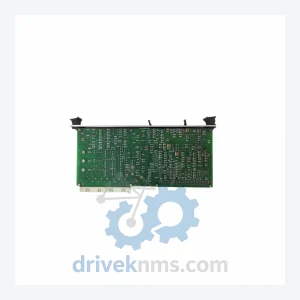
Yokogawa K9634DA-01 TCD Card Modules
Yokogawa K9634DA Series: Comprehensive Module Range and Technical Overview The Yokogawa K9634DA series TCD (Thermocouple/mV Input) cards are field-proven I/O…
Model: SDV541-S33 S2
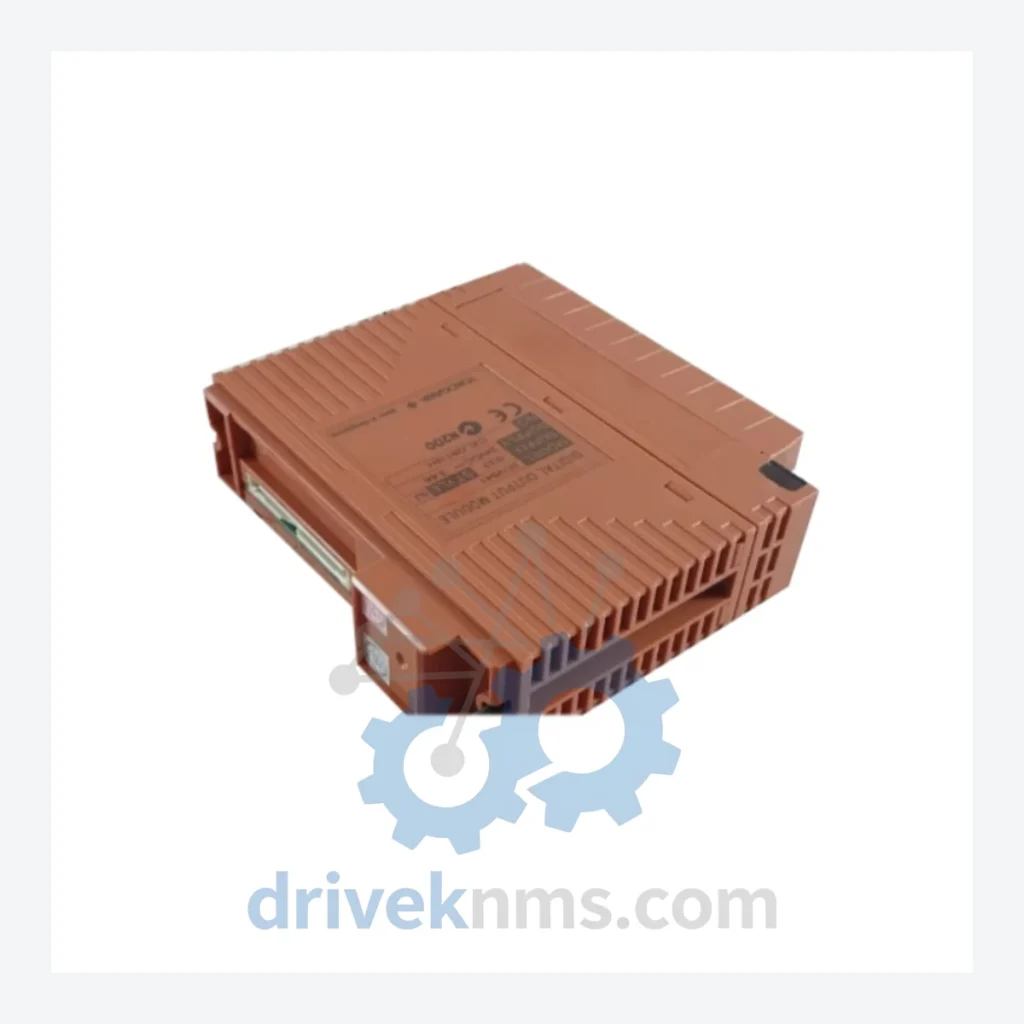
Product Overview
Commercial availability is handled through direct RFQ, model verification and export-oriented follow-up rather than public cart checkout.
Datasheet Preview
Use attached product manuals when available. If the manual is not public yet, request the full file directly through RFQ.
Commercial Path
Product pages on DRIVEKNMS are designed to verify model, brand and series first, then move the buyer into one clean quotation path.
Technical Dossier
The Yokogawa SDV541 series is a family of signal conditioning and digital I/O modules deployed within Yokogawa's CENTUM VP and CS 3000 Distributed Control Systems (DCS). These modules occupy a critical position in global heavy industry installations, including petrochemical complexes, nuclear power facilities, offshore oil platforms, and large-scale refinery operations. The SDV541 series handles field-level signal interfacing — converting, isolating, and conditioning analog and digital signals between field instruments and the DCS controller backbone. Their ruggedized design and compliance with IEC 61508 functional safety standards have made them a default specification in engineering procurement for safety-instrumented systems (SIS) and basic process control systems (BPCS) across Asia-Pacific, the Middle East, and Europe.
The SDV541 lineage traces to Yokogawa's modular I/O philosophy established in the CENTUM XL era of the 1990s, where signal conditioning was handled by discrete, slot-mounted modules on a shared backplane bus. The transition to CENTUM CS introduced standardized module form factors and a high-speed field bus (Vnet/IP predecessor), which the SDV541 family was designed to exploit. In the CENTUM CS 3000 generation, SDV541 modules communicated over the ESB (Enhanced Signal Bus), providing deterministic scan cycles suitable for process control loops with sub-100ms response requirements.
With the introduction of CENTUM VP (circa 2008), Yokogawa maintained backward compatibility with SDV541-series hardware through the use of legacy I/O nest adapters, allowing existing installations to migrate controller hardware without replacing field wiring or I/O modules. This architectural decision extended the operational lifespan of SDV541 modules well into the 2020s. However, as of 2023, Yokogawa has formally classified the majority of the SDV541 series as End-of-Life (EOL), with no new production runs planned. Replacement pathways include the ADV151, ADV161, and SDV144 series for analog I/O, and the SDV541 to SDV144 migration kits for digital I/O consolidation. Plants operating legacy CENTUM CS 3000 systems must now rely on aftermarket spare parts channels to sustain SDV541 inventory for unplanned maintenance events.
The following SKUs represent verified models within the Yokogawa SDV541 signal conditioning and digital I/O module family, classified by functional category:
Digital Input (DI) Modules
Digital Output (DO) Modules
Signal Conditioning / Mixed I/O Modules
With Yokogawa's EOL designation covering the majority of the SDV541 catalog, procurement teams at operating plants face a constrained supply environment. OEM channels no longer fulfill new orders for most SDV541 variants, and lead times through authorized distributors — where stock exists — routinely exceed 26 weeks. DriveKNMS maintains a dedicated inventory program for legacy Yokogawa DCS modules, with a focus on sustaining CENTUM CS 3000 and early CENTUM VP installations through their remaining operational lifecycle.
DriveKNMS sources SDV541 modules through a combination of decommissioned plant buybacks, controlled factory surplus, and verified secondary market channels. All units are subject to pre-sale inspection before listing. For critical spares planning, DriveKNMS can provide multi-unit lot quotations to support annual maintenance budgets and turnaround (TAR) event stockpiling. Customers operating under ISA-55.1 or IEC 62443 asset management frameworks can request full traceability documentation packages upon inquiry.
The SDV541 series presents specific technical challenges during refurbishment and testing due to its backplane-dependent communication architecture. Modules cannot be fully validated in isolation — functional verification requires a live ESB backplane environment replicating the CENTUM CS 3000 or CENTUM VP I/O nest electrical characteristics.
DriveKNMS operates a dedicated Yokogawa DCS test bench configured with authentic Yokogawa I/O nests, field terminal assemblies (FTAs), and controller cards. Each SDV541 module undergoes the following verification sequence: (1) visual inspection for PCB damage, relay contact wear, and connector pin integrity; (2) powered backplane insertion test confirming module recognition and ESB enumeration; (3) channel-level functional test — for DO modules such as the SDV541-S33 S2, each relay output is cycled under resistive and inductive load conditions to verify contact closure, release timing, and suppression circuit integrity; (4) 48-hour burn-in at rated operating temperature; (5) final datasheet parameter verification against Yokogawa GS 33J60B10-01EN specifications. Modules that fail any stage are quarantined and not returned to inventory.
© 2026 DriveKNMS. All trademarks belong to their respective owners. Specifications are for reference only and subject to change without notice. Verify all parameters against official documentation before installation.
Related Paths
Yokogawa K9634DA Series: Comprehensive Module Range and Technical Overview The Yokogawa K9634DA series TCD (Thermocouple/mV Input) cards are field-proven I/O…
Yokogawa UT350-01 Digital Indicating Controller – Obsolete UT Series Spare Part When a Yokogawa UT350-01 fails on the plant floor,…
YOKOGAWA K9403 Series: Comprehensive Module Range and Technical Overview The YOKOGAWA K9403 series Field Indication Device (FID) cards are deployed…