
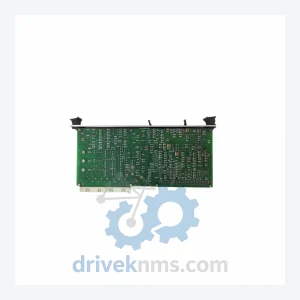
Yokogawa K9634DA-01 TCD Card Modules
Yokogawa K9634DA Series: Comprehensive Module Range and Technical Overview The Yokogawa K9634DA series TCD (Thermocouple/mV Input) cards are field-proven I/O…
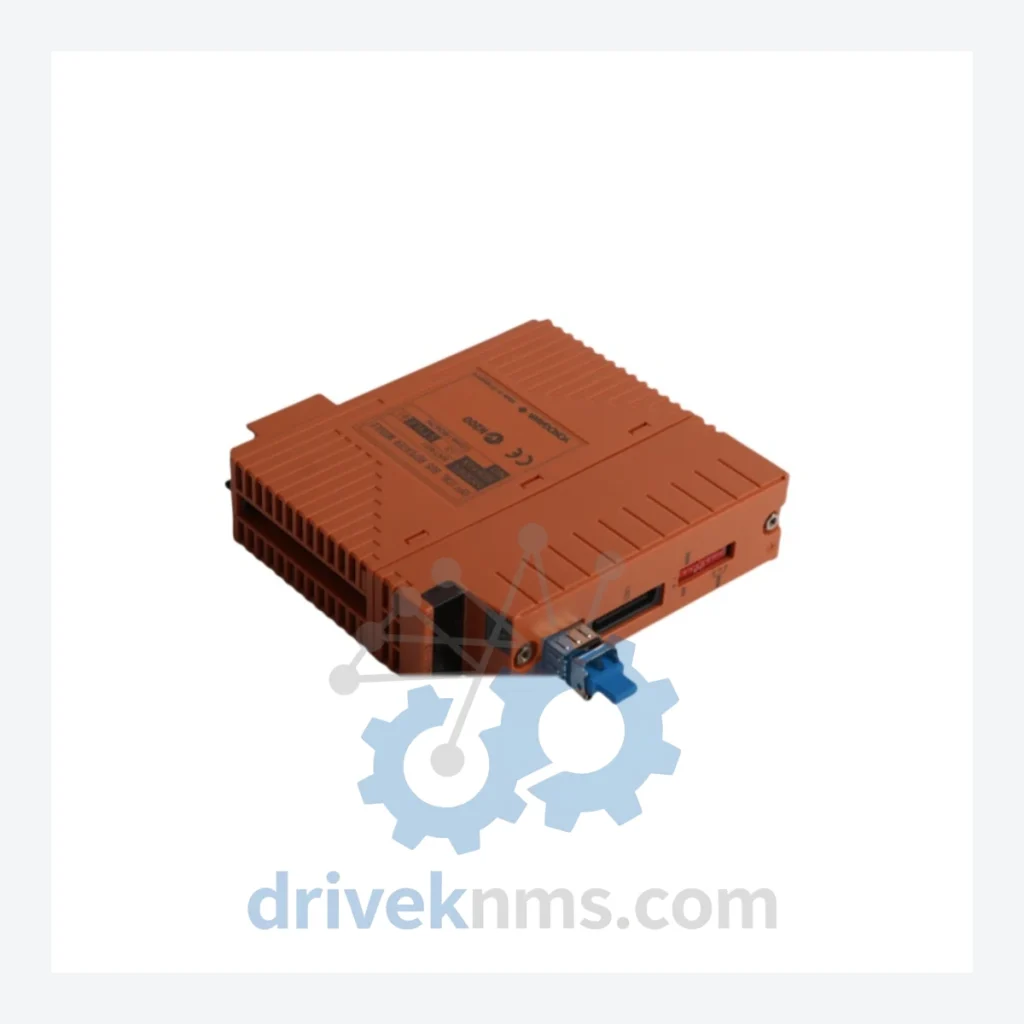
Model: SNT401-13 S1
Product Overview
Commercial availability is handled through direct RFQ, model verification and export-oriented follow-up rather than public cart checkout.
Datasheet Preview
Use attached product manuals when available. If the manual is not public yet, request the full file directly through RFQ.
Commercial Path
Product pages on DRIVEKNMS are designed to verify model, brand and series first, then move the buyer into one clean quotation path.
Technical Dossier
The Yokogawa SNT401 series comprises network interface modules deployed within Yokogawa's STARDOM FCN/FCJ autonomous controller platform. These modules serve as the communication backbone in distributed control architectures across global heavy industry installations, including petrochemical complexes, nuclear power auxiliary systems, offshore oil and gas platforms, and continuous-process refineries. The SNT401 series enables deterministic Ethernet-based communication between field controllers and supervisory SCADA/DCS layers, making it a critical component in high-availability process automation environments where communication failure is not operationally tolerable.
The SNT401-13 S1 specifically functions as a dual-port network interface module, providing redundant Ethernet connectivity for FCN autonomous controllers. Its deployment in safety-critical and continuous-process industries has resulted in a large installed base that continues to require long-term spare parts support well beyond the module's standard product lifecycle.
The SNT401 series was introduced as part of Yokogawa's STARDOM platform, which itself emerged in the early 2000s as a bridge between traditional PLC architectures and full DCS implementations. The FCN/FCJ controller family was designed to address mid-scale process automation requirements where a full CENTUM VP deployment was cost-prohibitive but where deterministic control and network redundancy remained mandatory.
Early SNT401 revisions supported 10/100 Mbps Ethernet with single-port configurations. Subsequent hardware revisions introduced dual-port redundancy (reflected in the S1 suffix designation), improved EMI shielding for harsh industrial environments, and enhanced firmware supporting IEC 61131-3 function block communication protocols. The architecture transitioned from proprietary Yokogawa bus structures toward open Ethernet standards, improving interoperability with third-party SCADA systems including Wonderware, iFIX, and OPC-DA/UA server environments.
Compatibility considerations are significant for maintenance engineers: SNT401 modules are backplane-specific and must match the FCN controller chassis revision. Cross-generation substitution between early FCN-100 and later FCN-500 series chassis requires firmware validation prior to installation. Modules with the S1 hardware suffix indicate second-generation silicon with revised MAC address allocation and updated boot ROM.
The following SKUs represent the documented SNT401 series and associated STARDOM FCN/FCJ network and communication modules. Each entry reflects a distinct hardware configuration or revision level.
SNT401-13 S1: Dual-port 100Mbps Ethernet network interface module for FCN autonomous controller, redundant LAN configuration, S1 hardware revision.
SNT401-13: First-generation dual-port Ethernet network interface module for FCN controller, non-S1 silicon revision, functionally equivalent with firmware constraints.
SNT401-11: Single-port 100Mbps Ethernet network interface module, non-redundant LAN topology, for cost-reduced FCN deployments.
SNT401-11 S1: Single-port Ethernet NIM, S1 hardware revision, updated boot ROM and MAC allocation logic.
SNT401-21: Extended-temperature rated network interface module for outdoor or non-climate-controlled enclosure installations.
SNT401-31: Network interface module with integrated serial RS-232/RS-485 gateway port for legacy field device integration.
FCN-RTU SNT401: RTU-variant network interface module configured for remote terminal unit deployments with low-power standby mode.
F3SP38-6N: STARDOM FCN CPU module, primary processor for FCN-100 series chassis, paired with SNT401 NIM for network communication.
F3SP58-6S: FCN-500 series CPU module with enhanced processing capacity, compatible with SNT401-13 S1 in redundant controller configurations.
F3SP67-6S: High-performance FCN CPU module supporting up to 60,000 I/O tags, requires SNT401-13 S1 for dual-LAN redundancy.
F3BU04-0N: 4-slot FCN base unit chassis, accommodates SNT401 NIM and up to 3 I/O or CPU modules.
F3BU16-0N: 16-slot FCN base unit chassis for expanded I/O configurations, supports multiple SNT401 NIM installations.
F3AD04-6R: 4-channel analog input module for FCN chassis, 4–20mA with HART pass-through, co-deployed with SNT401 in process measurement applications.
F3DA04-6R: 4-channel analog output module, 4–20mA, for FCN chassis, used in valve positioner and actuator control loops.
F3DI32-3N: 32-channel digital input module for FCN chassis, 24VDC, high-density discrete signal acquisition.
F3DO32-3N: 32-channel digital output module for FCN chassis, 24VDC transistor output, relay-driven actuator control.
F3PU20-0S: FCN power supply module, 24VDC input, provides regulated backplane power for SNT401 and co-installed modules.
F3PU30-0S: Redundant power supply module for FCN chassis, hot-swap capable, used in high-availability process control installations.
The Yokogawa SNT401 series has entered the mature-to-declining phase of its product lifecycle. Yokogawa has progressively shifted its installed base toward the STARDOM R10.x firmware platform and newer controller hardware, with some SNT401 variants formally discontinued from active production. However, the global installed base across refineries, chemical plants, and power generation facilities remains substantial, and operators routinely require SNT401 modules for corrective maintenance, hot-spare inventory replenishment, and lifecycle extension programs.
DriveKNMS maintains a dedicated inventory of SNT401-series modules sourced through authorized surplus channels, decommissioned plant asset recovery, and verified third-party distributor networks. All SNT401 units in DriveKNMS inventory are subject to pre-shipment inspection and functional verification. For end-users operating under ISA-18.2 or IEC 61511 functional safety frameworks, DriveKNMS can provide module-level documentation packages including revision history, firmware version records, and test certificates upon request.
DriveKNMS supports lifecycle extension for SNT401 installations through: emergency same-day quotation for critical plant shutdowns, cross-reference validation between SNT401 hardware revisions, and compatibility advisory for FCN chassis substitution scenarios.
Network interface modules present specific verification challenges compared to passive I/O modules due to their active Ethernet PHY components, onboard flash memory, and firmware-dependent initialization sequences. DriveKNMS applies a structured test protocol to all SNT401 units prior to shipment.
Each SNT401 module undergoes: visual inspection of backplane connector pins for oxidation, mechanical deformation, and solder joint integrity; power-on initialization test confirming LED status sequence matches Yokogawa FCN hardware diagnostic specification; Ethernet port continuity and auto-negotiation verification using calibrated network test equipment; firmware version readout and comparison against Yokogawa revision compatibility matrix; and 24-hour burn-in cycle under simulated backplane load conditions to screen for latent component failures.
Modules exhibiting non-conforming behavior during any test stage are quarantined, documented, and excluded from serviceable inventory. DriveKNMS does not rework or re-flash SNT401 firmware without explicit customer authorization and documented change control records.
Related Paths
Yokogawa K9634DA Series: Comprehensive Module Range and Technical Overview The Yokogawa K9634DA series TCD (Thermocouple/mV Input) cards are field-proven I/O…
Yokogawa UT350-01 Digital Indicating Controller – Obsolete UT Series Spare Part When a Yokogawa UT350-01 fails on the plant floor,…
YOKOGAWA K9403 Series: Comprehensive Module Range and Technical Overview The YOKOGAWA K9403 series Field Indication Device (FID) cards are deployed…