
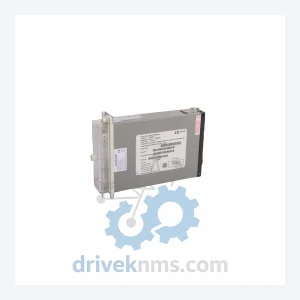
ALSTOM MVAJ105RA0802A Protection Relay – MiCOM Series
ALSTOM MVAJ105RA0802A Protection Relay: Supply Continuity Strategy for a Discontinued Critical Component The ALSTOM MVAJ105RA0802A is a numerical protection relay…
Model: 3402063200 640-34020631XD-1CA 640-34020631XD-2CA
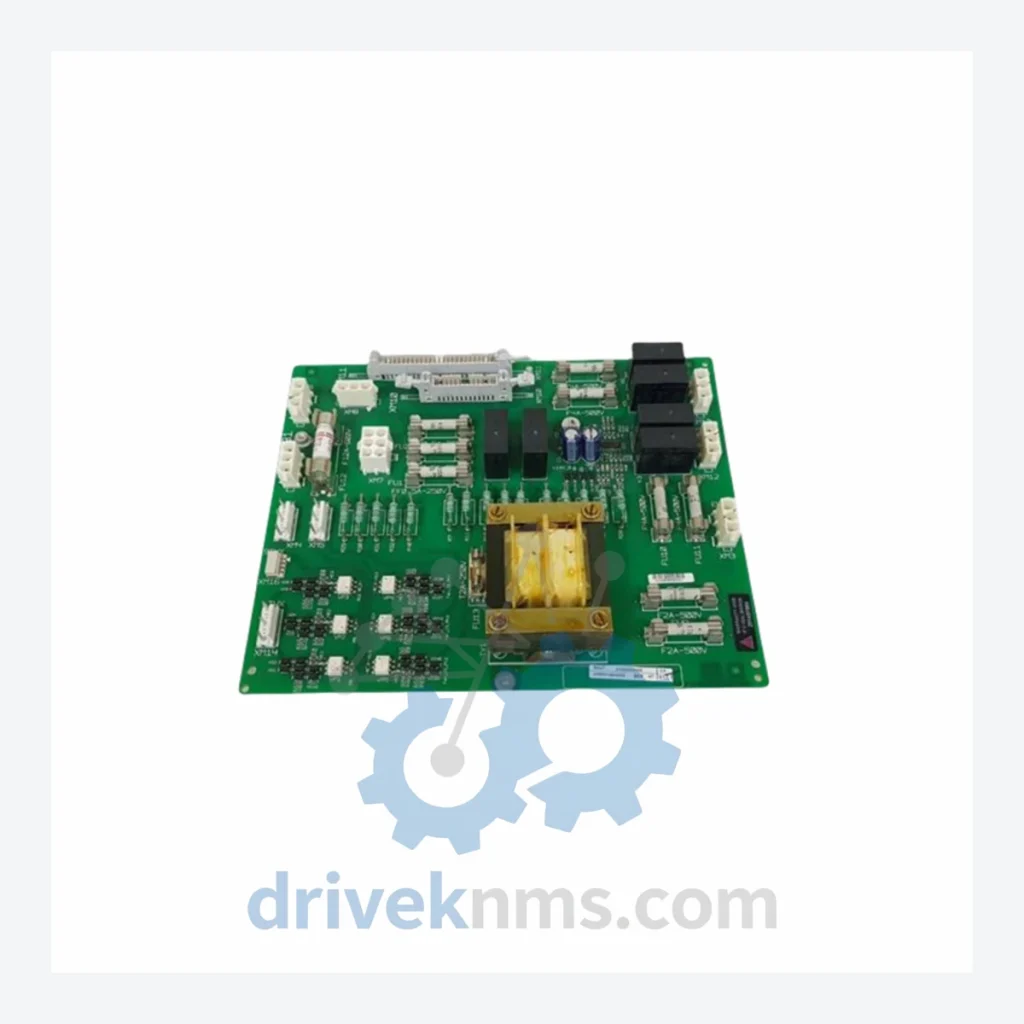
Product Overview
Commercial availability is handled through direct RFQ, model verification and export-oriented follow-up rather than public cart checkout.
Datasheet Preview
Use attached product manuals when available. If the manual is not public yet, request the full file directly through RFQ.
Commercial Path
Product pages on DRIVEKNMS are designed to verify model, brand and series first, then move the buyer into one clean quotation path.
Technical Dossier
When a DALIT control board fails in an aging production line, the consequences extend far beyond the cost of the component itself. A single unplanned shutdown can idle an entire facility for days. If the OEM no longer supports the platform, the only path forward — without this board — is a full system migration: new controllers, new wiring, new engineering hours, new operator retraining, and months of integration risk. Conservative estimates place that migration cost between $500,000 and $2,000,000 USD for a mid-scale automation cell. DriveKNMS holds verified stock of the DALIT 3402063200 / 640-34020631XD-1CA / 640-34020631XD-2CA. For facilities running legacy DALIT-based control architectures, this is not a commodity purchase — it is asset protection.
| Field | Detail |
|---|---|
| Manufacturer | DALIT |
| Part Number (Primary) | 3402063200 |
| Part Number (Alt 1) | 640-34020631XD-1CA |
| Part Number (Alt 2) | 640-34020631XD-2CA |
| Product Category | Industrial Control Board / PCB Module |
| Discontinuation Status | Obsolete – No longer in OEM production |
| Compatible Systems | Legacy DALIT industrial control platforms |
| Country of Origin | Germany |
| Condition Available | New Old Stock (NOS) / Refurbished (QA-verified) |
Note: Electrical parameters (voltage ratings, I/O specifications) are not published here to prevent misapplication. Please provide your system documentation when contacting us — our engineers will confirm compatibility before shipment.
Legacy DALIT control boards occupy a specific and non-negotiable role within their host systems. Unlike modern modular platforms where firmware abstraction allows cross-generation substitution, older DALIT architectures were designed with tight hardware-software coupling. The board's physical addressing, interrupt handling, and backplane communication protocols are matched to the specific generation of the control system it was built for.
Facilities that have operated DALIT-based systems for 15–25 years have accumulated significant institutional knowledge around those platforms: tuned PID loops, customized ladder logic, operator familiarity, and maintenance procedures refined over thousands of operating hours. Discarding that infrastructure because a single PCB is unavailable through standard channels is an engineering and financial decision that deserves serious scrutiny before execution.
The strategic case for sourcing a replacement board rather than initiating a platform migration rests on three pillars. First, the capital cost differential is substantial — a verified replacement board from DriveKNMS costs a fraction of a percent of a full system replacement. Second, the operational risk of a migration is non-trivial: integration failures, unexpected incompatibilities, and revalidation requirements routinely extend migration timelines by 6–18 months beyond initial estimates. Third, the institutional knowledge embedded in the existing system — the tuning, the logic, the procedures — has real economic value that is destroyed, not transferred, during a forced migration.
For plant managers facing board-level failures in DALIT systems, the correct first step is sourcing a verified replacement. DriveKNMS specializes in exactly this: locating, testing, and supplying obsolete industrial control components to facilities that cannot afford the alternative.
The decision to extend the operational life of a legacy control system is not a sign of deferred investment — it is a deliberate capital allocation strategy. For facilities where the production process itself is stable and the automation platform performs its function reliably, a structured spare parts program can defer a multi-million dollar migration by a decade or more at a fraction of the cost.
The following framework applies directly to facilities running DALIT-based control architectures:
1. Critical Board Inventory Audit. Identify every board variant in the system — primary controllers, I/O modules, communication cards — and cross-reference against known obsolescence status. For each obsolete variant, determine the minimum spare quantity required to sustain operations through a 10-year horizon, accounting for historical failure rates and mean time between failures (MTBF) data where available.
2. Prioritized Procurement of Hard-to-Source Components. Not all boards carry equal risk. Boards that are single points of failure, have no functional equivalent, and are no longer available through any distribution channel represent the highest procurement priority. The DALIT 3402063200 / 640-34020631XD series falls into this category. Procurement should occur now, while verified stock exists in the secondary market — not after a failure event, when negotiating leverage disappears and lead times become critical.
3. Controlled Storage Protocol. Obsolete electronic components require proper storage to remain serviceable. Anti-static packaging, climate-controlled environments (temperature and humidity within OEM-specified ranges), and periodic inspection schedules are not optional for long-term spare parts programs. Boards stored improperly for 5–10 years may present electrolytic capacitor degradation, pin oxidation, or firmware battery depletion upon installation.
4. Firmware and Configuration Documentation. Before any board is removed from service — whether for replacement or as a spare — its firmware version, configuration parameters, and any site-specific modifications must be documented. This documentation is the single most important asset in a legacy system maintenance program. Its absence transforms a routine board swap into a multi-day engineering recovery effort.
5. Scheduled Preventive Inspection. Legacy boards benefit from periodic inspection: visual examination for capacitor bulging or leakage, connector pin condition checks, and thermal imaging during operation to identify developing hot spots before they become failures. A structured inspection interval — typically annual for boards in continuous operation — extends service life and provides early warning of impending failures.
Facilities that implement this framework consistently report the ability to sustain legacy automation platforms well beyond OEM support windows, with total maintenance costs that remain significantly below the annualized cost of a forced migration.
Every DALIT 3402063200 / 640-34020631XD board supplied by DriveKNMS passes a structured 5-step quality assurance process before shipment. This process was developed specifically for obsolete industrial electronics, where standard incoming inspection procedures are insufficient.
Step 1 – Visual and Physical Inspection. Full board examination under magnification: solder joint integrity, component seating, PCB trace condition, connector pin geometry, and evidence of prior repair or rework. Any board showing signs of unauthorized modification is quarantined.
Step 2 – Electrolytic Capacitor Assessment. Electrolytic capacitors are the primary failure mode in aged industrial electronics. Each capacitor is inspected for physical deformation (bulging, leakage) and, where test equipment permits, capacitance and ESR (equivalent series resistance) values are verified against specification. Boards with degraded capacitors are either recapped by qualified technicians or rejected.
Step 3 – Firmware Version Verification. Where firmware is embedded in onboard memory, the version is read and documented. Customers are informed of the firmware version prior to shipment so they can confirm compatibility with their specific system revision. Firmware mismatches between board generations are a known source of integration failures in legacy DALIT systems.
Step 4 – Pin and Connector Corrosion Inspection. All edge connectors, backplane pins, and I/O terminals are inspected for oxidation and corrosion. Affected contacts are cleaned using appropriate methods; boards with structural corrosion damage are rejected.
Step 5 – Functional Verification (Where Applicable). For boards where test fixtures or compatible test systems are available, functional power-on testing is performed. Test results are documented and provided to the customer upon request.
The DALIT 3402063200 / 640-34020631XD-1CA / 640-34020631XD-2CA is a direct hardware replacement for the original board in compatible DALIT control systems. Key operational characteristics relevant to maintenance planning:
Q: What warranty applies to obsolete parts?
A: DriveKNMS provides a 90-day warranty on all QA-verified refurbished boards and a 180-day warranty on confirmed New Old Stock (NOS) units. Warranty covers functional failure under normal operating conditions. It does not cover damage resulting from installation error, incompatible system configurations, or improper storage after delivery.
Q: How do I know the board is genuine and not counterfeit?
A: All boards are sourced through traceable secondary market channels — decommissioned equipment, authorized surplus dealers, and verified industrial asset liquidators. Physical markings, board revision codes, and component date codes are examined during QA. Customers may request pre-shipment photographs and documentation. We do not source from unverified brokers.
Q: Should I purchase more than one unit?
A: For any obsolete board that is a single point of failure in a production-critical system, holding a minimum of one additional spare unit on-site is standard practice. For facilities with multiple identical systems, a proportional spare ratio should be calculated based on system count and historical failure frequency. Once verified secondary market stock is exhausted, no further supply can be guaranteed.
Q: What information should I provide when requesting a quote?
A: Please provide the full part number (including revision suffix), your system model and generation, the current firmware version if known, and your required delivery timeline. This allows our team to confirm compatibility and advise on the most appropriate unit from available stock.
Related Paths
ALSTOM MVAJ105RA0802A Protection Relay: Supply Continuity Strategy for a Discontinued Critical Component The ALSTOM MVAJ105RA0802A is a numerical protection relay…
MOORE 16137 Series: Comprehensive Module Range and Technical Overview The MOORE 16137 Series represents a core component family within Moore…
FUJI EP-3364B-CA-Z2 Inverter Control Board: Supply Continuity Strategy for a Discontinued Critical Spare The FUJI EP-3364B-CA-Z2 is a control board…