Products / Eik / 2.3 Controller
Eik 2.3 Controller

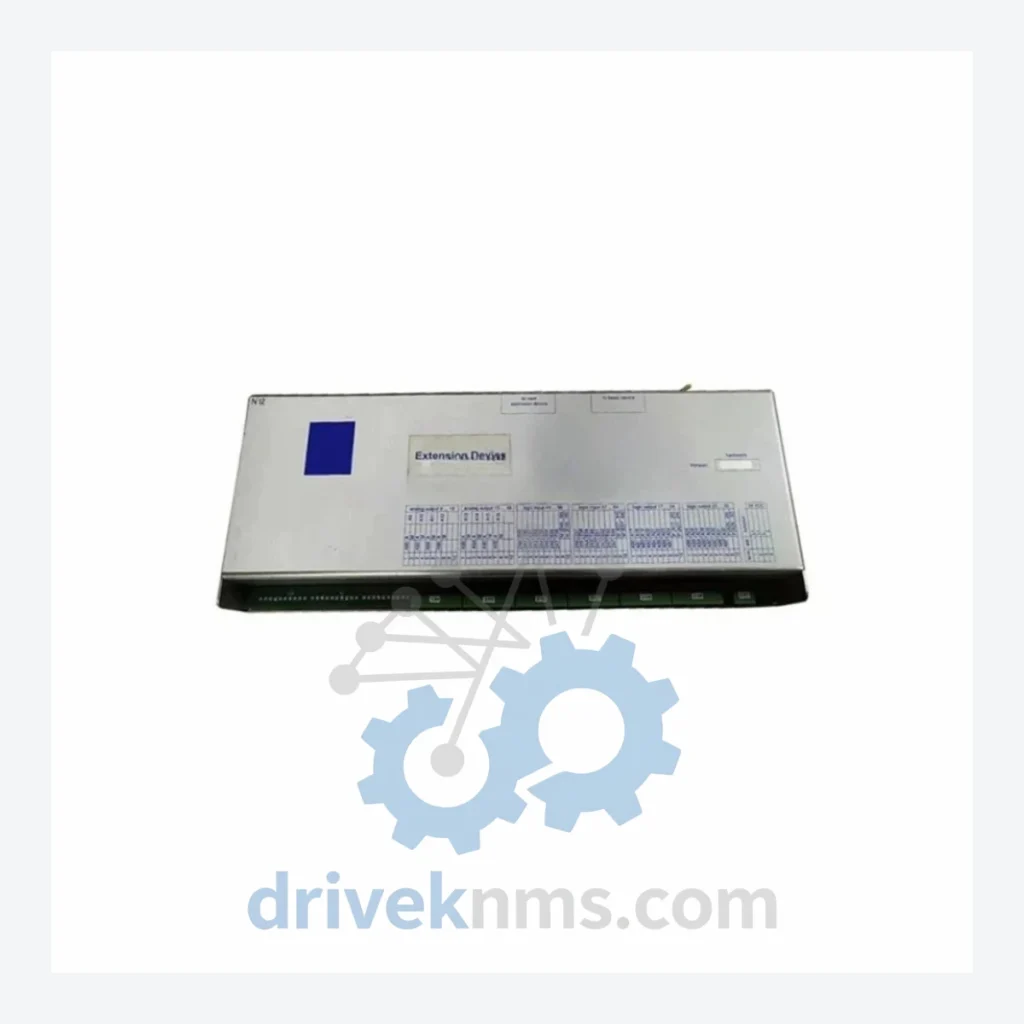
EIK 16/16/8AW-2.3 Controller – Obsolete I/O Controller Spare Part

Model: 16/16/8AW-2.3

Brand Eik
Series 2.3 Controller
Model 16/16/8AW-2.3
RFQ-ready model route Obsolete and surplus sourcing Export follow-up by model list

Product Overview

Commercial availability is handled through direct RFQ, model verification and export-oriented follow-up rather than public cart checkout.

Datasheet Preview

Datasheet Preview

Use attached product manuals when available. If the manual is not public yet, request the full file directly through RFQ.

Request Full Manual

Commercial Path

Use This Page To Confirm The Model, Then Move To RFQ

Product pages on DRIVEKNMS are designed to verify model, brand and series first, then move the buyer into one clean quotation path.

Technical Dossier

Product Details And Specifications

EIK 16/16/8AW-2.3 Controller – Obsolete I/O Controller Spare Part

When the EIK 16/16/8AW-2.3 controller module fails, the conversation in the control room shifts immediately from maintenance to capital expenditure. A single failed I/O controller in a legacy automation line does not just stop one process — it triggers a cascade: engineering assessments, system compatibility audits, vendor negotiations, and in most cases, a forced migration to a modern DCS or PLC platform that the facility budget was never designed to absorb. Conservative estimates place the total cost of an unplanned legacy system upgrade — including engineering hours, new hardware, rewiring, software licensing, and production downtime — between $500,000 and $3,000,000 USD per line.

DriveKNMS maintains verified stock of the EIK 16/16/8AW-2.3. This is not a catalog listing. If it is listed, it is physically on the shelf, inspected, and ready to ship.

Technical Specifications

Parameter Detail
Part Number 16/16/8AW-2.3
Brand EIK
Series AW Series, Version 2.3
Module Type Discrete / Analog I/O Controller
Digital Inputs 16
Digital Outputs 16
Analog Outputs 8
Lifecycle Status Discontinued / Obsolete
Condition Available New (sealed) / Refurbished (tested)
Country of Origin Germany

Note: Additional electrical parameters (supply voltage, signal range, communication protocol) are confirmed at the time of order based on unit serial number and firmware version. No parameters are assumed or fabricated.

Solving the Discontinued Hardware Crisis

The EIK 16/16/8AW-2.3 was deployed extensively in mid-generation industrial automation systems across process manufacturing, utilities, and discrete production environments. Its 16-channel discrete I/O architecture combined with 8 analog output channels made it a workhorse in applications where mixed signal handling was required without the overhead of a full distributed control node.

When EIK discontinued the AW-2.3 series, facilities running these controllers faced a hard choice: source replacement units on the secondary market, or commit to a full system migration. For plants operating on 15–25 year asset depreciation cycles, migration is rarely the rational economic decision. The installed base of wiring, field instruments, and operator interfaces built around this controller represents sunk capital that cannot be recovered through a forced upgrade.

The practical path — the one that protects the asset — is maintaining a strategic inventory of verified spare modules. A single EIK 16/16/8AW-2.3 held in a climate-controlled spare parts cabinet costs a fraction of one hour of unplanned downtime on a production line it supports. For facilities managing multiple units of this controller across several lines, a buffer stock of two to three modules per critical node is the standard recommendation among reliability engineers working with legacy automation assets.

How to extend the service life of systems dependent on the EIK 16/16/8AW-2.3 by 5–10 years:

  • Scheduled module rotation: Pull and bench-test installed units on a 24–36 month cycle. Identify electrolytic capacitor degradation before it causes field failure. Rotate tested spares into service and send pulled units for refurbishment.
  • Firmware version control: Document the firmware version running on every installed unit. Do not update firmware unless required — version mismatches between modules in the same rack have caused communication faults in legacy EIK installations.
  • Environmental hardening: Verify that cabinet cooling is maintaining the module within its rated thermal envelope. Electrolytic capacitors in modules of this generation degrade significantly faster above 40°C ambient.
  • Connector and pin maintenance: Inspect edge connectors and I/O terminal blocks annually. Oxidation on legacy connector pins is a leading cause of intermittent faults that are misdiagnosed as module failure.
  • Strategic spare procurement: The secondary market supply of the EIK 16/16/8AW-2.3 is finite and shrinking. Procurement decisions made today at current market prices will look rational against the prices — and availability — that will exist in three to five years.

Condition & Reliability Assurance

Every EIK 16/16/8AW-2.3 unit that leaves DriveKNMS goes through a structured 5-step inspection protocol before it is offered for sale. This process was developed specifically for obsolete industrial control hardware where field failure carries operational consequences.

  1. Visual and mechanical inspection: Board-level examination for physical damage, corrosion, burn marks, and component displacement. Units with any structural compromise are rejected at this stage.
  2. Electrolytic capacitor assessment: Capacitors in modules of this generation are the primary failure point. Each unit is assessed for capacitor bulging, leakage, and ESR deviation. Units with degraded capacitors are either recapped with equivalent-spec components or rejected.
  3. Firmware version verification: The firmware version is read and documented. Customers are informed of the exact version prior to shipment so compatibility with their installed system can be confirmed.
  4. Pin and connector integrity check: All I/O connector pins and edge connectors are inspected under magnification for oxidation, bending, and contact wear. Affected pins are cleaned or the unit is rejected.
  5. Functional power-on test: Where test fixtures are available for this module type, units are powered and basic I/O channel functionality is verified before packaging.

Key Features for System Maintenance

  • Drop-in replacement: The EIK 16/16/8AW-2.3 is a direct hardware replacement for the same part number in existing installations. No rack modification, no rewiring, no PLC program changes required in standard configurations.
  • No reprogramming required: The module's configuration is held in the host system, not the module itself in standard deployments. Swap the module, restore power, verify I/O mapping — the process takes minutes, not days.
  • Avoids engineering reconstruction costs: A forced migration away from this controller requires field instrument re-termination, new I/O mapping, HMI screen updates, and operator retraining. The cost of that engineering work alone typically exceeds the cost of maintaining a spare parts inventory for the remaining service life of the system.
  • Supports long-term asset protection strategy: Facilities that treat critical spare parts as capital assets — not consumables — consistently achieve lower total maintenance costs over the life of legacy automation systems.

FAQ

What warranty applies to obsolete parts?
DriveKNMS provides a 90-day warranty on all refurbished units and a 12-month warranty on new (sealed) units. Warranty covers functional failure under normal operating conditions. It does not cover damage from incorrect installation or operation outside rated parameters.

How do I know the unit is genuine and not counterfeit?
All units are sourced through verified industrial surplus channels. Serial numbers, date codes, and board markings are inspected for consistency. We do not source from unverified brokers. Customers may request documentation of the unit's provenance prior to purchase.

Should I buy more than one unit?
For any system where the EIK 16/16/8AW-2.3 is a single point of failure, holding at least one verified spare on-site is the minimum responsible position. For facilities with multiple installed units or where downtime costs are high, two to three spares per critical node is the standard recommendation. Secondary market availability of this part will not improve over time.

Can you source this part if it is not currently in stock?
Contact us. DriveKNMS maintains an active sourcing network for obsolete industrial hardware. If the part exists in the secondary market, we can locate it.

WhatsApp Prefilled Inquiry Email [email protected] Phone +86 18359293191 Top Back To Top