
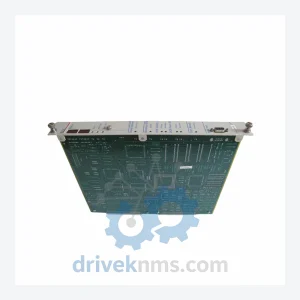
WESTINGHOUSE 4256A88G01 4256A88G04 PLC Controller – Ovation Series
Westinghouse 4256A88G01 4256A88G04 is listed for OVATION RFQ review. Confirm quantity, condition and destination before quotation.
RFQ-ready industrial model
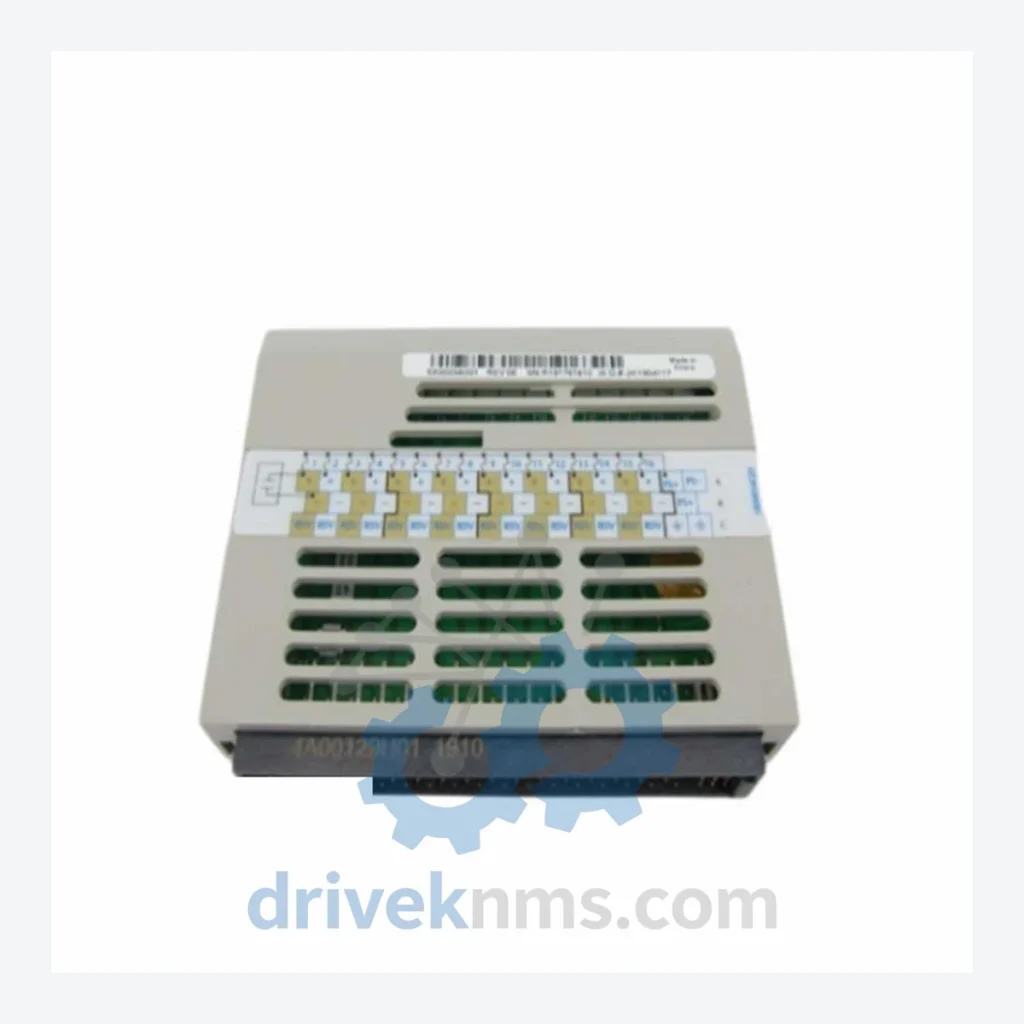
Model: 5X00034G01
Product Overview
Commercial availability is handled through direct RFQ, model verification and export-oriented follow-up rather than public cart checkout.
Datasheet Preview
Use attached product manuals when available. If the manual is not public yet, request the full file directly through RFQ.
Commercial Path
Product pages on DRIVEKNMS are designed to verify model, brand and series first, then move the buyer into one clean quotation path.
Technical Dossier
The Emerson Ovation Distributed Control System (DCS) is one of the most widely deployed process automation platforms in global heavy industry. Installed across coal-fired and nuclear power plants, petroleum refineries, chemical processing facilities, and pulp & paper mills, the Ovation platform has accumulated a multi-decade installed base spanning hundreds of sites worldwide. The 5X00034G01 is an Analog Input Module within this architecture, designed for high-density signal acquisition in safety-critical environments where signal integrity and deterministic scan times are non-negotiable. Ovation's modular backplane architecture allows individual I/O modules, controllers, and communication adapters to be replaced independently, making spare parts availability a long-term operational priority for plant engineers and reliability teams.
The Ovation platform originated from Westinghouse Electric's WDPF (Westinghouse Distributed Processing Family) system, introduced in the 1980s as the dominant DCS in the power generation sector. Following Emerson's acquisition of the process control assets, the platform was progressively modernized through several architectural generations.
Generation 1 — WDPF Era (1980s–1990s): Proprietary backplane, peer-to-peer communication via the Westinghouse Data Highway (WDH). I/O modules used dedicated point-to-point wiring. Many sites still operate legacy WDPF hardware under extended lifecycle agreements.
Generation 2 — Ovation 1.x / 2.x (Late 1990s–2000s): Transition to Ethernet-based Ovation Network. Introduction of the standard Ovation I/O module form factor (the 5X and 1X module families). Controller hardware migrated to Intel-based OCR400/OCR1100 platforms. Backward compatibility with WDPF I/O was maintained via bridge modules.
Generation 3 — Ovation 3.x (2010s–Present): 64-bit controller architecture, virtualized operator stations, OSIsoft PI historian integration, and cybersecurity hardening per NERC CIP standards. The physical I/O module form factor remained largely unchanged, preserving backward compatibility across the installed base.
Compatibility note: Modules from the 5X and 1X families are generally interchangeable within the same backplane generation, but firmware revision alignment with the active OCR controller version must be verified before installation.
Controllers & Processors
Analog Input Modules (AI)
Analog Output Modules (AO)
Digital Input Modules (DI)
Digital Output Modules (DO)
Communication & Network Adapters
Power Supply Modules
Emerson has formally discontinued several first- and second-generation Ovation modules as the platform transitions to Ovation 3.x and cloud-integrated architectures. For power generation and refining facilities operating on 15–30 year plant lifecycles, this creates a structural procurement gap: the control system cannot be economically replaced mid-lifecycle, but OEM spare parts are no longer manufactured.
DriveKNMS maintains a dedicated inventory of tested, pull-from-service Ovation DCS modules sourced from decommissioned plant assets globally. Our procurement network covers North America, Europe, and Asia-Pacific, with particular depth in nuclear and fossil fuel power generation spare parts. For obsolete modules such as legacy OCR400 controllers, WDPF-era I/O cards, and discontinued communication adapters, DriveKNMS provides:
Ovation DCS modules present specific test challenges due to their backplane-dependent communication architecture. Modules cannot be fully validated in isolation — functional verification requires active backplane communication with a compatible controller. DriveKNMS employs the following test protocol for all Ovation inventory:
Continue The Model Path
Move from this exact model into the matching system hub, brand archive, model-family archive or lifecycle sourcing route before sending a final RFQ list.
Related Paths
Westinghouse 4256A88G01 4256A88G04 is listed for OVATION RFQ review. Confirm quantity, condition and destination before quotation.
Westinghouse 2840A21G01 is listed for OVATION RFQ review. Confirm quantity, condition and destination before quotation.
Emerson KC3010X1-BA1 12P6762X042 is listed for OVATION RFQ review. Confirm quantity, condition and destination before quotation.