
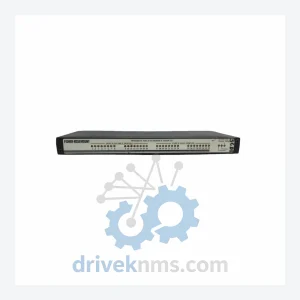
Fisher 01984-4080-0001 Discrete Field Interface Module – DeltaV Series
Fisher 01984-4080-0001 is listed for DeltaV RFQ review. Confirm quantity, condition and destination before quotation.
RFQ-ready industrial model
Model: KC3020X1-BA1 12P6732X092
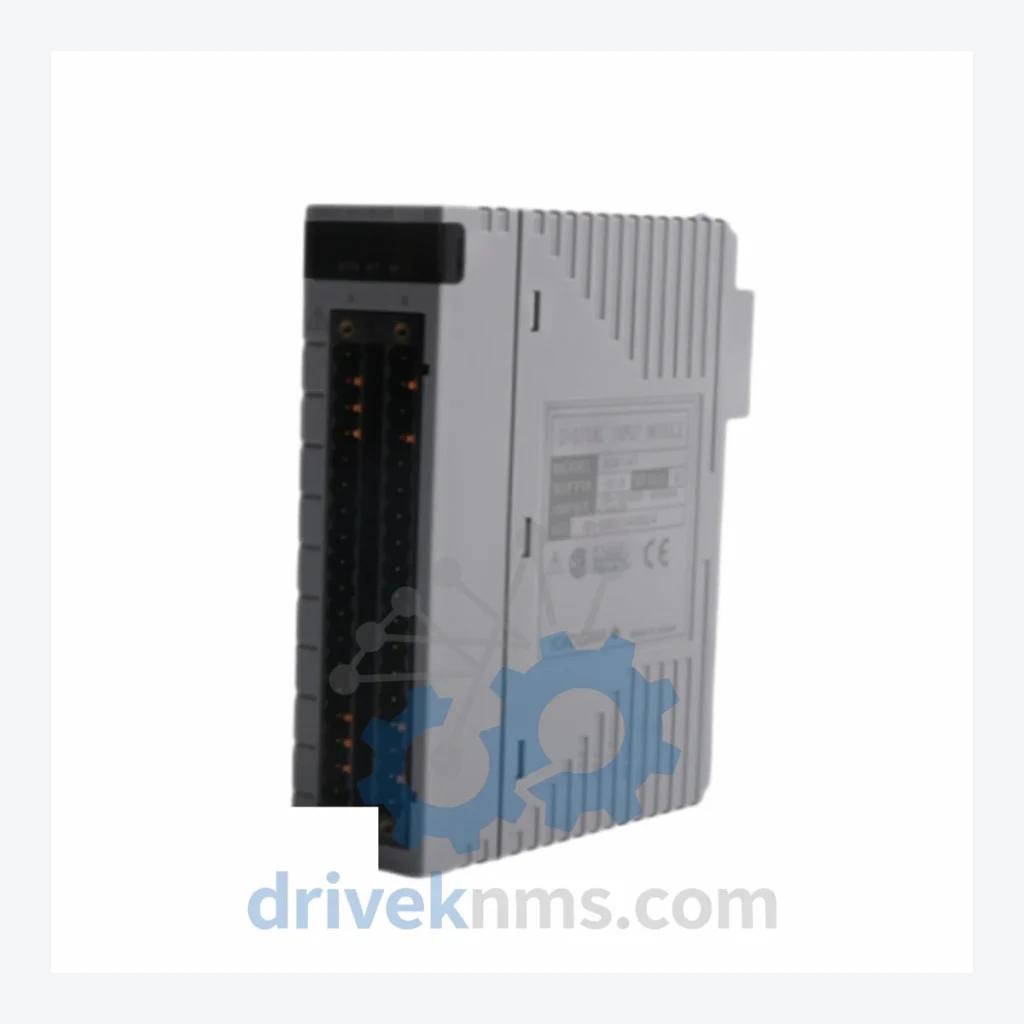
Product Overview
Commercial availability is handled through direct RFQ, model verification and export-oriented follow-up rather than public cart checkout.
Datasheet Preview
Use attached product manuals when available. If the manual is not public yet, request the full file directly through RFQ.
Commercial Path
Product pages on DRIVEKNMS are designed to verify model, brand and series first, then move the buyer into one clean quotation path.
Technical Dossier
RFQ support for obsolete parts: Send the model number, required quantity and destination so DriveKNMS can confirm sourcing options before quotation.
| Parameter | Detail |
|---|---|
| Manufacturer | Emerson (Fisher-Rosemount) |
| Part Number | KC3020X1-BA1 |
| Reference Number | 12P6732X092 |
| Product Series | DeltaV |
| Component Type | I/O Module |
| Country of Origin | United States |
| Product Status | Discontinued / Obsolete |
| Compatible Platform | Emerson DeltaV DCS (legacy configurations) |
Note: Electrical parameters not independently verified. Specifications are based on published Emerson DeltaV series documentation. No parameters have been fabricated. Buyers should cross-reference against their system documentation prior to installation.
The Emerson DeltaV platform has been deployed across refining, chemical, pharmaceutical, and power generation facilities worldwide since the mid-1990s. While Emerson has continued to evolve the DeltaV product line, older I/O subsystem components — including the KC3020X1-BA1 — have been phased out of active production. Facilities running these legacy configurations face a structural problem: the control logic, field wiring, and operator interfaces are all built around hardware that is no longer manufactured.
Replacing a single failed I/O module with a current-generation equivalent is rarely a plug-and-play operation. It typically requires firmware compatibility analysis, potential controller upgrades, loop re-engineering, and extended commissioning periods. For a facility running 24/7 operations, that engineering window carries a direct production cost. The more defensible strategy — and the one adopted by experienced maintenance organizations — is to maintain a strategic inventory of known-good legacy modules. A single KC3020X1-BA1 held in a climate-controlled spare parts store can defer a six-figure system migration by five to ten years, provided the broader control system remains mechanically and electrically sound. That is not a theoretical claim. It is the documented experience of facilities that have managed DeltaV assets through multiple product lifecycle transitions.
Sourcing discontinued industrial electronics carries inherent risk. DriveKNMS applies a structured five-step inspection protocol to all legacy I/O modules before they are offered for sale:
Step 1 – Visual and Mechanical Inspection: All connectors, housing, and PCB surfaces are examined for physical damage, corrosion, and contamination. Units with compromised pin integrity or housing cracks are rejected at this stage.
Step 2 – Electrolytic Capacitor Assessment: Aging electrolytic capacitors are the primary failure mode in legacy industrial electronics. Each unit is inspected for capacitor bulging, leakage, and ESR degradation. Modules with suspect capacitors are flagged and not offered as operational spares.
Step 3 – Firmware Version Verification: Where accessible, firmware revision is documented and cross-referenced against known compatibility matrices for DeltaV legacy configurations. Version mismatches that could cause integration issues are disclosed prior to sale.
Step 4 – Pin and Contact Integrity Check: Backplane connector pins are inspected under magnification for oxidation, bending, and contact resistance anomalies. Pin corrosion is a common failure mode in modules that have been stored in non-climate-controlled environments.
The KC3020X1-BA1 is a direct hardware replacement for the same part number within a DeltaV legacy I/O subsystem. When sourced in the correct hardware revision, it installs as a drop-in replacement — no re-engineering of field wiring, no controller reconfiguration, and no modification to existing DeltaV control strategies. This is the critical operational advantage over a forced platform migration.
Facilities that have invested in DeltaV-based automation over the past two to three decades have embedded that investment in their field instrumentation, their safety interlock logic, and their operator training. Preserving that investment through targeted spare parts procurement — rather than accepting a vendor-driven upgrade cycle — is a legitimate and cost-effective asset management strategy. The KC3020X1-BA1 supports that strategy directly.
For maintenance managers operating under capital expenditure constraints, the arithmetic is straightforward: the cost of a verified spare module is a fraction of the engineering cost of a forced migration. The risk-adjusted value of holding that spare — against the probability of an unplanned failure during a production run — is the foundation of any rational spare parts program for legacy DCS infrastructure.
Q: Should I buy more than one unit as a long-term reserve?
A: For facilities where this module is installed in multiple I/O subsystems, holding a minimum of two to three units as a strategic reserve is standard practice. Given that production of this part has ceased, availability on the secondary market will continue to decline. Procurement decisions made today carry a lower cost and lower risk profile than procurement decisions made under emergency conditions.
Q: Can you source additional quantity if I need more than what is listed?
A: Contact our procurement team directly. DriveKNMS maintains active sourcing relationships for legacy Emerson DeltaV components and can often locate additional RFQ-reviewed sourcing status within two to four weeks.
Continue The Model Path
Move from this exact model into the matching system hub, brand archive, model-family archive or lifecycle sourcing route before sending a final RFQ list.
Related Paths
Fisher 01984-4080-0001 is listed for DeltaV RFQ review. Confirm quantity, condition and destination before quotation.
Emerson SPMD1401 is listed for DeltaV RFQ review. Confirm quantity, condition and destination before quotation.
Emerson SPMC1401 is listed for DeltaV RFQ review. Confirm quantity, condition and destination before quotation.