
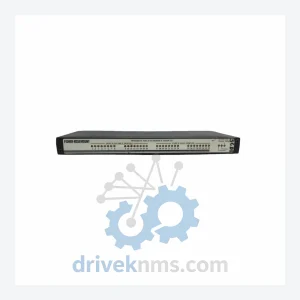
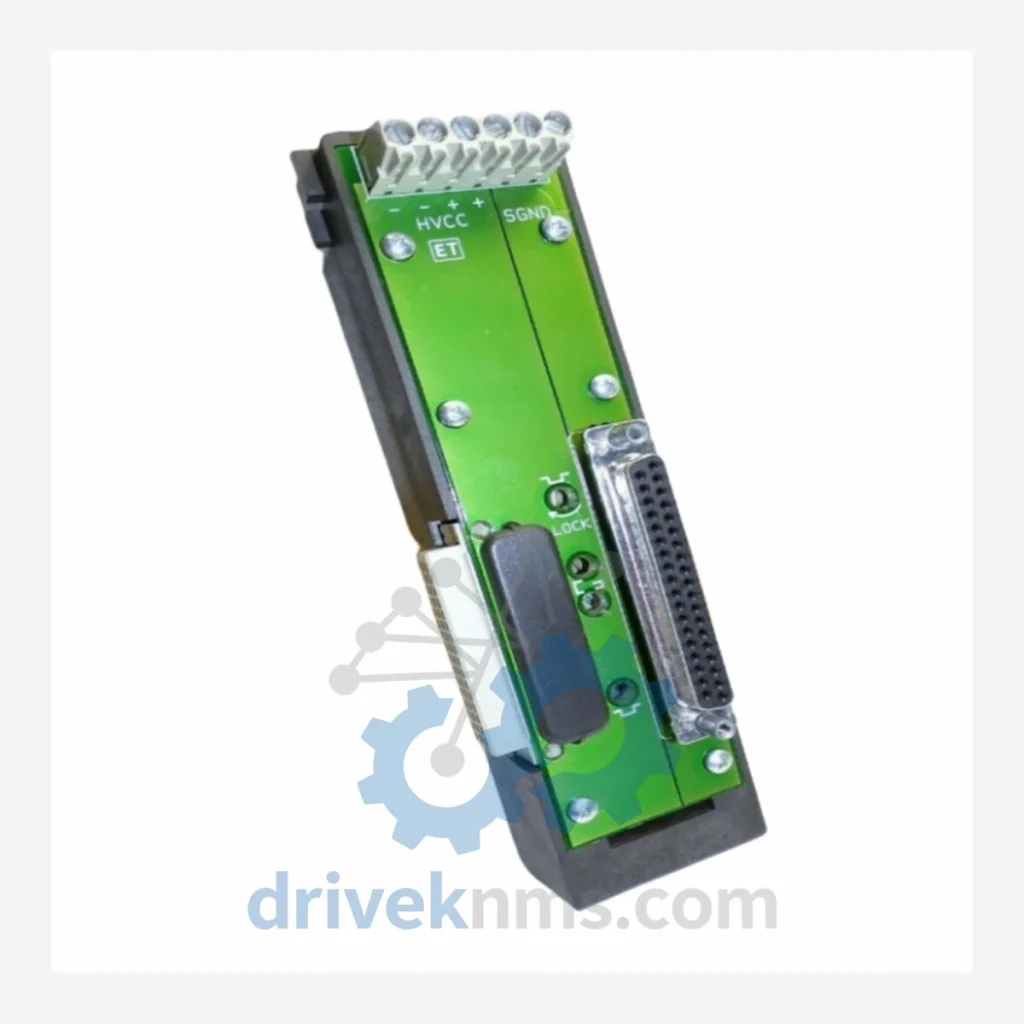
Fisher 01984-4080-0001 Discrete Field Interface Module – DeltaV Series
Fisher 01984-4080-0001 is listed for DeltaV RFQ review. Confirm quantity, condition and destination before quotation.
RFQ-ready industrial model
Model: KJ4010X1-BG1 12P0830X062
Product Overview
Commercial availability is handled through direct RFQ, model verification and export-oriented follow-up rather than public cart checkout.
Datasheet Preview
Use attached product manuals when available. If the manual is not public yet, request the full file directly through RFQ.
Commercial Path
Product pages on DRIVEKNMS are designed to verify model, brand and series first, then move the buyer into one clean quotation path.
Technical Dossier
The Emerson DeltaV Distributed Control System (DCS) is one of the most widely deployed process automation platforms in global heavy industry. Installed across petrochemical refineries, nuclear power facilities, LNG terminals, pharmaceutical manufacturing plants, and offshore platforms, the DeltaV architecture is recognized for its scalability, redundancy support, and deterministic I/O performance. The KJ4010X1-BG1 12P0830X062 is a chassis extender module within this ecosystem, enabling multi-chassis configurations that extend the physical I/O capacity of a DeltaV controller node without sacrificing backplane communication integrity.
DeltaV systems are engineered for long operational lifecycles — installations from the late 1990s remain active in facilities where process continuity is non-negotiable. This creates sustained global demand for both current-production and end-of-life DeltaV modules, particularly extenders, controllers, and I/O cards that are no longer manufactured but remain critical to system uptime.
The DeltaV platform was introduced by Fisher-Rosemount (later acquired by Emerson Electric) in 1996. The initial S-series architecture established the foundational backplane bus design: a proprietary high-speed serial bus connecting controller cards, I/O subsystem cards, and power supplies within a shared chassis. Early controllers such as the KJ3001X1-BA1 operated at limited node counts, with chassis extenders like the KJ4010X1 series introduced to address physical expansion requirements in large-scale installations.
The transition from S-series to M-series and subsequently to the MQ-series brought incremental improvements in processor speed, memory capacity, and redundancy architecture. However, the backplane bus protocol remained backward-compatible across generations — a deliberate design decision that allowed facilities to expand existing installations without full system replacement. This compatibility layer is the primary reason why obsolete DeltaV modules retain high residual value in the secondary market.
Modern DeltaV installations increasingly incorporate the Electronic Marshalling (CHARM) architecture, which abstracts I/O wiring from the controller layer. Despite this evolution, legacy chassis-based I/O configurations remain dominant in brownfield facilities where rewiring costs are prohibitive.
Controllers & CPUs
Analog & Digital I/O Modules
Chassis Extenders & Infrastructure
A significant portion of the DeltaV installed base operates on hardware that Emerson has classified as end-of-life or discontinued. Modules such as the KJ4001X1-CA1, KJ4001X1-CB1, and early KJ3221X1 variants are no longer available through standard distribution channels. Facilities operating these systems face a binary choice: full system migration (capital-intensive, high-risk during transition) or lifecycle extension through verified secondary-market sourcing.
DeltaV modules present specific testing challenges due to the proprietary backplane bus protocol and the interdependency between controller firmware and I/O subsystem firmware versions. Standard bench testing is insufficient for validating DeltaV module functionality; modules must be tested within a live DeltaV backplane environment using compatible controller and power supply hardware.
DriveKNMS employs a dedicated DeltaV test bench configured with multiple chassis generations, enabling functional validation of I/O modules, controller cards, and extender modules under simulated process conditions. Testing protocols include: backplane communication integrity verification, channel-level I/O accuracy measurement (±0.1% full scale for analog modules), HART pass-through validation, and firmware version confirmation. Chassis extender modules such as the KJ4010X1-BG1 are tested for signal integrity across the inter-chassis link under full I/O load conditions. All tested units are issued a functional test certificate with test date, technician ID, and pass/fail criteria documentation.
Continue The Model Path
Move from this exact model into the matching system hub, brand archive, model-family archive or lifecycle sourcing route before sending a final RFQ list.
Related Paths
Fisher 01984-4080-0001 is listed for DeltaV RFQ review. Confirm quantity, condition and destination before quotation.
Emerson SPMD1401 is listed for DeltaV RFQ review. Confirm quantity, condition and destination before quotation.
Emerson SPMC1401 is listed for DeltaV RFQ review. Confirm quantity, condition and destination before quotation.